




Iveco, Nikola Launch JV Plant for Electric Trucks in Germany
Iveco and Nikola have inaugurated a joint-venture manufacturing facility for electric heavy-duty trucks in Ulm, Germany
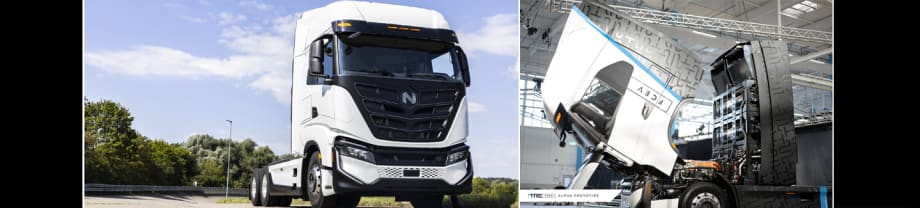
The Nikola Tre battery-electric tractor is based on the Iveco S-WAY cabover truck platform with an electric axle co-designed and produced by FPT Industrial. It also features Nikola's advanced electric and fuel cell technology, along with key components provided by Bosch.
Photo: Iveco + Nikola
The partnership announced last September between Italy-based global commercial truck maker Iveco and U.S. based manufacturer of zero-emission trucks Nikola has entered a new stage with the unveiling on Sept. 15 of a facility to manufacture Nikola Tre electric heavy-duty trucks.
The joint venture partners said the plant, located in Ulm Germany, will enable production of the Nikola Tre electric heavy-duty trucks to begin by year’s end.
Tre on way here
The first Nikola Tre models produced in Germany will be delivered to select customers in the United States in 2022.
In addition to that battery-electric vehicle (BEV) production model, the partners said the “next evolution of this modular heavy-duty platform was also on display to the public in the form of the fuel cell electric vehicle (FCEV) prototype of the Nikola Tre,” which is slated to enter production in Ulm by the end of 2023.
Spanning 50,000 square meters (nearly 60,000 square yards), of which half of that is covered, the Ulm plant features a final assembly process that has been designed for "electric-born" vehicles.
The production line is currently expected to be able to manufacture approximately 1,000 units per shift per year and is expected to undergo progressive ramp-up in the following years, said the partners.
The new site, and the full first phase of industrialization, represents joint investment by Iveco and Nikola and involves a projected 160 suppliers in the process from start to finish, the manufacturers noted.
Iveco roots
The partners stated that the Nikola Tre is based on the Iveco S-WAY cabover truck platform with an electric axle co-designed and produced by FPT Industrial. It features Nikola's advanced electric and fuel cell technology, along with key components provided by Bosch.
“Together, the teams have designed a modular platform capable of fuel cell as well as battery propulsion technology,” Nikola and Iveco said. “Launching the battery technology first will drive the maturity of the underlying platform before adding the fuel cell as a range-extension technology.”
More Fuel Smarts
Fleet Costs Shape ACT Expo 2027 Agenda
With diesel prices high and operating expenses under pressure, ACT Expo's 2027 agenda emphasizes fuel efficiency, AI, safety and the return on fleet technology investments.
Read More →
How GP Transco Builds Fuel Savings a Fraction at a Time
Aerodynamic specs, solar panels, and driver incentives help GP Transco turn small efficiency gains into savings it can reinvest in its people.
Read More →
Trucking’s Diesel Squeeze Isn’t Letting Up
With diesel topping $6 a gallon nationally, ATA's Bob Costello explains why fleets should prepare for continued pressure at the pump.
Read More →
FlowBelow Redesigns Trailer AeroSlider to Cut Fuel Use
The lighter trailer aerodynamic system installs in less than 45 minutes, according to the company, with potential payback in under a year depending on fuel prices and trailer mileage.
Read More →
Why Diesel Price Relief Efforts May Fall Short
Diesel prices have eased from September’s record high, but doubts about additional Russian supply and limits on dyed-diesel tax relief mean trucking fleets still face expensive fuel. And prices could go higher.
Read More →
Why Small Fuel Savings Matter in Trucking [Podcast]
Can better fuel economy help pay for driver raises? In this episode of the HDT Talks Trucking podcast, GP Transco explains how small efficiency gains create room to reinvest in its people.
Read More →
How GP Transco Cuts Trucking Fuel Costs, a Tenth of a Gallon at a Time
What’s another tenth of a mile per gallon worth? GP Transco shares how equipment upgrades and driver coaching turn small gains into meaningful fuel savings.
Read More →
Electric Yard Tractors Move Beyond Pilots
Operating-cost savings have overtaken sustainability goals as the leading reason surveyed fleets are adopting battery-electric terminal tractors, according to new NACFE research.
Read More →
Geotab Links Fleet Card to Vehicle Data
The new card combines fuel discounts with telematics-based purchase controls. Geotab’s analysis also points to potential savings from choosing lower-priced fuel stops.
Read More →
Fleet Economics Shape Electric Truck Outlook
ACT Research expects costs, charging infrastructure, and technology improvements to drive zero-emission commercial vehicle adoption as federal regulations and incentives retreat.
Read More →