




Will Trump's Take on Trade Be Boost or Bust for Fleets?
Last summer, the U.S. Department of Transportation reported that cross-border trade generated by NAFTA alone was worth $89 billion to the trucking industry. So are President Trump’s recent free trade actions a positive move for trucking? Or should American fleet executives be concerned?

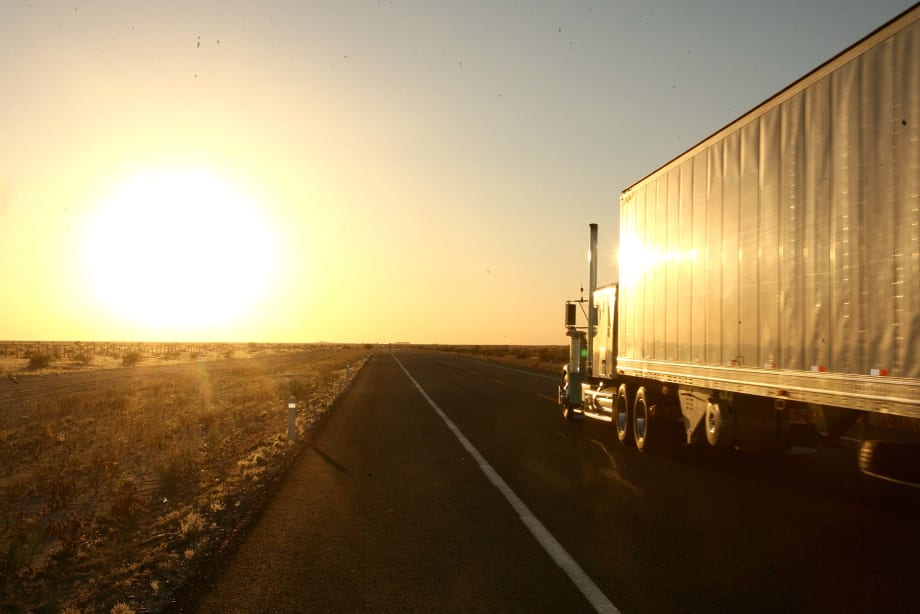
Image: Mexico Secretaria de Comunicaciones y Transportes
Candidate Donald Trump made scrapping or reworking various free trade agreements the United States is party to a central theme of his presidential campaign last year. Such rhetoric was highly popular with his supporters. And in his first full week in office, President Donald Trump has made reexamination of international trade agreements a top priority for his administration.
But the North American trucking industry has benefited greatly from various free trade agreements – notably the North American Free Trade Agreement (NAFTA). In the past week, President Trump pulled out of the Trans-Pacific Partnership and angered Mexico with his insistence that NAFTA be renegotiated to give the U.S. a stronger commercial hand while creating a funding stream that would have the Mexican government pay for a wall along the southern border to check illegal immigration into the U.S.
So far, the Canadian government has expressed concerns about President’s Trump’s trade moves, while the Mexican government has signaled it would walk away from all trade agreements with the U.S. and seek new international trading partners if it is treated in a way it perceives as being unfair.
Last summer, the U.S. Department of Transportation reported that cross-border trade generated by NAFTA was worth $89 billion to the trucking industry. So are President Trump’s recent actions a positive move for trucking? Or should American fleet executives be concerned?
Bill Sullivan, executive vice president of advocacy for the American Trucking Associations, said that ATA wants to help the Trump administration find a way forward on trade that keeps goods flowing and creating more jobs. "Trade and trucking are synonymous, and the increased movement of freight yields more good paying jobs and growth in American companies,” Sullivan said.
“We want to help the administration and Congress build a trade framework that helps grow our economy, including the trucking industry," he continued. "Since 1995, the value of goods traveling between the U.S. and Canada has risen dramatically – nearly 168% to $712 billion, supporting thousands of jobs in the trucking industry. For U.S. trade with Mexico, trucks move 83% of the trade between the two countries, in all making 5.5 million crossings in 2015. We will work to support any trade policies that help grow good-paying American jobs and the trucking industry."
A Mixed Bag
Marina Whitman, professor of Business Administration and Public Policy at the University of Michigan, contends some aspects of Trump’s trade plans would certainly benefit truck fleets. “Reforming corporate taxes and certain moves to deregulate the industry would certainly be beneficial for fleets,” she said. “On the other hand, the strong protectionist slant taken by the Trump administration is, I think, significantly damaging to industry in general and trucking in particular, since trucking is highly sensitive to any disruption in this highly integrated market.”
Simply put, Whitman said that when trade is growing, freight moves. “And if any of President Trump’s protectionist proposals become fact, they will put a real damper on trade in general,” she noted. “The Canadians are very concerned about the animus aimed at Mexico from the Trump White House, because their industries – particularly their automotive industry – is highly integrated with Mexico. And they are very worried they will get caught in the fallout from a major U.S.-Mexico trade dispute. And that would be bad for trucking because the physical movement of goods and services is highly important to that economic success.”
Whitman said private, high-level meetings are taking place as the Canadians attempt to convince the Trump administration of the dangers of disrupting these highly integrated markets. “There are no other markets trucking can look to if these agreements end,” she added. “Digital commerce cannot make up the shortfalls that will occur in the trucking industry if that happens.”
A Pure Loss of Demand
There are positive and negative attributes to any trade deal, according to Greg Wright, a professor of economics at the University of California, Merced. But Wright said fleets should be “wary” of any moves that completely undo such agreements in haste.
“My understanding is that upwards of 60% of NAFTA trade is truck-based, with rail second and then probably air, I would guess” he said. “So there is probably little ‘replacement’ for this trade coming from anywhere since these are the U.S. land borders. There is of course a simultaneous growth in internet-based commerce which certainly can be good for trucking-- provided that drone-based shipments don’t take off too quickly or that autonomous trucks don’t take over!-- but I see this as separate from NAFTA, meaning that losing NAFTA would be a pure loss of demand for trucking.”
Looking westward toward Asia, Wright thinks opportunities for growth in trucking exist, but doubts the current administration will pursue them vigorously. “Asia is the fastest growing economic region and is a natural opportunity for growth in trade,” he said. “But my sense is that this administration is likely to be consistent in its policies across all trading partners, meaning they will move to slow trade with Asia as well. In fact, they recently pulled the US out of the TPP, which is consistent with this idea.
"Trade with Asia is indeed potentially good for U.S. trucking since a large proportion of trade through LA/Long Beach, Oakland and Seattle-Tacoma is put on rail and truck for shipment across the country," he explained. "When I lived in Oakland, my barometer for the state of the US economy was how high are the containers stacked in the shipping yard, and how many trucks are lined up at the gate.”
In general, Wright said any policy that raises the cost of trade with Mexico and Canada will hurt trucking. “This is an important point because it highlights the larger issues here,” he noted. “Foremost, U.S. exporters are also U.S. importers: There is an enormous overlap between the set of firms engaged in these activities. More generally, two-thirds of global trade is in intermediate goods, meaning inputs into the production process, with the result that when US imports are taxed, firms face higher costs and firm productivity falls. It is absolutely true that some jobs may be saved, but the existing evidence indicates that this is a very inefficient [costly] way to save jobs.”
The reality today, Wright added, is that the global supply chain is incredibly sophisticated and NAFTA is emblematic of that. “Auto transmissions are made in Canada and brake lights in Mexico, etc. and trucking keeps the whole process going,” he said. “So, I would say that U.S. truckers should be very wary of any effort to close the southern border to commerce.
"Trump’s proposals are particularly dangerous because they are so extreme," he continued. "A new 20% import tariff between two countries that participated in a free trade zone is sure to set off a series of legal actions in NAFTA adjudication panels, WTO adjudication panels, and U.S. and Mexican courts. It is also very likely to provoke retaliation from Mexico in the form of raised tariffs and other barriers. This could dramatically cut the demand for moving freight across the border as well as interfere with the legal ability to do so.”
Cause For Concern
NAFTA benefits American trucking companies in two ways, said Charles Hankla, associate professor of Political Science, Georgia State University. Most directly, he said NAFTA has greatly facilitated the ability of American trucking companies to move freight across the border into Mexico and Canada, significantly increasing the market for those services. Less directly, but probably of equal importance, Hankla said NAFTA has encouraged the integration of production across the three countries, creating demand for raw materials, capital goods, and finished products to be moved back and forth across the borders.
“Of course, NAFTA has also allowed Canadian and more recently, after an extended dispute, Mexican truckers to carry freight into the United States, increasing competition for American trucking companies,” Hankla noted. “But the overall growth in business has almost certainly offset this effect.”
Hankla said one possible move on trade proposed by the Trump administration has been imposing a border adjustment tax which, if approved by Congress, would allow U.S. companies to deduct their export income from their tax base, but it would also disallow them from deducting their import costs.
“Whether a particular company would benefit from this change would depend on their import-export mix,” Hankla explained. “So, for example, a company that sells in the U.S. but imports their production inputs would be hurt, while a company that sources in the U.S. and exports the bulk of their product would benefit. That said, the danger for all U.S. businesses in this proposal is that, because it discriminates against foreign production, it would likely be contested under international trade law and might also invite retaliation.
"In the final analysis," he added, "any U.S. trucking firms that do a lot of business in Mexico and Canada, or that work for companies that are dependent on international trade, whether for inputs or markets, should be concerned about the direction that the Trump administration is heading.”
More Fleet Management
Can You Beat Our Trucking Trivia Challenge?
Test your truck knowledge with 19 trivia questions from Heavy Duty Trucking Exchange. Can you keep up with the fleet pros?
Read More →
BeyondTrucks Adds Rules Checks to Dispatch
New Compatibility Engine checks driver qualifications, equipment requirements and fleet policies before loads are dispatched.
Read More →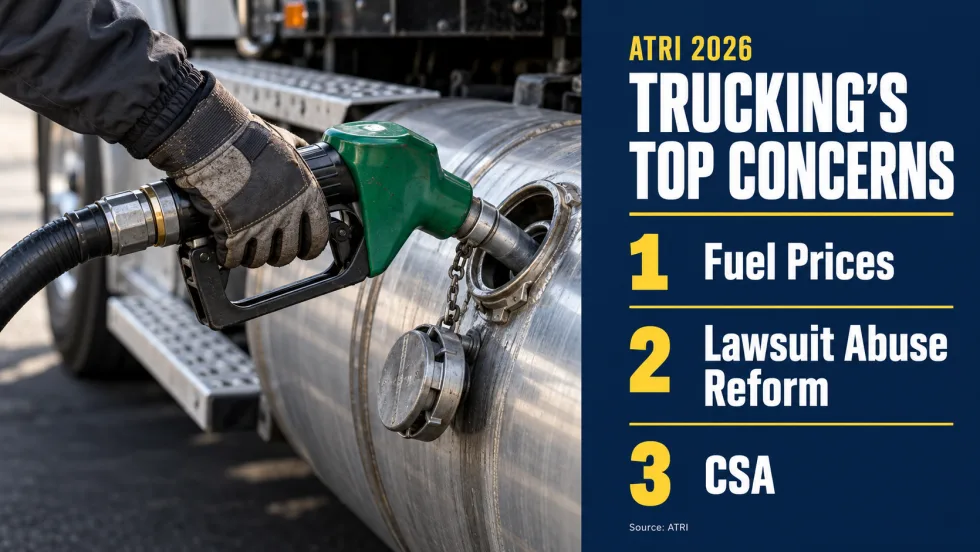
Diesel Prices Hijack Trucking’s Worry List
ATRI’s annual survey finds cautious optimism about freight, but diesel costs, litigation, and insurance continue to squeeze fleets. Drivers have different priorities on several issues.
Read More →
Nomination Deadline Extended for HDT Emerging Leaders
Just a few more days to nominate accomplished trucking fleet professionals under 40 who are making an impact and helping lead the industry forward for the HDT Emerging Leaders award. Deadline extended to October 20!
Read More →
What Will ATA’s New Leader Bring to Trucking's Table?
Incoming President and CEO Mark Colson’s record in Alabama offers clues about his priorities and approach following Chris Spear’s abrupt departure as the head of the American Trucking Associations.
Read More →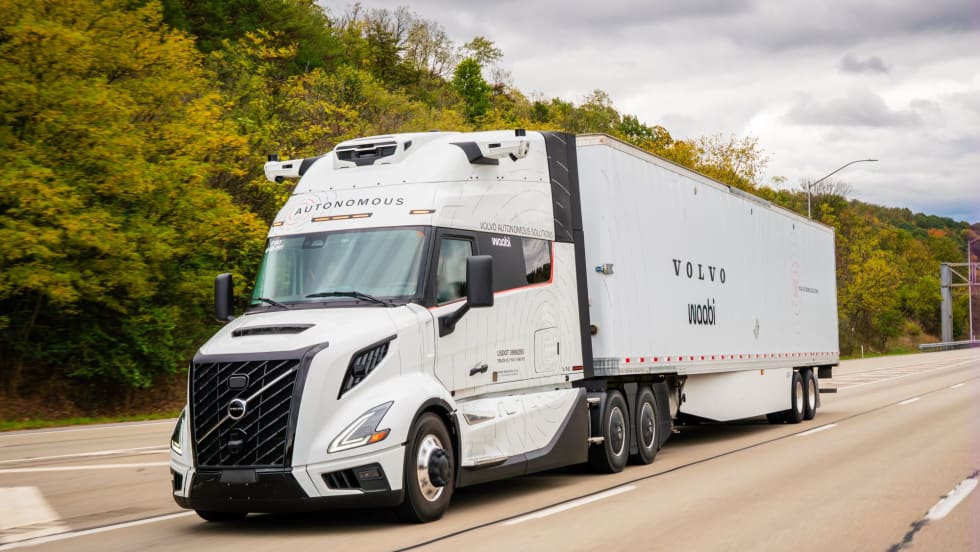
Volvo, Waabi Start Commercial Autonomous Operations in Texas
Volvo VNL Autonomous trucks, powered by the Waabi Driver, are hauling freight directly to third-party facilities for a customer in Texas.
Read More →
Samsara Launches Custom AI Agent Builder
Agent Studio lets fleets create AI tools for hours-of-service monitoring, reporting and driver support, including agents that communicate by phone.
Read More →
Einride Driverless Electric Trucks Begin Daily Freight Operations in Ohio
Two cabless electric trucks are hauling freight between EASE Logistics facilities in Marysville, Ohio, as part of a multi-state truck automation project.
Read More →
Geotab Links Fleet Card to Vehicle Data
The new card combines fuel discounts with telematics-based purchase controls. Geotab’s analysis also points to potential savings from choosing lower-priced fuel stops.
Read More →
How MFA Helps Protect Trucking Fleets
Multi-factor authentication adds protection when passwords are stolen. Here’s how it works and where fleets should start.
Read More →