




Virginia Governor Signs Bill Increasing Fuel Taxes for Transportation
Virginia Gov. Bob McDonnell signed legislation Monday raising billions of dollars for transportation that includes new taxes on fuel. They may go even higher depending on what happens to legislation on Capitol Hill.

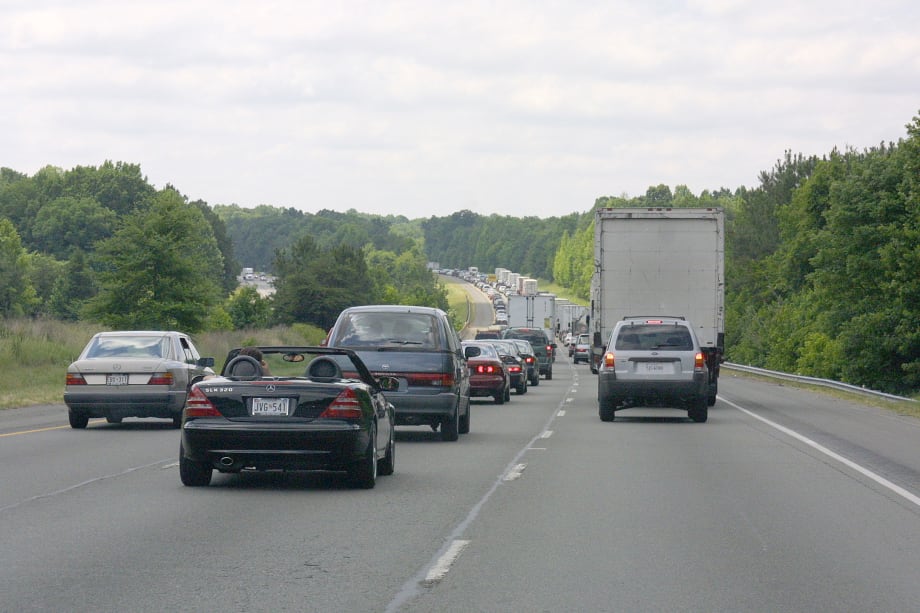
The new law also limits putting tolls along the state’s section of I-95.
The new law also limits putting tolls along the state’s section of I-95.
Virginia Gov. Bob McDonnell signed legislation Monday raising billions of dollars for transportation that includes new taxes on fuel. They may go even higher depending on what happens to legislation on Capitol Hill.
Known as Virginia's Road to the Future, HB2313 eliminates the 17.5 cents per gallon excise tax on gasoline and diesel fuel, and replaces the motor fuels tax with a 3.5% sales tax on the wholesale price of gasoline and a 6% sales tax on the wholesale price of diesel fuel, among other tax increases. The change in the tax structure allows the state to collect more in fuel taxes if the price moves higher.
In a statement the governor’s office said the bipartisan legislation, described as the state’s first comprehensive transportation funding plan approved in more than 25 years, will raise nearly $3.5 billion in additional statewide transportation funding, more than $1.5 billion in additional funding for Northern Virginia, and more than $1 billion in additional funding for Hampton Roads, over the next five years alone.
"When we put forward our comprehensive transportation funding plan this year, we called for three fundamental changes to how Virginia funds transportation, all based on conservative fiscal policy,” said the Republican governor. “First, we called for a reduction or elimination of our dependence on an archaic, outdated gasoline tax in the decades ahead. Second, we called for tying future transportation funding to the far more sustainable sales tax. Third, we called for treating transportation like the true core function of government that it is, one essential to economic growth and job creation in our state. While the final bill was in some ways different than our original proposal, it met all three of the goals we established.”.
The new law also limits putting tolls along the state’s section of I-95.
More money could go into Virginia’s transportation coffers under the new law if Congress passes legislation allowing states to collect sales taxes on Internet purchases. The Virginia law would earmark about 57% of an estimated $253 million the state would collect in the form of an internet tax that would be used for transportation projects.
The congressional bill passed the Senate by a wide margin, but faces an uncertain future in the House. If the bill fails to be passed and signed into law by President Obama, who has indicated support for it, then the Virginia law would allow the wholesale tax on gasoline to rise even more from 3.5% to 5.1% to make up for the funding gap.
A summary of the bill that received final passage by Virginia lawmakers and was signed by the governor is available online.
More Drivers

From One Generation to the Next: How Mentorship Builds Safer Truck Drivers
After three decades in trucking, Harold Perry shares what he's learned about driver safety, mentorship, and helping the next generation build confidence behind the wheel.
Read More →
Truck Drivers Need More Than Another Alert
Fleets have more visibility into truck health, safety events, and driver activity than ever. The next challenge is turning all that information into useful guidance for the person who has to decide what to do next.
Read More →
FMCSA Removes 110 Truck Driver Training Schools from Certified ELDT List
Federal regulators also are targeting more than 160 additional training providers and launching a nationwide audit of third-party CDL skills testers as part of a broader crackdown on trucking fraud.
Read More →
Hours of Service Pilot Programs: FMCSA Readies for 2027 Rollout
Two pilot programs could eventually reshape hours-of-service rules, giving truck drivers options to pause their 14-hour clock or use longer split sleeper rest periods.
Read More →
Medical Cards, English Proficiency Reshape Roadcheck Violations
Medical-card violations jumped to the top of the driver out-of-service list during CVSA’s 2026 International Roadcheck, while English-language proficiency violations appeared among the leading violations for the first time.
Read More →
Driver Trust Can Make or Break the Success of Fleet Safety Technology
New Teletrac Navman research suggests that onboarding, transparency about driver data, and positive feedback can play a significant role in how commercial drivers respond to safety and coaching technology.
Read More →
EEOC Sues KLLM Over Alleged Sex Discrimination in Driver Training
KLLM is facing a federal sex-discrimination lawsuit over policies the EEOC alleges put female truck driver trainees at a disadvantage.
Read More →
FMCSA Moves to Codify English Language Requirements for Commercial Drivers
By changing regulations on English-language proficiency requirements for commercial drivers, rather than relying on a guidance memo, the FMCSA said future administrations won't be able to walk back the Trump administration's stricter enforcement with just a memo.
Read More →
Drivers Put Western Star Trucks to the Test at Star Nation Experience
Watch to get an inside look at the Western Star trucks, technology, and community behind the Star Nation Experience 2026!
Read More →
Trump Administration Looks to Put More Veterans Behind the Wheel
The Freedom Haulers program pulls together existing and expanded programs at several federal agencies to recruit veterans to drive commercial heavy-duty trucks and cut the red tape for them to get a CDL, training, and employment.
Read More →