




U.S. EPA Issues Guidance Letter on Diesel Exhaust Fluid
The U.S. Environmental Protection Agency issued a guidance letter late last year to heavy-duty on-highway engine manufacturers outlining how it intends to determine the physical range of adjustment of diesel exhaust fluid quality for certification testing, according to DiscoverDEF.com.

The U.S. Environmental Protection Agency issued a guidance letter late last year to heavy-duty on-highway engine manufacturers outlining how it intends to determine the physical range of adjustment of diesel exhaust fluid quality for certification testing, according to DiscoverDEF.com.

Because operator intervention is needed to refill DEF, the letter says there is potential to add liquid other than DEF, either accidentally or intentionally. The agency says a financial motive could also exist to refill the DEF tank with other liquids, as well as diluted DEF.
At the time of EPA certification of the manufacturer's engine, the agency says it examine what means the engine maker has implemented inhibit DEF quality adjustment. It notes that sensors in current and previous model years have been able to detect poor DEF quality for many engines, but not all, DEF dilution scenarios.
“EPA expects that operators that would tamper with DEF quality would most commonly attempt to do so by diluting DEF with water. Dilution of DEF with water can be accomplished cheaply and easily…” the letter says. “This type of dilution would cause little to no immediate damage to the [engine’s] selective catalytic reduction system and would not affect performance characteristics apparent to the operator, such as developed power or fuel economy, though it would likely lead to a substantial increase in nitrogen oxide emissions."
EPA says using the cost range for DEF of $3 to $5 per gallon and assuming 25% dilution with water, an operator that drives 100,000 miles a year, achieves a fuel economy of 6 miles per gallon, and whose engine doses DEF at 3% of its fuel consumption rate, could save from $375 to $625 per year in DEF costs.
The incorporation of DEF quality sensors could be a suitable option and the EPA believes that urea quality sensors can be installed on new vehicles by 2016.
A copy of the letter is on the EPA website.
More Fuel Smarts

Record Diesel Prices Squeeze Trucking Fleets
Average U.S. diesel prices have climbed to nearly $6 a gallon, surpassing the 2022 record as tight refinery capacity and Middle East disruptions keep fuel costs elevated.
Read More →
How Fuel Delivery Shapes Engine Performance
Fuel delivery depends on more than what happens at the injector. For fleet, maintenance and technical professionals, looking at the full path from pump to injector can provide useful context for understanding engine performance.
Read More →
East Coast Port Launches $45M Electric Truck Push
The Port Authority of New York and New Jersey announced millions in incentives for zero-emission drayage trucks, yard tractors, and new charging hubs near the port.
Read More →

California Bill Could Shed Light on Electric Truck Prices
Why do battery-electric Class 8 trucks remain so expensive? A California bill headed to Gov. Gavin Newsom would give fleets and state agencies more visibility into what manufacturers charge.
Read More →
Detroit Opens Orders for EPA 2027 Engines
Detroit isn’t starting from scratch to meet EPA 2027 diesel emissions standards. Its Gen 6 DD13 and DD15 engines keep much of today’s platform while updating the fuel and aftertreatment systems.
Read More →
Zero-Emission Truck Corridor Planned for West Coast
California, Oregon, Washington, British Columbia and Baja California are coordinating plans for truck charging and hydrogen fueling from Canada to Mexico.
Read More →
A Closer Look at Kenworth’s Electric T880E Vocational Truck [Video]
Learn more about Kenworth's T880E battery-electric vocational truck at the Paccar Technical Center, including its range, applications, upfitting considerations, and PTO options, in this HDT Spotlight video.
Read More →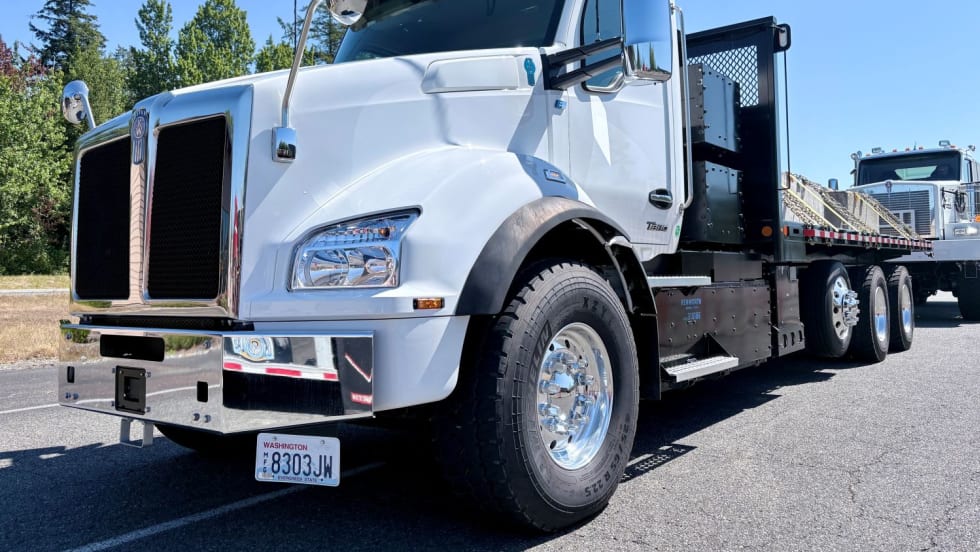
Kenworth T880E Brings EV Power to Vocational Trucks
A closer look at the Kenworth T880E’s range, charging, powertrain and upfit options — and where fleets are showing the most interest.
Read More →
Jennie Abarca Is Proving Electric Trucks Can Do the Job
HDT Truck Fleet Innovator Jennie Abarca is building confidence in fleet electrification one load at a time while openly sharing the challenges she encounters along the way as a small-fleet owner.
Read More →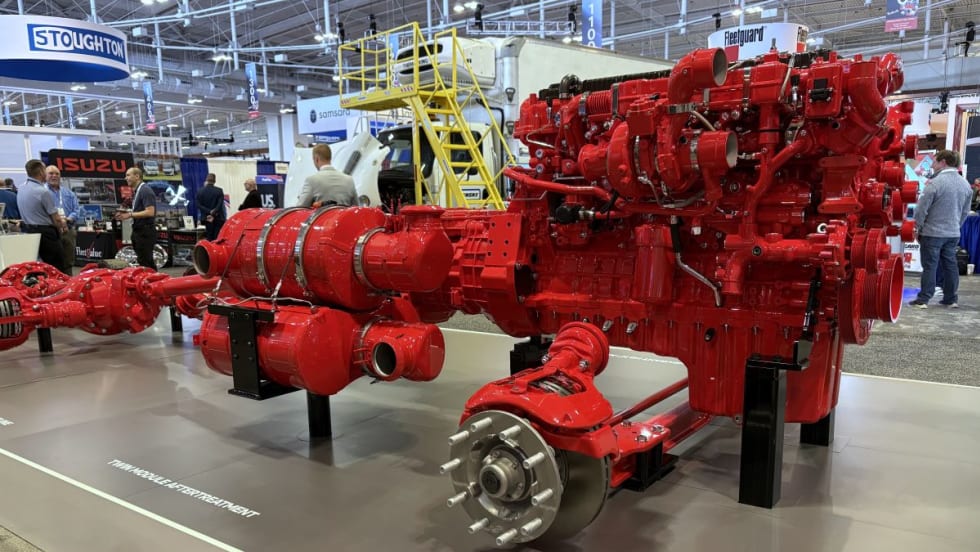
Cummins Adjusts 2027 Engine Rollout After EPA Proposal
The engine maker will gradually introduce its new Model Year 2027 diesel engines while continuing to offer current models during the transition, citing the EPA's proposed emissions rule changes.
Read More →