




Trump and Trade
President Trump is already making good on campaign promises to end or seriously alter U.S. free trade agreements. But what are the pros and cons of these moves?

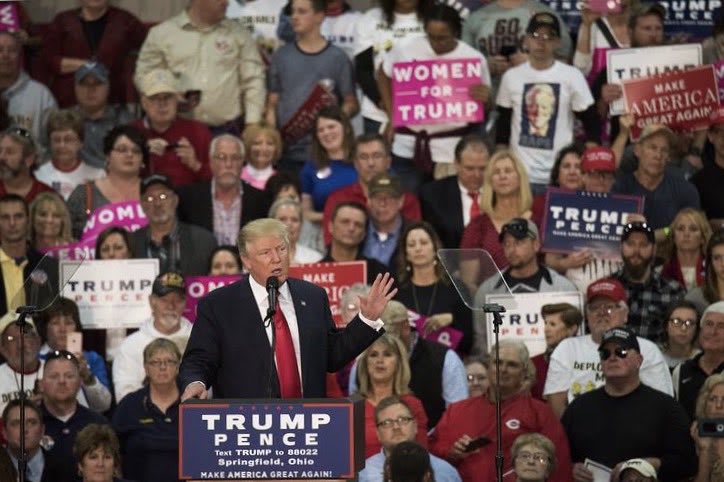
Image via Twiiter @realDonaldTrump
Image via Twiiter @realDonaldTrump
President Donald Trump has moved quickly to keep key campaign promises on ending or altering U.S. international trade agreements. During the campaign, Trump insisted that these agreements have hurt American workers and cost jobs, while unfairly benefiting foreign countries such as China and Mexico.
On Monday, Jan. 23, President Trump pulled out of negotiations on the Trans-Pacific Partnership (TTP), an Asia-centric trade agreement designed to bolster U.S. trading interests in the region at the expense of the Chinese.
The president has also said he will renegotiate the North American Free Trade Agreement (NAFTA) with Mexico and Canada “at the appropriate time.” Trump has also threatened to levy “major taxes” on U.S. companies that shift jobs to foreign countries.
Such moves are highly popular with his supporters. But some trade experts argue that the moves could ultimately backfire and slow U.S. economic growth.
Outlined below are views of several experts, from in and out of trucking, on these early trade moves by the Trump administration excerpted (along with their accompanying quotes) from a US News & World Report post
Winners and Losers
Marina Whitman is a professor of Business Administration and Public Policy at the University of Michigan who has long been a proponent of free trade agreements. Today, however, she says that while she still believes free trade agreements are beneficial to the U.S., and cites polling showing a majority of Americans support free trade agreements, she thinks the “unexpected” emergence of China as a major trade rival in the 1990s-- along with the failure of the American labor market to adjust and create new jobs for workers displaced by NAFTA-- have poisoned the free trade well for many Americans.
Whitman says that while there are many more American winners benefiting from free trade agreements, the negative impact from such agreements on the losers, in terms of lost jobs and lower wages, are more intense and personal:
Studies suggest that the American labor market is not as fluid and flexible as we thought. Job losers were not able to find new ones as quickly as expected nor command the same level of wages when they did. This finding is consistent with other research indicating that the in-country mobility of blue-collar American workers has been falling.
In other words, while the overall welfare effects of trade liberalization are generally positive, the impact on some subgroups, particularly the less well-educated, are negative and much larger. And the United States is less generous than other rich countries in providing both reemployment assistance and income support to workers hurt by these changes.
High-production Poverty
Harley Shaiken, director of the Center for Latin American Studies and professor of Letters and Science, University of California, Berkeley, says that the lack of strong labor unions and protections in Mexico led to a unique series of problems that eventually placed downward pressure on wages, salaries and jobs for American workers:
In 1993, when NAFTA was being debated, Mexico faced a disturbing reality: manufacturing productivity was rising at the same time real wages for Mexican workers were declining. Autos and color televisions were moving along assembly lines in state-of-the-art factories whose productivity and quality rivaled that of the U.S. or Japan, while workers were often living in communities without running water.
Economists tell us low wages reflect low productivity, but here we were seeing high productivity and rock-bottom wages. The result was high-productivity poverty. Why? A key factor was a lack of critical labor rights: the virtual impossibility in the export sector for Mexican workers to form independent unions and bargain collectively for better wages and conditions.
As my research has shown, by strengthening investment protection and largely ignoring worker protections, real wages in Mexican manufacturing continued to slide in the wake of NAFTA, declining almost 20% from 1994 to 2011 while productivity grew almost 80%. This loss for Mexican workers also contributed to a sharp downward pressure on manufacturing wages in the US. The combination of high productivity and depressed wages not surprisingly can serve as a beacon for investment.
There Will Be Consequences
The unprecedented scope of many of these free trade agreements today is a major problem, argues Charles Hankla, associate professor of Political Science, Georgia State University. He argues that since these agreements often touch on host of issues, from internet freedom to generic drug prices to the right of private investors to sue states for compensation, the effects of canceling them can have implications beyond the components of trade protection:
Economically, the U.S. is already tightly linked with both Asia and Europe. The TPP agreement would essentially expand the Pacific trade bloc beyond NAFTA to include nine additional countries, most significantly Japan. Similarly, the Trans-Atlantic Trade and Investment Partnership (TTIP) would deepen the already significant economic interdependence that traverses the Atlantic.
The loss of these agreements would certainly have negative economic effects on all sides, as least in the aggregate (since some jobs would be saved by the reduced competition). Agreements this large cannot be jettisoned without consequences.
That said, given the deep connections that already exist among Asia, North America and Europe, the purely economic results of killing the agreements are likely to be important, but not enormous. More serious would be the geostrategic implications. A rejection of TTIP by either side could signal a reduced U.S. presence in Europe, a particular concern in the face of increasing Russian assertiveness. Meanwhile, an end to TPP could encourage a number of Asian countries, unsure of America’s future in the region, to move into China’s growing sphere of influence.
The United States, Mexico and Canada Make So Many Things Together
FedEx Chairman and Chief Executive Officer Fred Smith is a passionate supporter of free trade agreements, noting that “History has shown repeatedly that free-market economies create human opportunities.” He urges the Trump administration to improve both existing and pending trade agreements, to both sustain and boost economic growth and create new opportunities for American workers:
If President Trump wants to improve NAFTA, he may to want to address the advantage that Mexican exporters receive through the rebate of value-added taxes on all their exports to the U.S. We don’t have similar rebates on corporate taxes paid on U.S.-made goods, and this puts our exports at a serious disadvantage.
While NAFTA could be updated and strengthened, as noted, withdrawal is another matter entirely. There are myriad reasons why that would be catastrophic for the U.S. economy, but a main one is the nature of North American supply chains. Few people understand how NAFTA has woven the productive capacity of North America into one integrated platform.
The United States, Canada and Mexico make so many things together. Forty percent of the value of Mexico’s exports to the United States is U.S. content. The auto industry is a great example. It’s been said that the average American car crosses the U.S.-Canadian border seven times during its production. A November 10th Wall Street Journal article cited an example in which a seat had parts from four U.S. states and four Mexican locations. NAFTA makes the U.S. one of the most attractive manufacturing locations in the world because of value-added productivity of both Canada and Mexico in an integrated North American supply chain.
More Fleet Management
Why This Trucking Recovery Is Different
Freight demand remains sluggish, but rising costs and tougher enforcement have taken enough capacity out of the market to change the outlook for motor carriers.
Read More →
Platform Science Adds Dispatch and Safety Tools
Four additions to PS Fleet help fleets monitor loads, manage driver coaching, share truck locations and adjust video system settings.
Read More →
PrePass Intelligence Mines Fleet Bypass, Toll and Safety Data
PrePass Intelligence helps fleets measure bypass savings, flag potential toll overcharges, and spot suspicious transactions by combining data from separate systems.
Read More →
Motive Adds AI Agents for Fleet Operations
New tools automate follow-up on fleet data, from maintenance work orders to driver alerts, with two-way voice conversations planned for later this year.
Read More →
Can You Beat Our Trucking Trivia Challenge?
Test your truck knowledge with 19 trivia questions from Heavy Duty Trucking Exchange. Can you keep up with the fleet pros?
Read More →
BeyondTrucks Adds Rules Checks to Dispatch
New Compatibility Engine checks driver qualifications, equipment requirements and fleet policies before loads are dispatched.
Read More →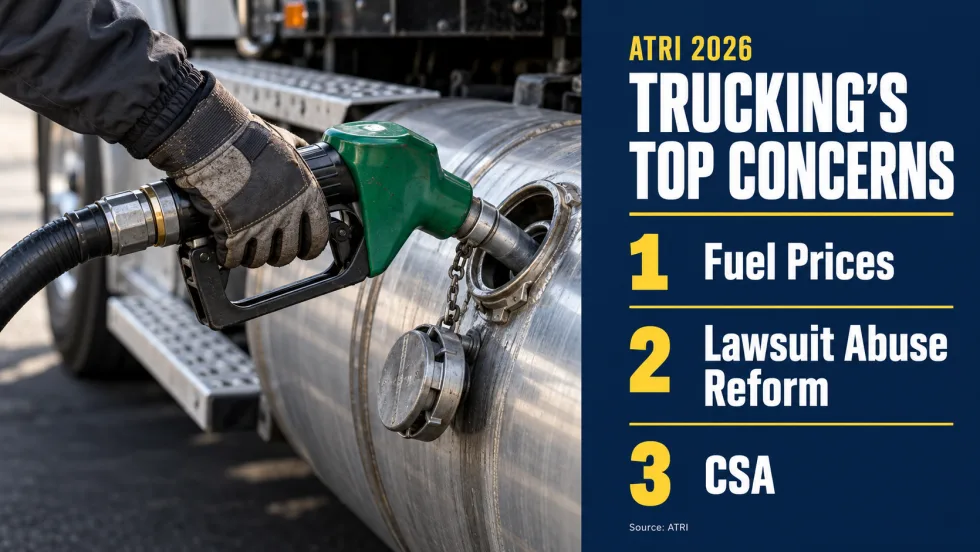
Diesel Prices Hijack Trucking’s Worry List
ATRI’s annual survey finds cautious optimism about freight, but diesel costs, litigation, and insurance continue to squeeze fleets. Drivers have different priorities on several issues.
Read More →
Nomination Deadline Extended for HDT Emerging Leaders
Just a few more days to nominate accomplished trucking fleet professionals under 40 who are making an impact and helping lead the industry forward for the HDT Emerging Leaders award. Deadline extended to October 20!
Read More →
What Will ATA’s New Leader Bring to Trucking's Table?
Incoming President and CEO Mark Colson’s record in Alabama offers clues about his priorities and approach following Chris Spear’s abrupt departure as the head of the American Trucking Associations.
Read More →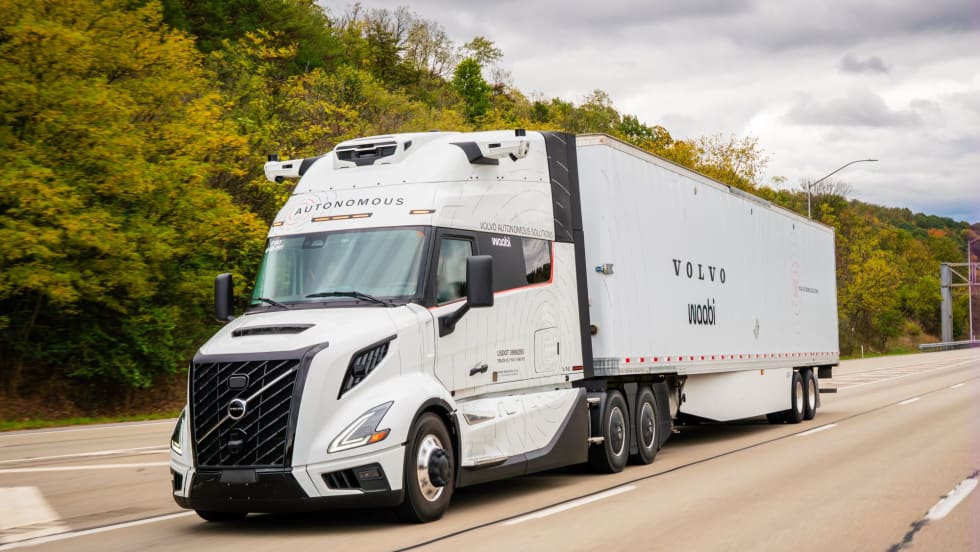
Volvo, Waabi Start Commercial Autonomous Operations in Texas
Volvo VNL Autonomous trucks, powered by the Waabi Driver, are hauling freight directly to third-party facilities for a customer in Texas.
Read More →