



Survey 1: Pandemic Cutting into Fleet Business: Survey
Survey 2: Survey Offers Snapshot of Fleet Effects of COVID-19
 MENU
MENU SEARCH
Truck fleets seem cautiously optimistic about freight and business levels in the coming months as the economy continues to work to recover from COVID-19 shutdowns, according to an HDT survey – and they see some positive long-term takeaways from the pandemic.
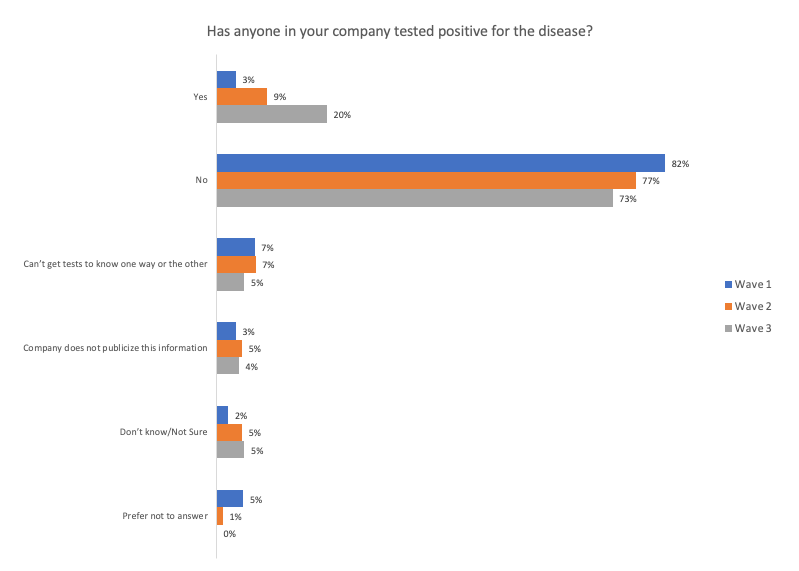
While most fleets had not seen anyone test positive for COVID-19, the percentage who have has been increasing.
Graph: HDT
Truck fleets seem cautiously optimistic about freight and business levels in the coming months as the economy continues to work to recover from COVID-19 shutdowns, according to an HDT survey – and they see some positive long-term takeaways from the pandemic.
In the months since the COVID-19 pandemic seriously started affecting the country in mid-March, trucking fleets have dealt with everything from finding personal protective equipment to plummeting freight levels to working from home.
Heavy Duty Trucking has documented fleet challenges, actions, and attitudes in a special COVID-19 online survey, conducted in three waves: Late March/early April, in May, and in June.
More respondents in each survey reported having someone at their company test positive for the disease, unsurprising as cases across the country rose. In our first survey in late March/early April, only 3% of respondents had someone test positive. That rose to 9% in our second survey in May, and to 20% with our third survey in June.
One fleet that had some employees test positive was System Freight Inc., a 409-truck fleet specializing in contract dedicated fleet transportation in the Northeast. Executive VP and Co-owner James Lamarca, answering some questions as a follow-up to the survey, explained how the company handled that: “When we had positive results, we notified all employees at that location who could have come into contact with the positive employee. We also had them get tested. Sanitized the work area or truck that was used by the positive individual. Anyone who worked closely was kept in self-quarantine for two weeks as well, so as to prevent the potential for spread.”
A serious effect of the pandemic for most fleets has been an unprecedented drop in business – but that has varied greatly, depending on the type of freight hauled. In fact, in the first weeks, fleets that carried in-demand goods such as toilet paper, bottled water, and groceries, were in high demand. You can see that reflected in our survey; in the first wave, 21% of respondents saw their business increase, but only 9% did in the second wave, which asked about business levels in April. In the most recent survey that had risen to 14% of respondents reporting an increase in business in May.
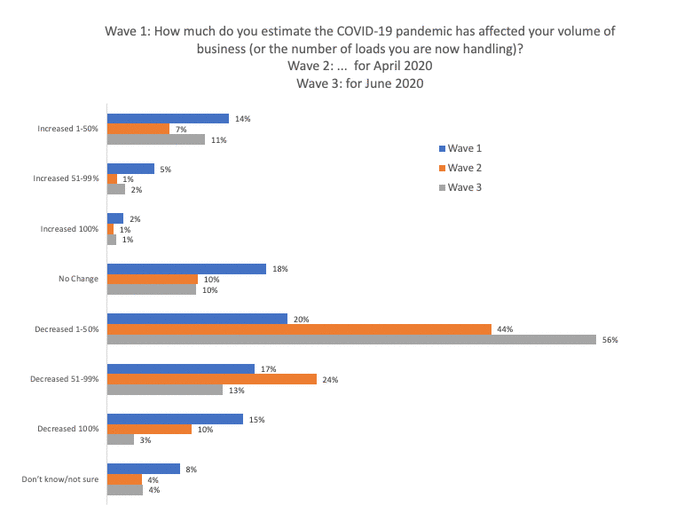
Business was down less in May than it was in April, according to the surveys.
Graph: HDT
Conversely, in our first survey, 53% of respondents reported a drop in business, compared to 78% and 70% in the second and third waves, respectively. But the amount of business lost appeared to decrease over time. In the first wave, 11% reported a decrease in business of up to 25%. The second wave had 22% at that level, the third at 33%. In the first wave, 15% reported a 100% loss of business, which dropped to 10% in the second survey and only 3% in the third.
While 45% of respondents in June said their fleet was being fully utilized, another 45% said up to 49% of the fleet was parked or underutilized.
Because the trucking industry is so diverse, fleets report vastly different experiences in business levels.
At System Freight, Lamarca reported a slowdown of about 8% in April from a normal-to-busy March, and 15% down from normal in the first three weeks of May. The last week of May, business started to increase, “getting us back to normal volume by the end of May for this time of year,” he said in an email. Business “steadily increased every week in June to now what is heavy volume, which is the start of our peak season, which will run from now through the middle of December.”
But business just continues to drop for Matt Leitz, general manager at Safeway Logistics Specialty Flatbed in Indianapolis, who told us business was down 15% in April, 20% in May and 25% in June. One way the company responded to lower volumes was by redeploying local drivers to assist with a pick-and-pack project of COVID PPE supplies for a major client’s national offices.
Some fleets, like System Freight, saw improvements in freight levels in May and June due to re-openings the economy. For others, it was a result of shifting their business operations. For instance, Chris Houck, office manager at J.K. Pickle Trucking, a 26-truck fleet based in Oregon, told HDT that its sawdust and chip business plummeted by 65% in April and May as mills started shutting down. “End of May and June, we started diversifying our company and hauling different materials to allow us to continue operating,” Houck said in an email. “We are continuing to diversify by purchasing different trailers so we can haul other commodities.”

The majority of fleets surveyed believe business will look better in the third quarter.
Graph: HDT
As stay-at-home orders have been relaxed, some fleets are bringing employees back into the office who had been working at home or on furlough. The most common actions fleets said they are taking to help protect these workers are:
Provide employees with disposable wipes and other cleaning materials, 64%
Provide workers with face masks, 53%
Increased cleaning and sanitation regimen, 50%
Create a COVID-19 workplace health and safety plan, 48%
Signs and reminders about social distancing, hygiene, symptoms, cough-and-sneeze etiquette, 40%
Moved workstations or furniture to at least 6 feet apart, 33%
“Procuring PPE was the biggest challenge early on, so we placed orders for supplies early on and continued stocking our supply reserves so as to not run low or out of anything like masks, hand sanitizer, disinfectant spray, cleaners or wipes,” said SFI’s Lamarca. “In our offices, the social distancing issue forced us to adapt to a 'work from home' schedule for many employees (75%) so as to thin out the needed staff at the office.”
In fact, he said, the company will allow a modified “work from home” schedule going forward. “We have learned that we can allow certain functions to be done out of the office, which will allow us to control overhead costs for office space going forward as we grow.”
And SFI is growing, he said. “We actually were very fortunate to pick up some growth opportunity during this pandemic. Instead of stagnant or reduced revenue; we have been blessed with new unexpected opportunity.”
When asked about expectations for the third quarter, 37% of respondents expect improving business activity, and another 15% believe it will improve to levels resembling those pre-COVID. However, 19% said it was too soon to make any predictions. (It's worth noting that this survey closed on June 21; COVID-19 cases have spiked in several states since then, with some states tightening restrictions and enacting mask orders.)
At System Freight, Lamarca said, “We have no reason to believe that freight levels won’t be normal for the remainder of the year in our business, unless a recurrence of the COVID-19 virus creates another shutdown of the economy.”
Looking ahead, when asked “What about the current situation will make your company better in the long run,” 40% said they have developed new ways to serve customers, 38% reported better resiliency and agility, and 36% said work flexibility such as hours and location will remain in the long run. Leaner operations were the takeaway for 29%, and technology investments for 18%.
Leitz said one of the biggest challenges has been working remotely for three months. “Twice daily videoconferences helped,” he said, and longer-term, despite the challenges, “we learned that it’s possible to work remotely, and quite effectively.”

As the pace of change accelerates in trucking, the fleets that adapt best have more than the latest technology. They have cultures that embrace improvement.
Read More →
When it gets harder for a freight broker to prove they are financially sound, the ones who cannot clear that bar get pushed out of the market. And those are exactly the brokers who used to leave motor carriers holding the bag.
Read More →
For trucking, the bridge opening should offer immediate improvements in efficiency and reliability, with new customs facilities, expanded inspection capacity, and direct freeway-to-freeway connections.
Read More →
Aurora's latest autonomous trucks it's rolling out with International feature lower-cost hardware designed for a million miles as the company expands commercial driverless freight operations across the U.S. Sun Belt.
Read More →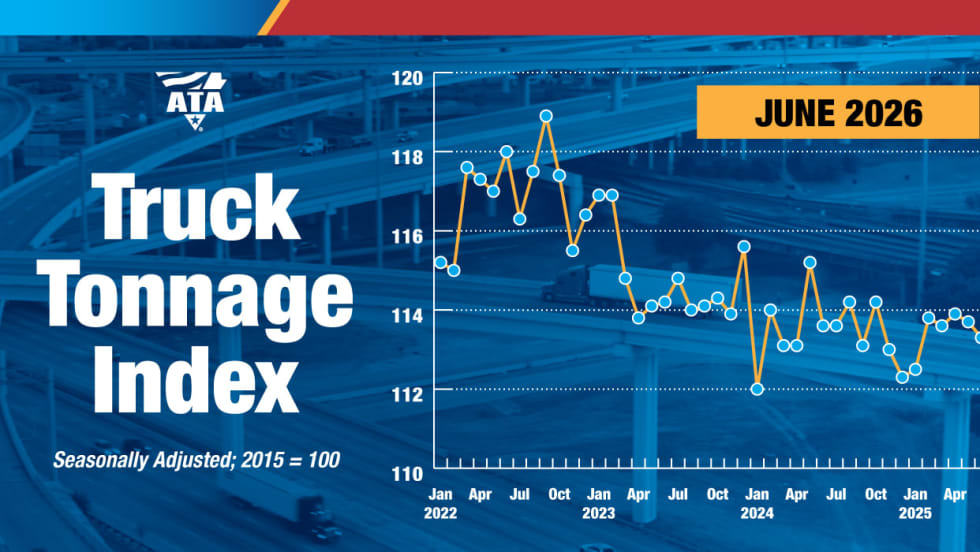
The recovery from the freight recession continues to be driven by reduction in capacity rather than by increased demand.
Read More →
Shadow AI — the use of unauthorized artificial intelligence tools at work — is becoming increasingly common, putting sensitive company data at risk. Learn how trucking fleets can protect sensitive data while embracing AI.
Read More →
The company will bring three business units under the ArcBest brand, eliminate about 2% of positions, and expects the changes to generate $40 million in annual savings.
Read More →
ATRI's annual operational cost report shows carriers trimmed fleets, delayed equipment purchases, and ran older trucks as expenses continued to outpace freight rates.
Read More →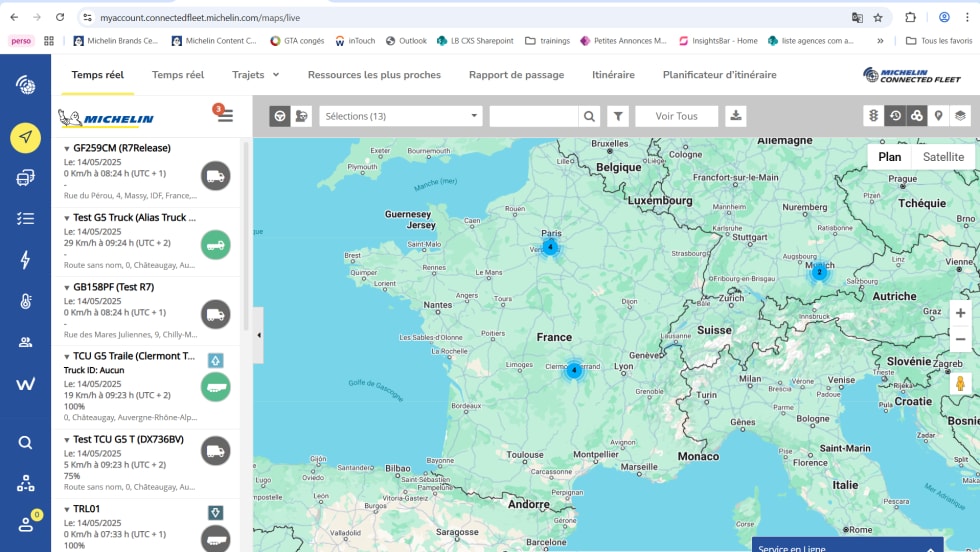
Michelin’s new generative AI tool delivers instant fleet insights, helping managers analyze fuel use, tire maintenance, vehicle status, and operational performance without manually creating reports.
Read More →
New enhancements add AI-powered insights, asset tracking, compliance automation, and configurable privacy controls to Lytx's all-in-one fleet management platform.
Read More →