




Study Estimates Public Health Costs of U.S. Traffic Congestion
New research by the Harvard Center for Risk Analysis at the School of Public Health estimates that the additional fine particulate matter emissions that can be traced back to traffic congestion in the nation's 83 largest urban areas lead to more than 2,200 premature deaths in the U.S. last year
New research by the Harvard Center for Risk Analysis at the School of Public Health estimates that the additional fine particulate matter emissions that can be traced back to traffic congestion in the nation's 83 largest urban areas lead to more than 2,200 premature deaths in the U.S. last year.
The related public health cost, researchers say, was, conservatively, at least $18 billion.
"The Public Health Costs of Traffic Congestion: A Health Risk Assessment" was published in the scientific journal Environmental Health. It is the first to attempt to quantify the public health implications of growing traffic congestion in America.
"Our estimates of the total public health costs of traffic congestion in the U.S. are likely conservative," the study authors write. They point out their research considers "only the impacts in 83 urban areas and only the cost of related mortality and not the costs that could be associated with related morbidity, health care, insurance, accidents, and other factors."
As might be expected, the public health toll of traffic congestion was estimated to be highest in some of the nation's largest urban areas. The Los Angeles/Long Beach/Santa Ana, California, area was first, with an estimated additional 426 premature deaths and $3.3 billion in public health costs. It was followed by: New York City/Newark, New Jersey (+337 premature deaths, +$2.6 billion in costs); Chicago/Northern Indiana (+251 premature deaths, $2 billion costs); and San Francisco/Oakland, California (+124 premature deaths, +$1 billion in costs).
In conducting the study, the Harvard researchers projected the estimated growth of traffic congestion, and resulting emissions, from the baseline year 2000 through 2030 if no additional transportation infrastructure capacity is provided in the 83 urban areas to accommodate projected population growth. They forecast traffic congestion will rise more than 30 percent over the period 2000 to 2030 in 18 urban areas.
While the study was not designed to address traffic congestion-reducing strategies, researchers said solutions would likely vary from community to community. Potential strategies range from better traffic management through congestion pricing, traffic light synchronization and more efficient response to traffic incidents to adding new highway and public transit capacity. More refined models of traffic dynamics specific to each urban area linked to the public health models developed in the study could be used to explore the impacts of proposed strategies.
The research did offer one piece of good news. The number of additional premature deaths and public health costs due to traffic congestion has been declining over the past 10 years and will continue to decline until about 2030, when it would again begin to rise. The reason: an ever emissions cleaner fleet of U.S. motor vehicles as older, more polluting vehicles are replaced with today's low emission vehicles.
For more information:
More Aftermarket

What Three Fleets Are Doing Differently When Buying Truck Parts in 2026
With freight improving but costs still climbing, fleet maintenance executives explain how they're balancing price, quality, and supplier relationships.
Read More →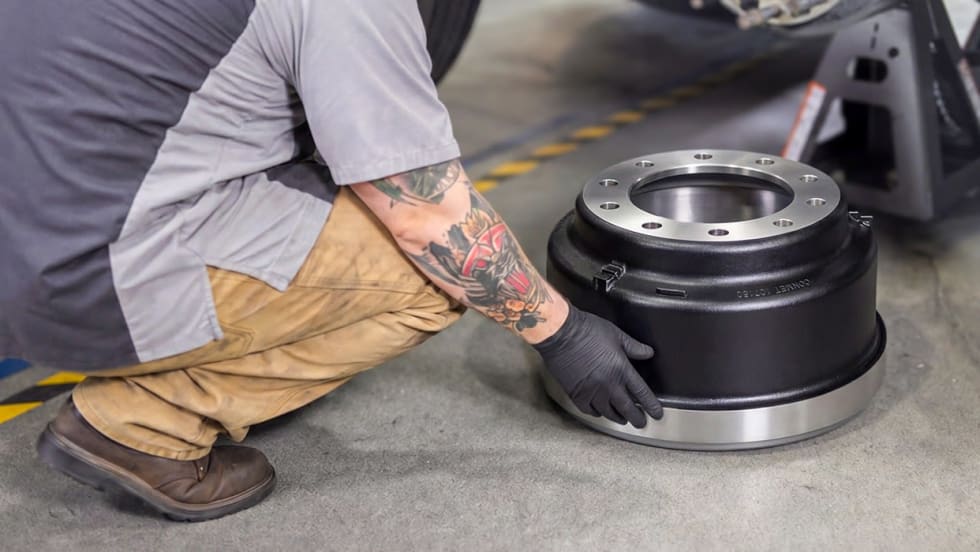
ConMet Expands Aftermarket Brake Drum Lineup With TruCast
A new heavy-duty truck brake drum option in the aftermarket gives customers more flexibility within the ConMet product family.
Read More →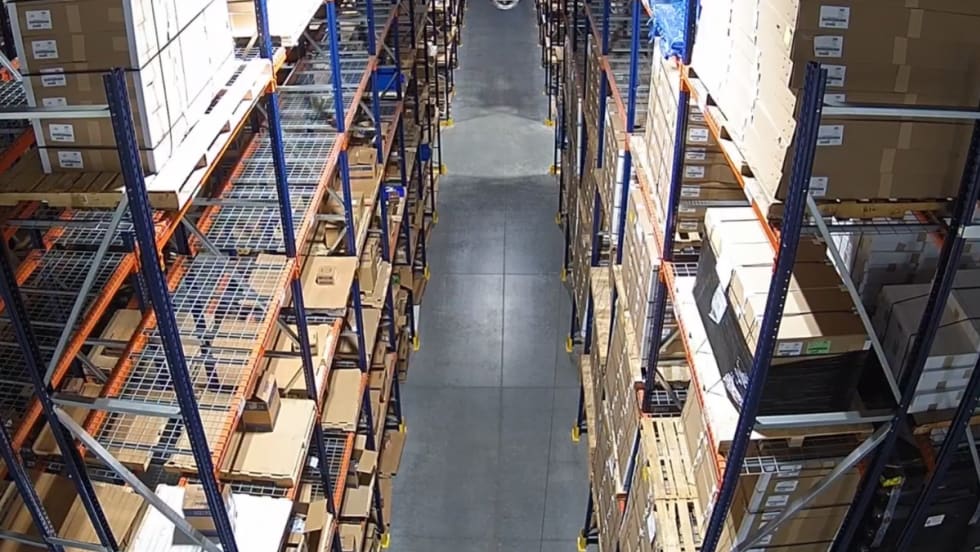
Phillips Opens High-Tech Distribution Center for Faster Parts Delivery
Phillips Industries’ new Cincinnati-area distribution center is now shipping aftermarket trucking parts nationwide, aiming to speed up delivery times for customers.
Read More →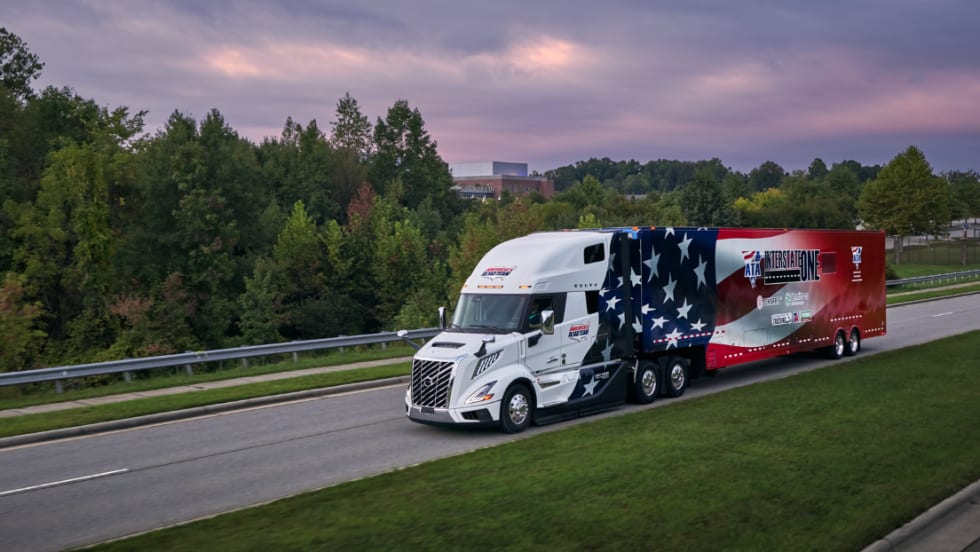
Volvo to Sponsor America’s Road Team for 2025
Volvo Trucks announced that it is extending its exclusive sponsorship of America’s Road Team for 2025.
Read More →
Webb to Start Taking Orders for UltraSet Pre-Adjusted Wheel Hubs
Webb, which recently acquired the Stemco Trifecta pre-adjusted hub program, will soon start taking orders for its replacement pre-assembled hub, the UltraSet.
Read More →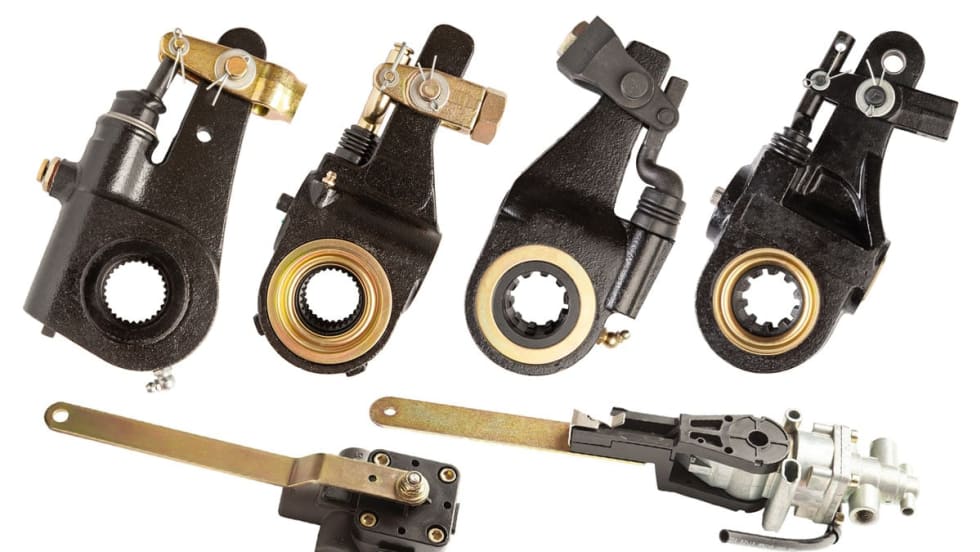
All-Makes Automatic Brake Adjusters, Ride Height Control Valves from Midland
SAF-Holland has added automatic brake adjusters and ride height control valves to its Midland All-Makes Program.
Read More →
ZF Aftermarket Expands [pro]Academy Training
ZF Aftermarket said it is expanding its ZF [pro]Academy training and will be adding 40 new modules this year.
Read More →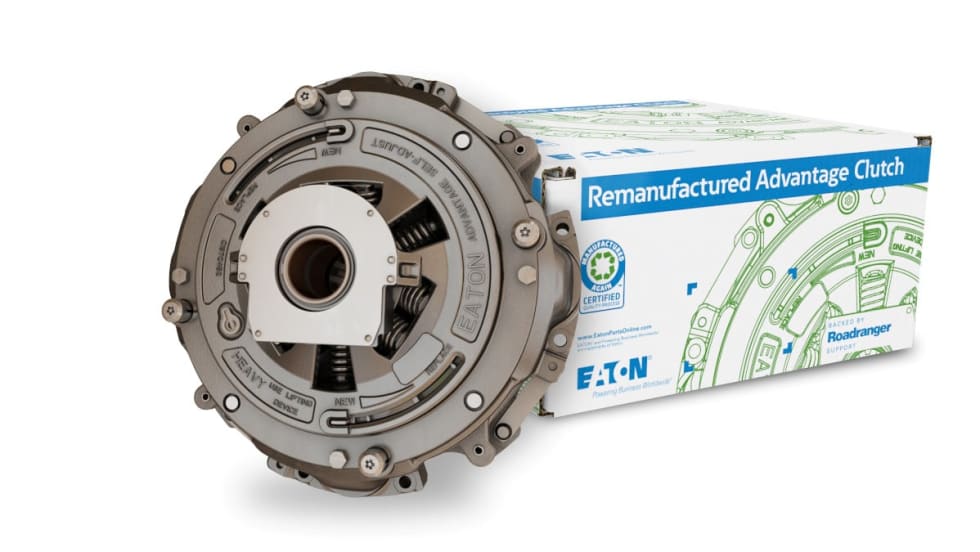
Eaton Adds Remanufactured Advantage Line of Clutches
Eaton has added its Advantage clutches to its remanufactured product line. The clutches feature a unique strap drive intermediate plate designed to allow customers to choose the latest OE specification
Read More →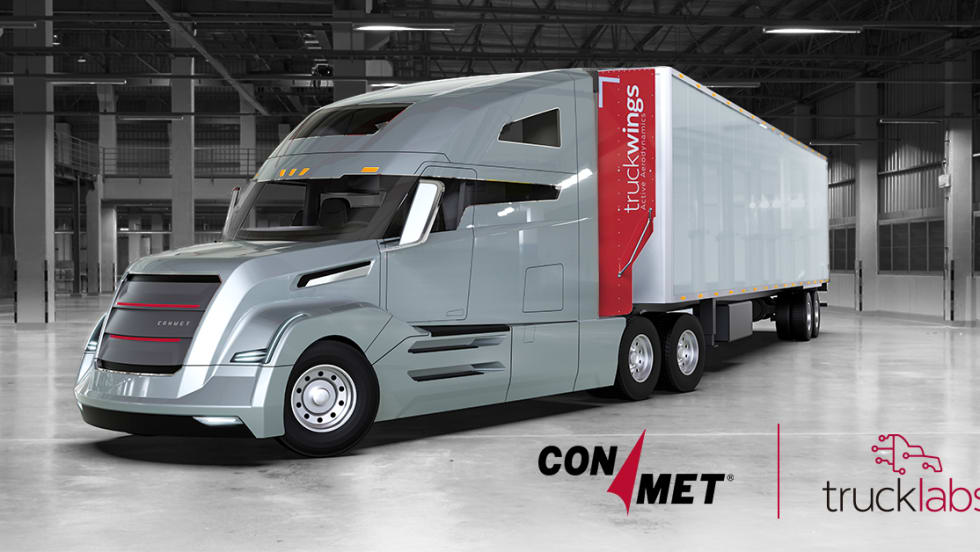
ConMet Acquires TruckLabs, the Creator of TruckWings
Commercial truck and trailer parts provider ConMet acquired TruckLabs, the company that created TruckWings, an aerodynamic device that attaches to truck cabs and deploys to close the gap between truck and trailer. TruckLabs now operates as a subsidiary of ConMet.
Read More →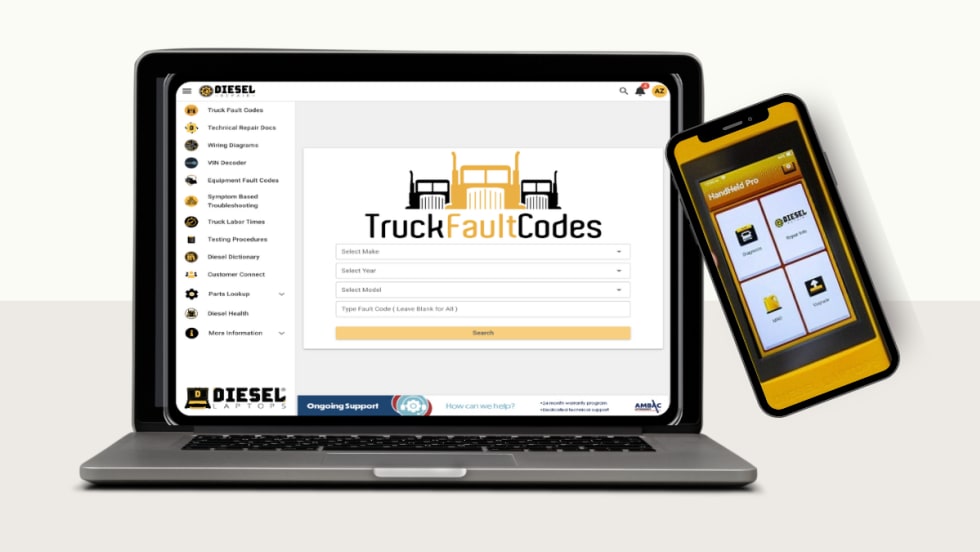
Diesel Laptops Releases Fault-Code-to-Part-Number Tool
Diesel Laptops said its Truck Fault Codes allows users to input a fault code and immediately identify and order the parts needed to complete repair work.
Read More →