




Stemco DataLogger Predicts TrailerTail Fuel Savings
The palm-sized DataLogger plugs into the tractor’s J1939 diagnostic port and accesses engine data, which Stemco engineers use to predict how much fuel the TrailerTail will save that fleet.
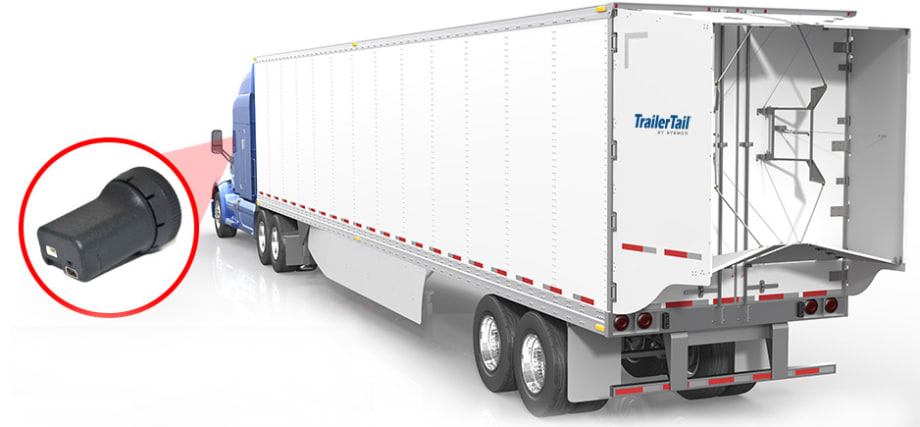
Photo via STEMCO
Photo via STEMCO
Stemco says it has developed a fuel efficiency testing device that shows the results of using its TrailerTail aerodynamic product in under four hours.
The palm-sized DataLogger, developed with IOSiX, LLC., plugs into the tractor’s J1939 diagnostic port and accesses engine data. A Stemco field technician conducts a controlled test with the fleet’s truck, trailer and driver. Engineers then analyze the data to precisely break down how much fuel the TrailerTail will save that specific fleet.
The device’s testing protocol and filtering algorithm were developed specifically to provide a customized data stream, said Bob Montgomery, vice president of the company’s Innovative Tire & Mileage Solutions group.
The data stream isolates the aerodynamic variables while minimizing the disruptive effect that inconsistent wind, temperature and traffic can have when comparing different test runs to measure fuel economy improvements.
“TrailerTail technology has proven in numerous standardized aerodynamic tests that it reduces fuel consumption by over five percent at highway speeds,” he said. “But many fleets really want to know that it will work for them in their specific operation, not just on a test track or in someone else’s fleet. The DataLogger provides a means to prove fuel savings in a matter of hours.”
More than a dozen fleets have tested TrailerTail using the DataLogger with results consistently showing fuel savings of approximately 4.5% or 0.44 mpg, Montgomery said. These results are also consistent with fuel savings reported from fleet-wide TrailerTail deployments.
“Historically, trying to find the ROI on an investment such as this has required an enormous financial expense, as well as an intense study of fuel purchases and mileage data over a long period of time,” said Trevor Kurtz, of Brian Kurtz Trucking.
“In just four hours on a rainy, cold day in December we were able to obtain real fuel savings numbers using the DataLogger test. With over 70 TrailerTails now installed, we are consistently achieving the test results or better.”
Fleets seeking additional information or a DataLogger fuel savings demonstration can contact the Stemco TrailerTail team at 888-283-TAIL (8245) or visit TrailerTail.com.
More Fuel Smarts

How Volvo Updated Its D13 for EPA 2027 [Watch]
Volvo’s updated D13 promises lower emissions without sacrificing performance or fuel economy. Take a closer look at what changed inside the engine in this HDT Spotlight video.
Read More →
Diesel Price Spike Shortens Payback for Natural Gas Trucks, Report Says
Energy Vision estimates fleets could recover the higher purchase price of an RNG-fueled Class 8 tractor in 1.3 to 2.8 years under current fuel-price scenarios.
Read More →
Calstart Becomes Catalyst Mobility, Reflecting Broader Focus
Calstart is now Catalyst Mobility, reflecting the nonprofit’s growing national role in clean transportation, including zero-emission trucks, infrastructure and incentive programs.
Read More →

Record Diesel Prices Squeeze Trucking Fleets
Average U.S. diesel prices have climbed to nearly $6 a gallon, surpassing the 2022 record as tight refinery capacity and Middle East disruptions keep fuel costs elevated.
Read More →
How Fuel Delivery Shapes Engine Performance
Fuel delivery depends on more than what happens at the injector. For fleet, maintenance and technical professionals, looking at the full path from pump to injector can provide useful context for understanding engine performance.
Read More →
East Coast Port Launches $45M Electric Truck Push
The Port Authority of New York and New Jersey announced millions in incentives for zero-emission drayage trucks, yard tractors, and new charging hubs near the port.
Read More →
California Bill Could Shed Light on Electric Truck Prices
Why do battery-electric Class 8 trucks remain so expensive? A California bill headed to Gov. Gavin Newsom would give fleets and state agencies more visibility into what manufacturers charge.
Read More →
Detroit Opens Orders for EPA 2027 Engines
Detroit isn’t starting from scratch to meet EPA 2027 diesel emissions standards. Its Gen 6 DD13 and DD15 engines keep much of today’s platform while updating the fuel and aftertreatment systems.
Read More →
Zero-Emission Truck Corridor Planned for West Coast
California, Oregon, Washington, British Columbia and Baja California are coordinating plans for truck charging and hydrogen fueling from Canada to Mexico.
Read More →
A Closer Look at Kenworth’s Electric T880E Vocational Truck [Video]
Learn more about Kenworth's T880E battery-electric vocational truck at the Paccar Technical Center, including its range, applications, upfitting considerations, and PTO options, in this HDT Spotlight video.
Read More →