




Spot Freight Rates Rise for Vans, Reefers as Demand Increases
Spot market truckload rates and the amount of available freight posted gains for the week ending Nov. 5 as the number of trucks posted slipped, according to DAT Solutions and its network of load boards.

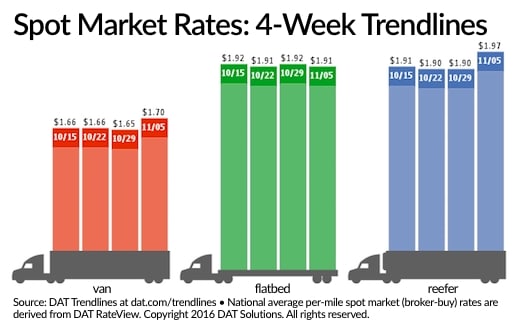

Spot market truckload rates and the amount of available freight posted gains for the week ending Nov. 5 as the number of trucks posts slipped, according to DAT Solutions and its network of load boards.
At $1.70 per mile, the average van rate was up 5 cents week-over-week and was just 1 cent below year-ago levels. For reefers, rates looked more like the June produce peak than the first week in November, jumping 7 cents from the previous week to an average of $1.97 per mile. In contrast, flatbeds held nearly steady at $1.91 per mile, close to where it been the past month.
This happened as the amount of available spot market freight increased 4.8%, truck postings fell 2% and the average cost of diesel fuel declined 1 cent to $2.47 per gallon.
Van and reefer load-to-truck ratios jumped, with vans up 9% to 3 to 1 while reefers added 13% to 6.8 to 1. Flatbeds posted a decline of 2%, hitting 14.1 to 1
Van load posts rose 7% and truck posts dropped 2% last week. Price changes were small on most individual lanes but the overall effect boosted the average linehaul rate to just 1 cent below the average for this time last year.
Several van markets are much stronger than they were a month ago, especially in the West, such as Los Angeles, Dallas, Denver, Seattle, and Stockton, that connect the region to much of the East Coast, according to DAT.
The top van markets by region all showed gains:
Northeast: Buffalo, $1.97 per mile, up 6 cents
West: Los Angeles, $2.07 per mile, up 4 cents
South Central: Dallas, $1.51 per mile, up 1 cent
Midwest: Chicago, $2.05 per mile, up 1 cent
Southeast: Charlotte, N.C., $1.91 per mile, up 2 cents
Meantime, reefer rates haven't been this high since mid-July. With produce and other fresh food moving into position for Thanksgiving, reefer load posts unexpectedly increased 10% last week while truck posts declined 2.5%.
DAT said rates on the top reefer lanes have been hard to predict, with lots of changes from week to week:
Fresno-Denver added 27 cents for an average of $2.27 per mile
Miami-Northern New Jersey added 35 cents for $1.44 per mile
Green Bay-Minneapolis rose 36 cents to $2.24 per mile
Miami-Baltimore was down 29 cents to $1.36 per mile
Los Angeles-Denver dipped 18 cents to $2.38 per mile
Ontario-Phoenix rose 7 cents to $3.10 mile
Flatbed load posts declined 1% last week as truck posts increased less than 1%, causing the load-to-truck ratio to decline. The flatbed load-to-truck ratio has been trending higher since August, which is usually an indication higher rates are on the way, but so far that has yet to happen.
More Fleet Management

Deen Albert: Let Automation Do the Math, People Make the Decisions
HDT Truck Fleet Innovator Deen Albert makes sure people are still at the heart of operations at Grand Island Express, even while adopting artificial intelligence tools. AI-assisted dispatch helped boost revenue 25% with the same number of trucks.
Read More →
Trimble’s New AI Agent Takes Aim at Fleet Back-Office Busywork
Arc Agent works across Trimble TMS products to automate repetitive tasks such as freight orders, maintenance, invoices, fuel costs and more.
Read More →
How HDT’s 2026 Truck Fleet Innovators Are Rethinking Fleet Operations
Meet five trucking leaders who are challenging assumptions, solving operational problems, and putting innovative ideas to work.
Read More →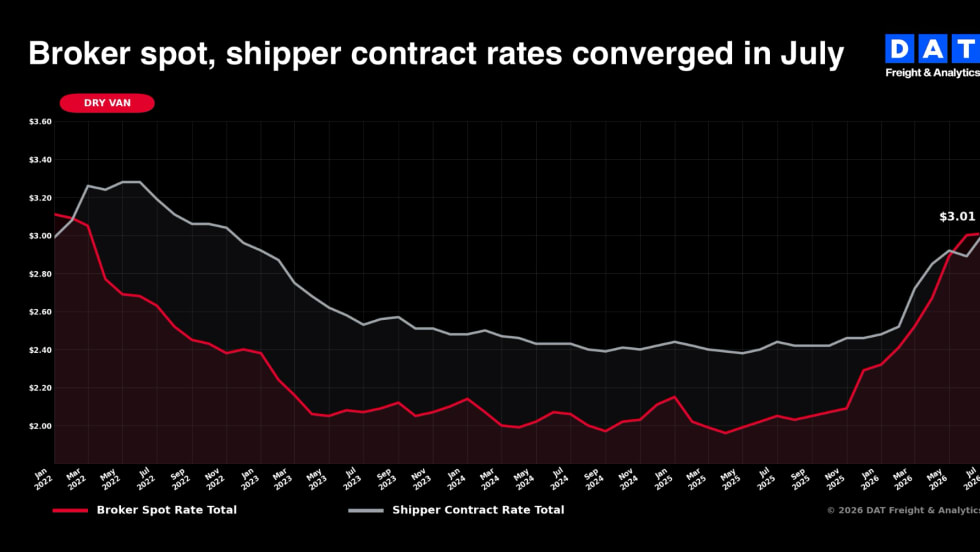
Tight Trucking Capacity Pushes Rates Higher Even as Freight Volumes Fall
“Spot rates moving ahead of contract rates have historically signaled a tightening market, but we haven’t seen a capacity-driven market quite like this one,” said DAT's Dean Croke.
Read More →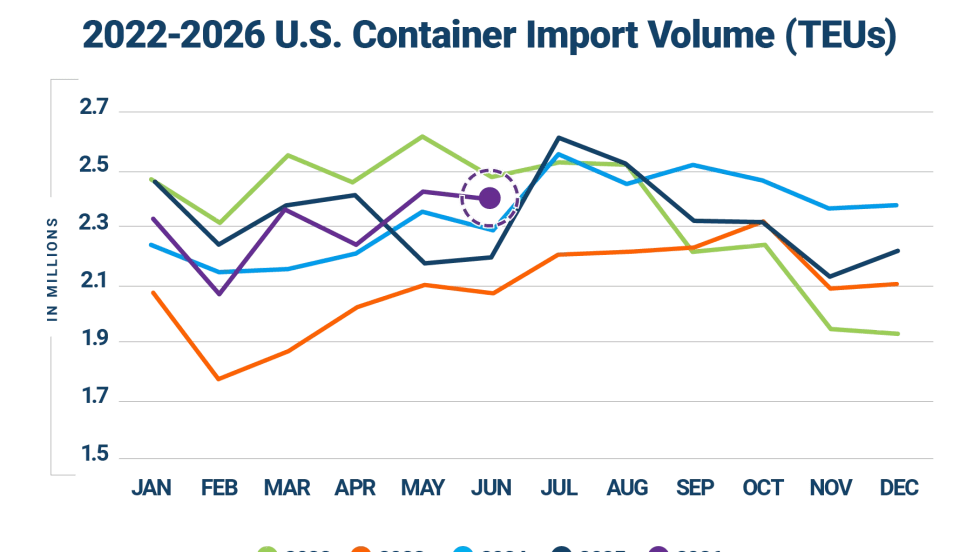
Import Cargo’s Early Peak Season is Winding Down
There was an early start to peak season this year at the nation's gateway ports, as retailers brought in merchandise ahead of tariff changes in late July and responded to other supply chain uncertainties,
Read More →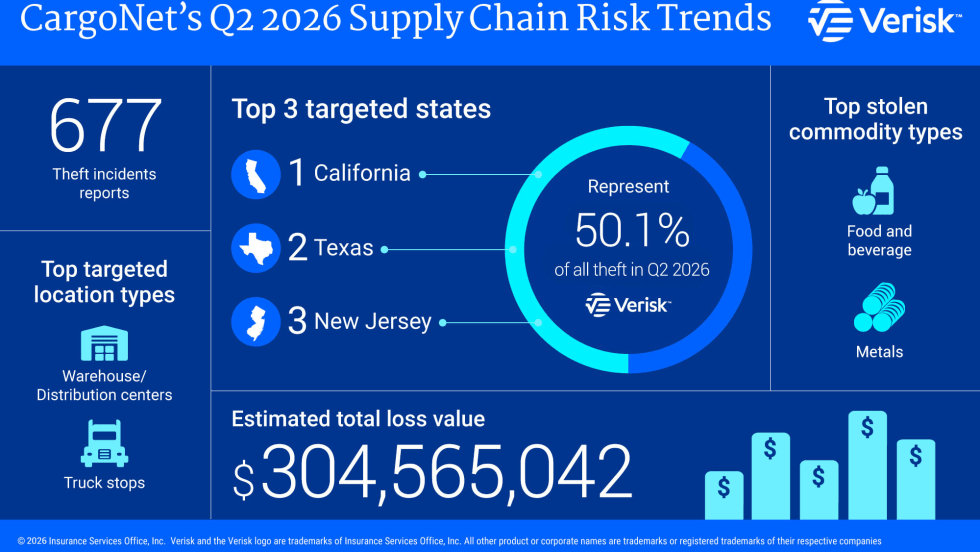
Fewer Cargo Thefts, Bigger Losses: Criminals Target Higher-Value Loads
CargoNet says organized theft rings are stealing fewer shipments but choosing more valuable freight, including metals and technology, resulting in record losses.
Read More →
How Innovative Trucking Leaders Turn Change Into an Advantage
As the pace of change accelerates in trucking, the fleets that adapt best have more than the latest technology. They have cultures that embrace improvement.
Read More →
Freight Broker Bonds Just Got Harder to Get. Here's What That Means for Your Fleet.
When it gets harder for a freight broker to prove they are financially sound, the ones who cannot clear that bar get pushed out of the market. And those are exactly the brokers who used to leave motor carriers holding the bag.
Read More →
Long-Awaited Canadian Border Bridge to Open in Detroit
For trucking, the bridge opening should offer immediate improvements in efficiency and reliability, with new customs facilities, expanded inspection capacity, and direct freeway-to-freeway connections.
Read More →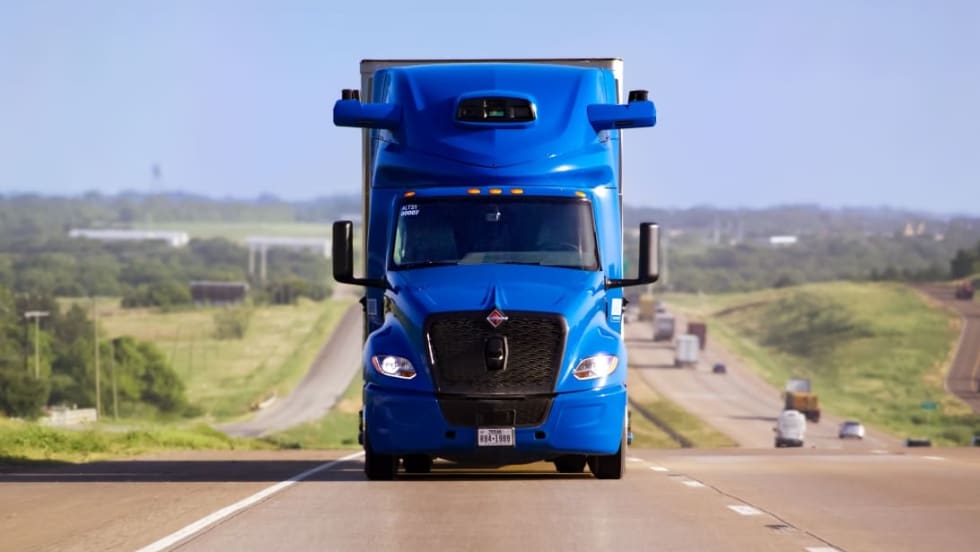
Aurora Rolls Out Next Generation of Driverless Trucks for Commercial Freight
Aurora's latest autonomous trucks it's rolling out with International feature lower-cost hardware designed for a million miles as the company expands commercial driverless freight operations across the U.S. Sun Belt.
Read More →