




Spot Freight Availability Jumps, Capacity Tightens Over Past Week
The number of loads on the spot truckload freight market surged 7.6% during the week ending March 3 as rates appear poised to rebound, according to DAT Solutions, which operates the DAT network of load boards.


The number of loads on the spot truckload freight market surged 7.6% during the week ending March 3 as rates appear poised to rebound, according to DAT Solutions, which operates the DAT network of load boards.
Truck posts declined 2% which helped push load-to-truck ratios higher from the previous week for all three trailer types.
Vans: 7.0 loads per truck, up 5%
Flatbeds: 79.9 loads per truck, up 13%
Reefers: 10.6 loads per truck, up 15%
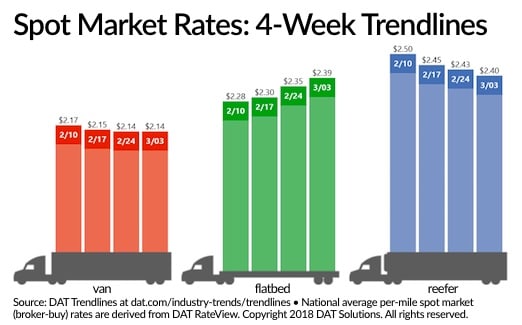
After seven weeks of declines, the national average spot van rate was unchanged at $2.14 per mile but rates rose on 66 of the top 100 van lanes. Van load posts increased 4% while truck posts declined 1%. The current van load-to-truck ratio is about three times higher than it was at this time last year.
The national average reefer rate fell 3 cents to $2.40 per mile but the number of available loads was 11% higher than the previous week and truck posts declined 3%. Reefer load counts are roughly equal to where they were in mid-January.
Flatbed rates rose 4 cents to an average of $2.39 per mile, an increase for the fourth straight week. Capacity continued to tighten and the load-to-truck ratio for flatbeds hit its highest point in years. Extremely strong markets include Atlanta, Birmingham, Memphis, Green Bay, and Cleveland.
According to DAT, capacity may tighten in the weeks ahead with the end of the first quarter of the year coinciding with both Easter weekend and the April 1 end of the phase-in period for the electronic logging device mandate.
All reported rates include fuel surcharges. The national average diesel price during the reporting period dropped another 1.5 cents to $2.99 per gallon.
More Fleet Management

Fleet Costs Shape ACT Expo 2027 Agenda
With diesel prices high and operating expenses under pressure, ACT Expo's 2027 agenda emphasizes fuel efficiency, AI, safety and the return on fleet technology investments.
Read More →
Does Your Trucking Fleet Need a New TMS? [Video]
Cloud technology, AI and new integrations are changing what transportation management systems can do. But does taking advantage of those advances mean replacing your existing TMS?
Read More →
Road Ready Becomes Saegic, Launches New Trailer Telematics Gateway
Clarience Technologies is rolling out new hardware and expanding its plans for connecting trailer telematics, maintenance data, and video.
Read More →
Give Your Trucking Fleet a Cybersecurity Walkaround
Your fleet's cybersecurity policies may look good on paper. These seven checks can help you find out whether they’re working.
Read More →
Kodiak Lines Up Fleets for Driverless Trucking
An agreement for 75 trucks, a new Texas freight lane, and progress on safety validation move Kodiak closer to its planned driverless highway launch.
Read More →
ITS Logistics Settles Religious Harassment Case
The Nevada-based logistics firm agreed to pay more than $396,000 to settle a religious harassment charge involving an employee's Jewish identity.
Read More →
Your Trucks Are Busy. That Doesn’t Mean They’re Winning.
High utilization doesn’t always mean strong margins. Looking beyond the current load can help fleets make better dispatch decisions and get more value from each truck’s time.
Read More →
Why This Trucking Recovery Is Different
Freight demand remains sluggish, but rising costs and tougher enforcement have taken enough capacity out of the market to change the outlook for motor carriers.
Read More →
Platform Science Adds Dispatch and Safety Tools
Four additions to PS Fleet help fleets monitor loads, manage driver coaching, share truck locations and adjust video system settings.
Read More →
PrePass Intelligence Mines Fleet Bypass, Toll and Safety Data
PrePass Intelligence helps fleets measure bypass savings, flag potential toll overcharges, and spot suspicious transactions by combining data from separate systems.
Read More →