




Smith’s Alive, CEO Plans Volume Production
Smith Electric Vehicles is alive and operating, even if it’s not building trucks for a while, according to Bryan Hensel, the specialty builder’s CEO and co-founder, refuting reports that the company had closed.

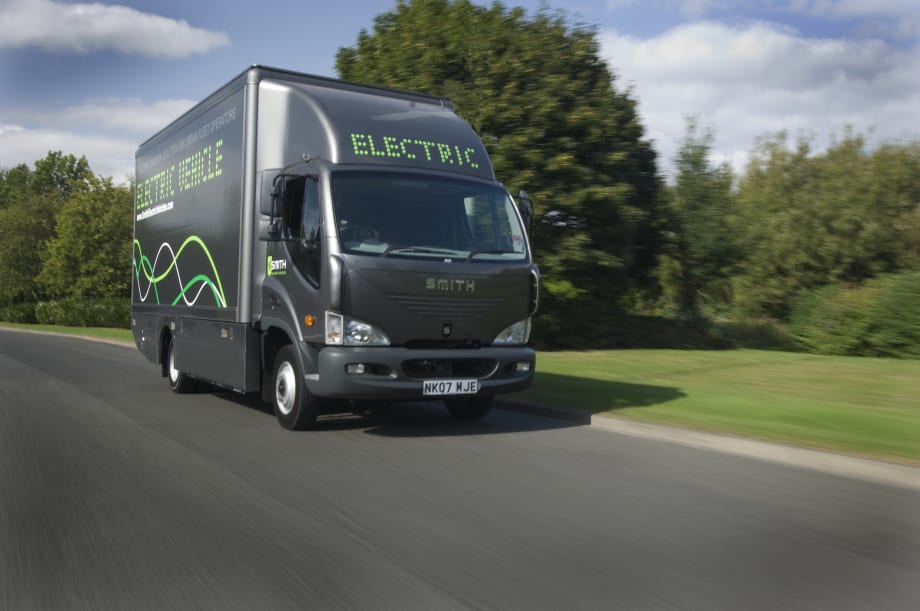
Smith Electric Vehicles is alive and operating, even if it’s not building trucks for a while, according to Bryan Hensel, the specialty builder’s CEO and co-founder, refuting reports that the company had closed.
A “strategic decision” to stop money-losing production around the first of the year resulted in layoffs of assembly line workers, he said, but the plant and office in Kansas City, Mo., remains staffed with about 100 engineering, manufacturing, sales, marketing and support people.
Component manufacturing is being moved from the United Kingdom to Malaysia, where motors, controllers and other parts will be made at less cost and with higher quality, Hensel said. As before, components will be shipped to Kansas City for final assembly when production resumes in mid summer.
New Generation 3 trucks will include 16,000- to 26,000-pound-GVW Newton low-cab-forward and stripped chassis models, he said. Generation 2 trucks produced until the shutdown “were built to validate the technology and get quantities of trucks out there to validate that it was what we and customers needed.”
The Edison model that used a Ford Transit van chassis has been discontinued, even though the new Transit will be built locally, in Kansas City. “We sat down with Ford and decided that it wasn’t going to make sense to electrify the new Transit,” Hansel said.
Outside investors are being added to financial backers who include current stockholders, he said. The amount of backing will be announced in May.
Previous operations incurred heavy loses, but “we feel very confident that we will have a positive return on our investment,” Hansel continued. “The previous supply chain was low volume. Now it’s time to go from hundreds of trucks produced to thousands. We think demand will be higher than ever, but we’re not publicly stating any production forecasts.”
Asked why calls to Smith Electric’s Kansas City office were not picked up last Friday, as we previously reported, Hansel explained that the company was closed for Good Friday and IT problems crippled answering devices. A test call made Tuesday was promptly fielded by a lady who cheerfully said, “Oh, yes. We’re here!”
Related Stories:
More Fuel Smarts

How Volvo Updated Its D13 for EPA 2027 [Watch]
Volvo’s updated D13 promises lower emissions without sacrificing performance or fuel economy. Take a closer look at what changed inside the engine in this HDT Spotlight video.
Read More →
Diesel Price Spike Shortens Payback for Natural Gas Trucks, Report Says
Energy Vision estimates fleets could recover the higher purchase price of an RNG-fueled Class 8 tractor in 1.3 to 2.8 years under current fuel-price scenarios.
Read More →
Calstart Becomes Catalyst Mobility, Reflecting Broader Focus
Calstart is now Catalyst Mobility, reflecting the nonprofit’s growing national role in clean transportation, including zero-emission trucks, infrastructure and incentive programs.
Read More →

Record Diesel Prices Squeeze Trucking Fleets
Average U.S. diesel prices have climbed to nearly $6 a gallon, surpassing the 2022 record as tight refinery capacity and Middle East disruptions keep fuel costs elevated.
Read More →
How Fuel Delivery Shapes Engine Performance
Fuel delivery depends on more than what happens at the injector. For fleet, maintenance and technical professionals, looking at the full path from pump to injector can provide useful context for understanding engine performance.
Read More →
East Coast Port Launches $45M Electric Truck Push
The Port Authority of New York and New Jersey announced millions in incentives for zero-emission drayage trucks, yard tractors, and new charging hubs near the port.
Read More →
California Bill Could Shed Light on Electric Truck Prices
Why do battery-electric Class 8 trucks remain so expensive? A California bill headed to Gov. Gavin Newsom would give fleets and state agencies more visibility into what manufacturers charge.
Read More →
Detroit Opens Orders for EPA 2027 Engines
Detroit isn’t starting from scratch to meet EPA 2027 diesel emissions standards. Its Gen 6 DD13 and DD15 engines keep much of today’s platform while updating the fuel and aftertreatment systems.
Read More →
Zero-Emission Truck Corridor Planned for West Coast
California, Oregon, Washington, British Columbia and Baja California are coordinating plans for truck charging and hydrogen fueling from Canada to Mexico.
Read More →
A Closer Look at Kenworth’s Electric T880E Vocational Truck [Video]
Learn more about Kenworth's T880E battery-electric vocational truck at the Paccar Technical Center, including its range, applications, upfitting considerations, and PTO options, in this HDT Spotlight video.
Read More →