





“This attack on truck driver HOS rules is just the latest in the insatiable attempts of certain trucking interests to advance their economic agenda regardless of the human cost to public safety.”
Safety Groups Oppose Changing HOS in THUD Bill
A broad coalition of interest groups is lobbying Congress “to oppose any special interest anti-truck safety riders including changes to the truck driver hours of service rules..."
April 19, 2016

3 min to read

A broad coalition of interest groups, including highway-safety, law-enforcement and public-health advocates, is lobbying Congress “to oppose any special interest anti-truck safety riders including changes to the truck driver hours of service rules that would jeopardize the safety of truck drivers and the motoring public.”
That’s per an April 18 letter sent by the chief executives of the Advocates for Highway and Auto Safety and the International Brotherhood of Teamsters as well as the leaders of 13 other advocacy groups to the bipartisan leadership of the Senate Appropriations Committee, which has begun crafting the Fiscal Year 2017 Transportation, Housing and Urban Development (THUD) appropriations funding bill.
The coalition of groups wants no HOS-related policy riders — especially regarding the 34-hour restart reforms – to be attached to this latest THUD bill.
Congress had suspended the 34-hour restart requirements pending submission of a study by the Department of Transportation on whether or not the more restrictive provisions provided “a greater net benefit for the operational, safety, health and fatigue impacts.”
The requirements were to be suspended until DOT submits its final report to the House and Senate appropriations committees. However, the bill that forced the restart rollback law is silent on what will happen when the study is done. Presumably, if it shows that one restart version provides a greater net benefit than the other, then the Federal Motor Carrier Safety Administration will adopt that provision as part of the rule.
But suspending the more restrictive rules did not sit well with some.
“The last two appropriations bills included special-interest riders opposed by safety groups, law enforcement, truck drivers, truck crash victims and the Office of Management and Budget that suspended two important safety provisions in the HOS rule,” the coalition states in its letter.
“These political maneuvers evade the regulatory process, disregard the congressional committee of jurisdiction and ignore federal agency and public input,” the writers continue. “This attack on truck driver HOS rules is just the latest in the insatiable attempts of certain trucking interests to advance their economic agenda regardless of the human cost to public safety.”
The coalition argues that the changes made to HOS rules in 2013 “required truck drivers with the most grueling schedules to take two consecutive nights off during the 34-hour restart and to use the 34-hour restart only once a week. These reforms were adopted because truck drivers were using the restart to work significantly more hours and truckers acknowledged that they were driving while fatigued.”
While conceding that “the pre-2004 [HOS] rules were not perfect,” the coalition contends that “they did not promote greater driver fatigue to the same degree as the current rule, which suspends both the two consecutive nights of rest as well as the once-a-week use of the 34-hour restart.”
Just last week, the same committee was admonished by Sen. Barbara Boxer (D-CA),the influential Ranking Member of the Environment and Public Works Committee, to not include any provision in the THUD bill that would prevent states from enacting their own meal and rest break rules for CDL drivers.
Boxer went so far as to call such a measure “a poison pill,” which if included in the THUD bill, “would end any chance of the bill moving swiftly in the Senate.”
More Safety & Compliance

Trump Administration Expands Homeland Security's Role in Trucking Enforcement
The administration's latest trucking crackdown goes beyond roadside inspections, expanding Homeland Security's role in commercial vehicle enforcement and investigations involving CDL training schools.
Read More →
Paccar Recalls 2027 Trucks Built This Summer for Possible Electrical Problem
The nearly 6,000 Kenworth and Peterbilt trucks in the recall could potentially lose engine power, among other things.
Read More →
Brake Safety Week to Focus on Drums and Rotors
Commercial vehicle inspectors will be focusing on brakes during CVSA's Brake Safety Week, August 23-29.
Read More →
Trump Administration Looks to Put More Veterans Behind the Wheel
The Freedom Haulers program pulls together existing and expanded programs at several federal agencies to recruit veterans to drive commercial heavy-duty trucks and cut the red tape for them to get a CDL, training, and employment.
Read More →
$604 Million Verdict Tests Broker Liability After Supreme Court Ruling
C.H. Robinson plans to appeal after a Texas jury found it bore the largest share of responsibility for a fatal 2021 crash, in a case that follows the Supreme Court's Montgomery decision allowing negligent hiring claims against freight brokers.
Read More →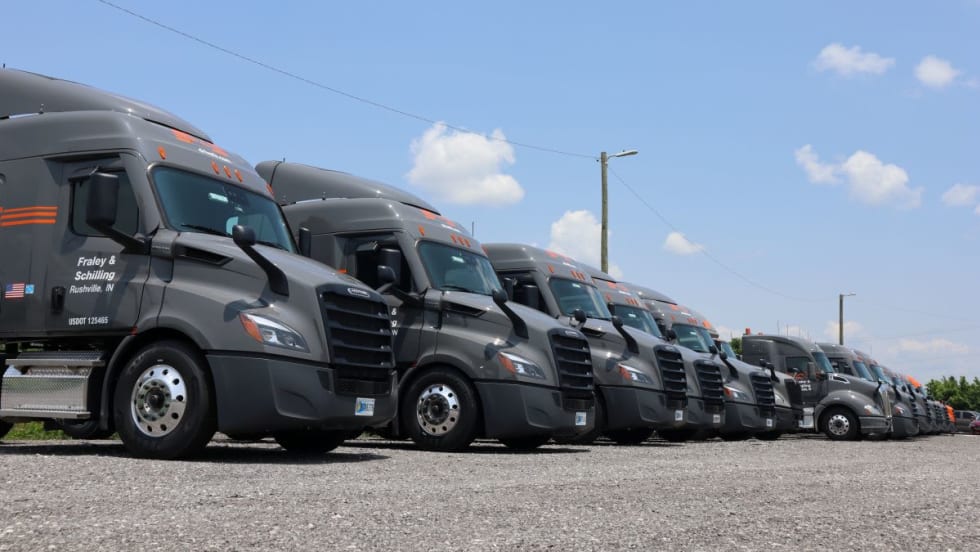
How Fraley & Schilling Improved Logbook Compliance by Over 50%
Fraley & Schilling needed a way to close a compliance workflow gap in its ELD system without adding more work from driver training, reminders, and back-office follow-ups. It found the answer in a custom driver app.
Read More →
Farewell, CDL: Why I'm Giving Up My Commercial Driver's License
After more than 20 years as a CDL holder, HDT Executive Editor Jack Roberts is letting his commercial license expire. Not because he wants to — but because trucking's nuclear verdict crisis has made the risks of public-road test drives too great for editors, manufacturers, and everyone involved.
Read More →
Enhance Fleet Performance with High-Efficiency Auxiliary Power Units
Drive sustainable cost savings while increasing driver comfort during short- and long-haul logistics operations.
Read More →
Wabash Trailers Recalled for Improperly Installed Underride Guards
More than 900 Wabash dry van trailers may not comply with the Federal Motor Vehicle Safety Standard for rear impact guards.
Read More →
Why K&B Trucking Is Embracing AI and Driver Safety Technology
Crunching data and embracing artificial intelligence are key in K&B Trucking's safety efforts, says the company's safety director.
Read More →