




Rule Change Reduces Training Duplication for Drivers Upgrading to Class A CDL
The Federal Motor Carrier Safety Administration is making it easier and less expensive for truck drivers to upgrade their commercial driver’s license from a Class B to Class A through a change to its entry-level driver training regulations.

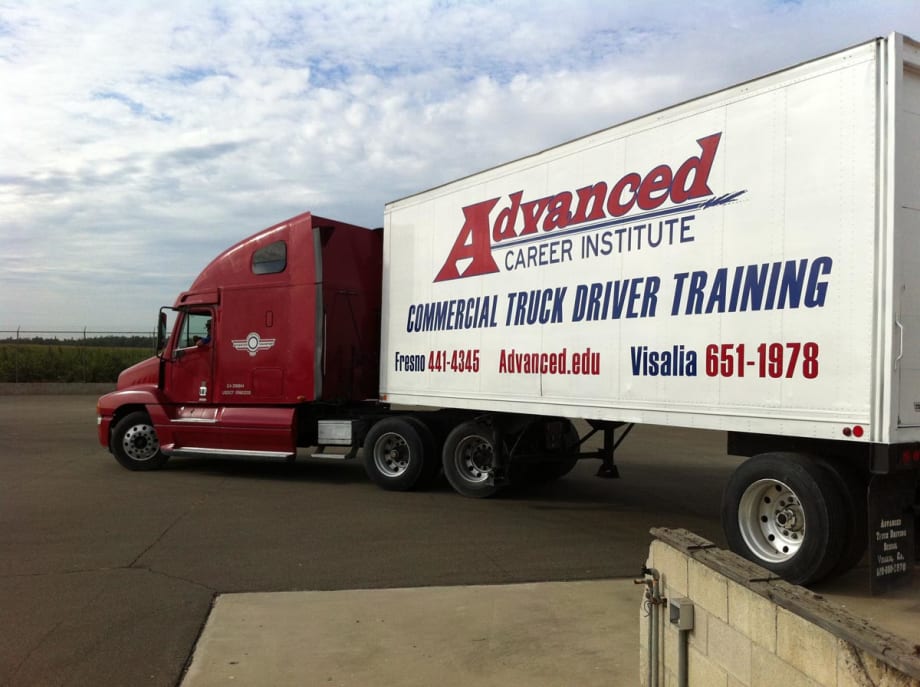
The entry-level rules are just a minimum; states and schools may set more ambitious curricula.
Photo courtesy Advanced Career Institute
The Federal Motor Carrier Safety Administration is making it easier and less expensive for truck drivers to upgrade their commercial driver’s license from a Class B to Class A through a change to its entry-level driver training regulations.
The ELDT regulations published on Dec. 8, 2016, originally required the same level of theory training for drivers upgrading from a Class B CDL to a Class A CDL as it did for those getting their CDL for the first time.
Now, FMCSA said it recognizes that because Class B CDL holders have prior training or experience, they should not be required to receive the same level of theory training as individuals who have never held a CDL, so it’s amending the rule. The compliance date for this final rule is Feb. 7, 2020.
This change will save eligible driver trainees and motor carriers $18 million annually, according to FMCSA. The agency estimates that more than 11,000 driver-trainees will benefit annually and see an average reduction of 27 hours in time spent completing their theory instruction.
The new final rule applies only to Class B CDL holders, and does not change the behind-the-wheel training requirements in the 2016 ELDT rule. All driver-trainees, including those who hold a Class B CDL, must demonstrate proficiency in all elements of the behind-the-wheel curriculum in a Group A vehicle.
The American Trucking Associations supported the proposal, describing in its comments on the notice of proposed rulemaking as “an important improvement to the ELDT regulations that will help keep these experienced drivers in the industry.”
C.R. England’s comment appreciated the agency’s effort “to reduce unnecessary requirements and ‘red tape’ for the benefit of drivers and carriers alike,” although it suggested that drugs/alcohol and trip planning should be retained in the proposed Class A CDL Theory Instruction Upgrade Curriculum “due to the ongoing importance of these two topics.”
The Owner-Operator Independent Drivers Association said while it favored the elimination of these duplicative requirements, it would like to see some of the projected savings used to further entry-level training, specifically behind-the-wheel instruction.
The association has long advocated for entry-level driver training standards, believing that such regulations would do far more to improve safety than other initiatives such as mandatory electronic logging devices.
It and other ELDT advocates were surprised that the rule did not set a minimum requirement for behind-the-wheel training. Under the rule, applicants seeking a CDL have to demonstrate proficiency in knowledge training and behind-the-wheel training on a driving range and on a public road. But there are no required minimum number of hours for the knowledge or behind-the-wheel portions of any of the individual training curricula.
Responding to OOIDA’s comments in the final rule, the FMCSA pointed out that the cost savings would be for drivers and fleets, not to the government, so the agency has no authority to “reallocate” the savings to other aspects of ELDT.
The Commercial Vehicle Training Association, in its comments on the proposal, said, “While we understand the Agency’s attempt to remove redundancies for those with substantive experience driving large, non-articulated Class B commercial vehicles, CVTA believes that removing these subjects is not warranted.”
CVTA pointed out that state licensed programs will dictate how programs are taught. “The reality is that commercial driving schools are more likely to continue to teach a Class A program as filed with their state. Schools are highly unlikely to create a special program for a limited number of people. It is more efficient to subject Class B holders to a full Class A curriculum rather than dedicating resources to developing a new curriculum.”
In the final rule, FMCSA acknowledged that under the ELDT rule, training providers are free to continue or develop ELDT programs that exceed the agency’s requirements.
The training association also pointed out that while FMCSA’s change assumes Class B holders have some experience handling freight, in fact the driving experience for many of these Class B holders is limited to operating passenger vehicles such as motorcoaches and school buses, “therefore their experience handling and documenting cargo in a real-world environment may not exist or is rudimentary at best.”
FMCSA’s response was that Class B drivers who don’t have experience with cargo may still choose to receive theory instruction in handling and documenting cargo (as well as the other seven non-driving units) by selecting the Class A standard curriculum rather than an upgrade curriculum.
A copy of the final amended rule is available at https://s3.amazonaws.com/public-inspection.federalregister.gov/2019-04044.pdf.
Learn more about FMCSA’s Entry-Level Driver Training regulations by visiting https://www.fmcsa.dot.gov/registration/commercial-drivers-license/eldt.
More Drivers

Truck Drivers Need More Than Another Alert
Fleets have more visibility into truck health, safety events, and driver activity than ever. The next challenge is turning all that information into useful guidance for the person who has to decide what to do next.
Read More →
FMCSA Removes 110 Truck Driver Training Schools from Certified ELDT List
Federal regulators also are targeting more than 160 additional training providers and launching a nationwide audit of third-party CDL skills testers as part of a broader crackdown on trucking fraud.
Read More →
Hours of Service Pilot Programs: FMCSA Readies for 2027 Rollout
Two pilot programs could eventually reshape hours-of-service rules, giving truck drivers options to pause their 14-hour clock or use longer split sleeper rest periods.
Read More →
Medical Cards, English Proficiency Reshape Roadcheck Violations
Medical-card violations jumped to the top of the driver out-of-service list during CVSA’s 2026 International Roadcheck, while English-language proficiency violations appeared among the leading violations for the first time.
Read More →
Driver Trust Can Make or Break the Success of Fleet Safety Technology
New Teletrac Navman research suggests that onboarding, transparency about driver data, and positive feedback can play a significant role in how commercial drivers respond to safety and coaching technology.
Read More →
EEOC Sues KLLM Over Alleged Sex Discrimination in Driver Training
KLLM is facing a federal sex-discrimination lawsuit over policies the EEOC alleges put female truck driver trainees at a disadvantage.
Read More →
FMCSA Moves to Codify English Language Requirements for Commercial Drivers
By changing regulations on English-language proficiency requirements for commercial drivers, rather than relying on a guidance memo, the FMCSA said future administrations won't be able to walk back the Trump administration's stricter enforcement with just a memo.
Read More →
Drivers Put Western Star Trucks to the Test at Star Nation Experience
Watch to get an inside look at the Western Star trucks, technology, and community behind the Star Nation Experience 2026!
Read More →
Trump Administration Looks to Put More Veterans Behind the Wheel
The Freedom Haulers program pulls together existing and expanded programs at several federal agencies to recruit veterans to drive commercial heavy-duty trucks and cut the red tape for them to get a CDL, training, and employment.
Read More →
Putting Mack’s Command Steer to the Test
A test drive of Mack’s Command Steer active steering system evaluates how it can make truck driving easier and less tiring.
Read More →