A new data analysis shows the effects on commercial freight movement of New York City's congestion pricing in Manhattan.
Image: HDT Graphic/Geotab
3 min to read
Data analysis shows the New York City Congestion Pricing program has resulted in commercial trucks being able to move through the area more quickly, and there are fewer of them – yet idling has largely stayed the same.
Using data from over 16,000 vehicle trips, Altitude by Geotab has released what the company says is the first comprehensive look at the New York City congestion pricing program’s impact on freight movement in Lower Manhattan.
Ad Loading...
The Geotab analysis revealed significant changes in commercial traffic flow and the types of vehicles driving through the congestion zone.
New York City’s controversial congestion pricing program was rolled out in January, with the aim of reducing gridlock and improving air quality in Lower Manhattan.
Geotab’s Key Findings for Commercial Traffic in the Congestion Pricing Zone
Geotab’s study looked at data from January through May 2024 compared to the same five-month period in 2025 to understand how commercial fleet activity changed after the introduction of congestion pricing.
Ad Loading...
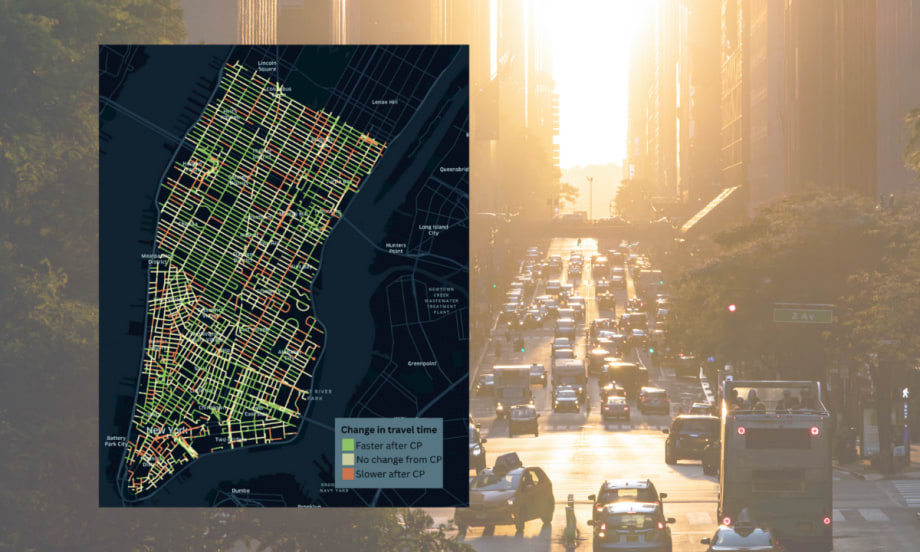
Truck Traffic is Moving Faster: Between 8 a.m. and 6 p.m., 44% of Lower Manhattan roadways saw faster commercial vehicle travel times (40% unchanged).
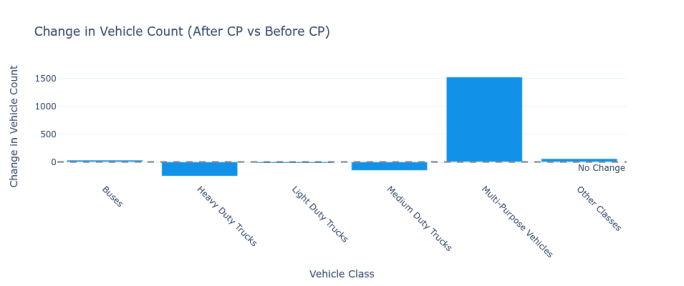
Fewer Large Trucks, More Multi-Purpose Vehicles: The data showed a noticeable decrease in the number of medium- and heavy-duty trucks entering the congestion pricing zone, with a corresponding increase in smaller multi-purpose vehicles, such as vans, SUVs and pickups.
Idling Behavior Largely Unchanged: Despite improved traffic flow and a shift in vehicle types, Geotab’s analysis has not shown a substantial change in how long vehicles spend idling within the zone.
Businesses have been using more smaller, multi-purpose vehicles in New York City's congestion pricing zone.
Source: Altitude by Geotab
About New York City's Congestion Pricing Plan
As Heavy Duty Trucking previously reported, New York's congestion pricing program, officially called the Central Business District Tolling Program, went into effect in January. Heavy-duty trucks now must pay $21.60 each time they enter Manhattan south of 60th Street between 5 a.m. and 9 p.m. on weekdays and between 9 a.m. and 9 p.m. on weekends.
The trucking industry has criticized the program as unfairly targeting trucks.
New York officials have been locked in a battle with the Trump administration, which has tried to cancel the program.
“We’ve also fended off five months of unlawful attempts from the federal government to unwind this successful program and will keep fighting — and winning — in the courts,” Hochul said in the statement. “The cameras are staying on.”
What Other Studies on NYC's Congestion Pricing Found
Most reports of the program's effectiveness so far have primarily focused on passenger vehicles.
For instance, the latest data from TomTom showed a notable decrease in motor vehicle congestion and a drop in travel times. (Although, as Forbes noted, motorists still have average speeds slower than many bicyclists.)
A report released last month by the New York Regional Plan Association found that the congestion pricing program also has reduced congestion outside of the actual congestion pricing zone, in the four boroughs and several adjacent areas in New Jersey, Long Island, and Westchester that surround Manhattan.
How Data Insights Can Help Transportation Planners
“Data insights are crucial for understanding and optimizing the dynamic world of transportation,” said Nate Veeh, AVP, Business Development, Altitude by Geotab, in a news release.
Ad Loading...
Altitude by Geotab provides advanced mobility insights and solutions for public and commercial sectors across North America.
“By leveraging this information, transportation planners and city officials can make informed decisions about transportation options that show results, whether it is to enhance safety, improve efficiency, or facilitate better planning for the movement of people and goods.”
Overnight Truck Parking in NYC
In related news, last month, the New York City Council passed legislation requiring the New York City Department of Transportation to establish overnight truck parking areas in Industrial Business Zones.
The Trucking Association of New York called this “a significant win for the trucking industry and a step toward addressing a significant challenge that our members face in New York City.”
This legislation will build on the New York City Department of Transportation’s Overnight Truck Parking Pilot.
Announced in March, the Overnight Truck Parking Pilot is offering a new metered parking option in select industrial business zones (IBZ) for commercial vehicles, including large tractor-trailers, in an effort to improve parking compliance and minimize overnight truck parking in residential areas.
The pilot will run for one year, encouraging businesses to ensure compliance with parking regulations while providing drivers with safe and convenient truck parking options during legally-mandated rest periods.
For fleet managers and collision repair professionals keeping heavy-duty trucks on the road, getting the color right the first time isn't just about appearance — it's about efficiency, turnaround time, and bottom-line results. Discover how today's digital color tools are transforming the repair process from guesswork to precision.
Carriers whose updates were due on or after June 1 have more time, while FMCSA works to stabilize its new registration system and warns of phishing sites impersonating its new carrier registration system, Motus.
Cargo theft is no longer just the cost of doing business. It's a multi-billion-dollar criminal enterprise exploiting vulnerabilities across your fleet, drivers, and supply chain.
Explore how telematics help refrigerated fleets improve visibility, uptime, efficiency, compliance, and cargo protection across connected cold chain operations.
Escalating U.S.-Canada tariffs could disrupt cross-border freight, reduce truck volumes, raise costs, and create new uncertainty for carriers on both sides of the border.
The American Transportation Research Institute wants to know what's worrying trucking fleet managers, drivers, and other stakeholders in its annual Industry Issues survey.
HDT Truck Fleet Innovator Adam Buttgenbach helped PepsiCo build one of North America’s largest EV fleets by focusing on where electric trucks make operational sense.