




Related: Speed-Limiter Bill Garners Support of Trucking Groups
Proposed Bills Would Update Insurance Minimums and Mandate Automatic Braking on Trucks
Two proposed bills in the House of Representatives aim to reduce harm caused by large truck crashes by updating the minimum insurance requirements for carriers and requiring automatic emergency braking to be standard on large commercial vehicles.

Steven Martinez・Web Editor
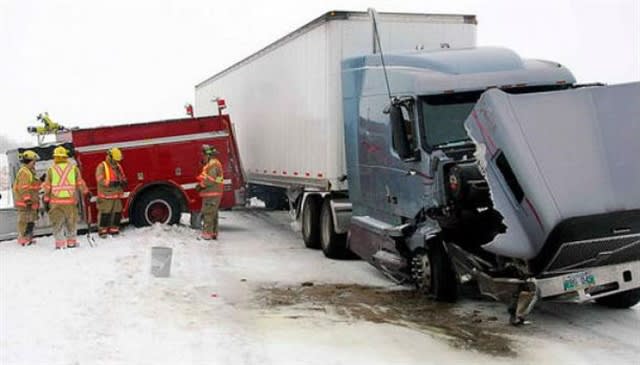
Two proposed bills in the House of Representatives aim to reduce harm caused by large truck crashes by updating the minimum insurance requirements for carriers and requiring automatic emergency braking to be standard on large commercial vehicles.
Photo: FMCSA
4 min to read
*UPDATED to include additional statements from trucking industry groups.
Two proposed bills in the House of Representatives aim to reduce harm caused by large truck crashes by updating the minimum insurance requirements for motor carriers and requiring automatic emergency braking to be standard on large commercial vehicles.
Rep. Jesús García (D-IL), Hank Johnson (D-GA) and Matt Cartwright (D-PA) announced the proposed legislation at a press conference held on July 16, with the Truck Safety Coalition and truck crash victims.
Reps. García and Cartwright introduced the Insurance Act, which would ensure minimum insurance requirements for carriers are periodically adjusted to the inflation rate of medical costs, as determined by the Bureau of Labor Statistics. Minimum insurance requirements for carriers were set in the 1980s and have not been adjusted for inflation since. Proponents of the bill say that current levels of compensation are not adequate to cover current medical care costs.
“Thousands of families are suffering in silence, saddled with crippling medical care costs resulting from catastrophic crashes,” said García, “The inadequacy of the current minimum insurance requirement, left unchanged for 40 years, only further prolongs the suffering and financial strain on families that have already lost so much. The Insurance Act ensures that families are adequately compensated to cope with their losses and prevents taxpayers from footing the bill for negligent trucking businesses and drivers.”
Reps. García and Johnson also introduced the Safe Roads Act, which would require automatic emergency braking technology as standard equipment on large commercial vehicles.
“Tragically, the simple installation of automatic braking systems on all commercial motor vehicles – a $500 safety feature – might have prevented these deaths and countless others across the country,” said Rep. Johnson. “America’s roads and highways should be safe for all drivers. Taking full advantage of technologies that are available and proven to anticipate and prevent crashes will save lives.”
The Truckload Carriers Association told HDT that it is still looking into aspects of both new bills and offered this comment:
"In regard to the Safe Roads act, TCA supports technology that has demonstrated a significant safety benefit that would aid in our industry’s effort to reduce accidents upon our nations roadways," said David Heller, TCA vice president of government affairs. "As for the minimum insurance bill, TCA supports the notion that all motor carriers should be required to have adequate liability coverage at reasonable rates. However we continue to examine these aspects as it relates to this bill in an effort to fully understand the effects that raising the minimum to $4.9 million will have on our membership and the industry as a whole."
Regarding the Insurance Act, the Owner-Operator Independent Drivers Association stated that it strongly opposed the bill, saying that current coverages are sufficient in the majority of cases.
"Raising the minimum will not improve highway safety and will force the safest and most experienced truckers off the road," OOIDA spokesperson Norita Taylor told HDT. "The market dictates the appropriate level of insurance coverage required for motor carriers and more than 99% of cases are covered by the current minimum. There are other, more meaningful ways to make roads safer without eliminating the livelihoods of small-business truckers."
The Trucking Alliance expressed support for an update to insurance requirements, with a spokesperson telling HDT that the trucking industry has "moral and ethical responsibility to keep up with today’s expenses, not what they were 40 years ago."
"Congress set the minimum financial responsibility level for motor carriers in 1980, a year that people earned about $19,500 per year compared to $62,000 today. A car cost $7,600 compared to $38,000 today, and the average price for a typical hospital room was $127 per day compared to $400 per day now. Yet, trucking companies can still operate at 1980 levels of insurance," said Lane Kidd, managing director for The Trucking Alliance. "Congress was clear when it established the financial responsibility for motor carriers, not based on what the industry could afford, but to offset the medical and related expenses of people who are in a large truck crash."
More Safety & Compliance
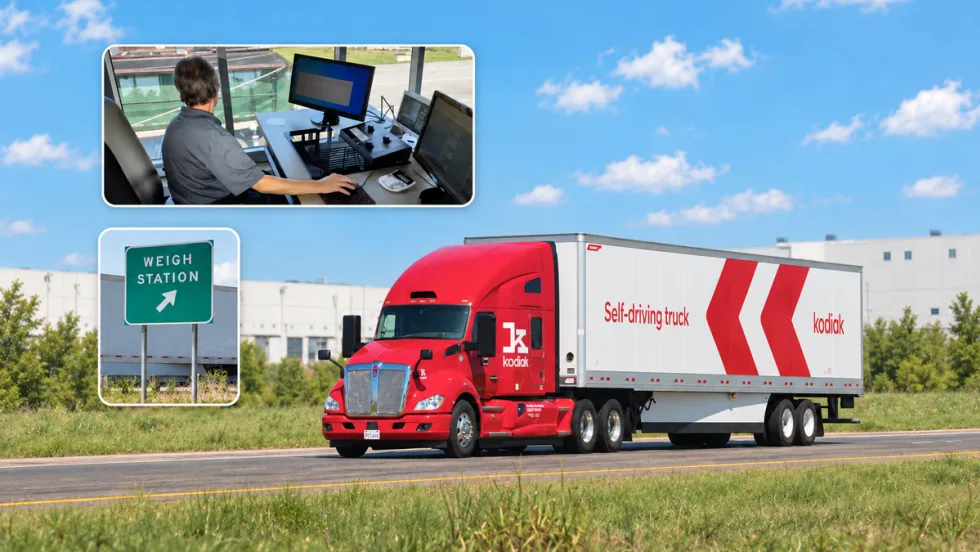
PrePass, Kodiak Connect Driverless Trucks to Roadside Enforcement
The system will allow enforcement agencies to verify Enhanced Inspection information and decide whether Kodiak’s autonomous trucks can bypass roadside screening sites.
Read More →
From One Generation to the Next: How Mentorship Builds Safer Truck Drivers
After three decades in trucking, Harold Perry shares what he's learned about driver safety, mentorship, and helping the next generation build confidence behind the wheel.
Read More →
FMCSA Pauses Biennial-Update Enforcement Amid Motus Transition
Carriers whose updates were due on or after June 1 have more time, while FMCSA works to stabilize its new registration system and warns of phishing sites impersonating its new carrier registration system, Motus.
Read More →
ZF Expands Commercial Vehicle Push in North America
ZF is expanding its North American commercial-vehicle presence with new transmission applications, electrification, trailer technology and autonomous-driving systems.
Read More →
Truck Drivers Need More Than Another Alert
Fleets have more visibility into truck health, safety events, and driver activity than ever. The next challenge is turning all that information into useful guidance for the person who has to decide what to do next.
Read More →
Tesla Wants a Self-Driving Semi. Are Cameras Enough?
Could Tesla’s camera-only autonomous driving technology work on an 80,000-pound Semi? In this commentary, HDT's Deborah Lockridge takes a look at Tesla, Cybercab, and how autonomous trucks see the road.
Read More →
What DOT’s Automated Vehicle Strategy Means for Trucking
The U.S. Department of Transportation issued a new automated-vehicle strategy that outlines plans for driverless-truck regulations, cross-state freight corridors, and federal safety standards.
Read More →
NYC Expands Speed, Pedestrian Safety Tech Across Fleet
New York City is expanding intelligent speed assistance and pedestrian-alert systems across its municipal fleet, moving the technologies from pilot programs into vehicle procurement and retrofit requirements.
Read More →
FMCSA Removes 110 Truck Driver Training Schools from Certified ELDT List
Federal regulators also are targeting more than 160 additional training providers and launching a nationwide audit of third-party CDL skills testers as part of a broader crackdown on trucking fraud.
Read More →
Beyond DOT Compliance: What Makes a Trucking Fleet Truly Safe?
A trucking fleet can follow every rule and still make unsafe decisions. The real test comes when safety conflicts with freight, productivity, or cost.
Read More →