




Propane Supplier Readies Dual-Fuel System for Diesels
Blossman Services is waiting on final governmental approval for a “blended fuel” system that injects varying amounts of propane autogas to replace diesel fuel in heavy duty truck engines.

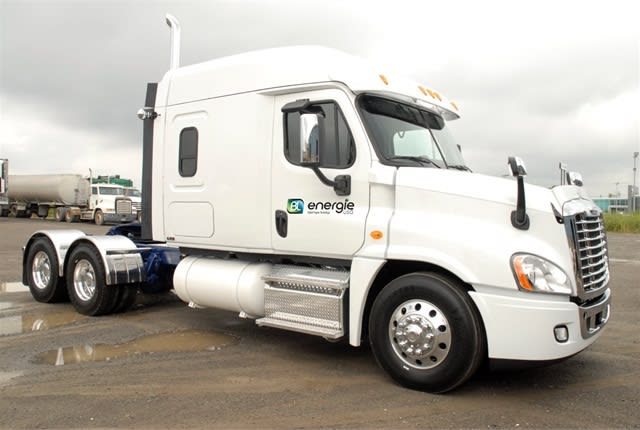
A multi-state propane supplier is poised to introduce a dual-fuel system for Class 8 diesels that promises significant savings with a relatively modest investment in equipment and a payback in under two years.
Blossman Services, North Carolina, is waiting on final governmental approval for a “blended fuel” system that injects varying amounts of propane autogas to replace diesel fuel in heavy duty truck engines. The system has been certified by the federal Environmental Protection Agency for a 14-liter Detroit Diesel Series 60, said Jessie Johnson, vice president of marketing.
The engine has been running for six months in a road tractor hauling auto parts between Pennsylvania and upstate New York, he said. In Canada there already are 150 to 200 trucks running with the system because EPA certification is not needed there, Johnson said.
Next to be certified is Volvo’s D13, which several interested fleets are running, he said. Mack’s MP8 version of the 12.8-liter diesel is also likely to be certified.
The system is certified for retrofitting onto existing diesels with at least 185,000 miles, which EPA calls intermediate useful life under its maintenance requirements, said Brent Kiomall, Blossman’s applications engineer. All emissions equipment must be retained, but later testing might show that some could be modified or removed.
Certification for new engines might follow with cooperation from truck and engine builders, Johnson said. Blossman expects to begin selling the first retrofit systems in October.
The system is from Prins, a Dutch company, obtained through BL Energie of Canada, Blossman’s partner in this venture, Johnson said.
Blossman Services is a subsidiary of Blossman Gas, with corporate headquarters in Ocean Springs, Miss., which sells propane and gas accessories in five southern and mid-Atlantic states. It has its own fleet of service and delivery trucks, some running on propane, others on diesel, and some on other makers’ propane fumigation systems.
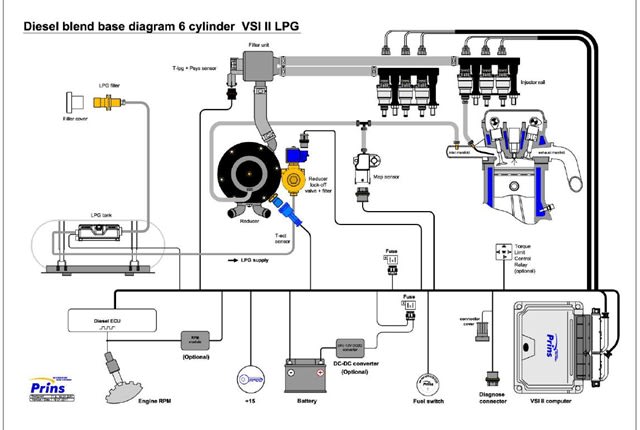
A Blossman-BL Energie blended-fuel system injects no propane at idle or full load to protect the diesel from overheating, Kionall said. In other conditions the system displaces up to 40% of the diesel fuel, depending on speed and load as read from existing engine sensors. The engine reverts to all diesel fuel if propane runs out or its controls get certain critical fault codes.
Electronic controls meter propane into the intake manifold, unlike fumigation systems that introduce propane at the turbocharger in addition to diesel, and can achieve only 20 to 25% use.
Cost for a Blossman-BL Energie system is “in the $15,000 range,” about half the cost of a natural gas dual-fuel conversion, Johnson said, “because our system is based on spark ignition technology and uses some of the same parts. And the tanks are significantly less expensive. Our tanks typically run $1,000 to $1,200 apiece vs. $10,000 for a natural gas tank.”
A truck whose diesel tank holds 100 usable gallons would carry 30 usable gallons of propane, he said. Propane is measured in gasoline-equivalent gallons.
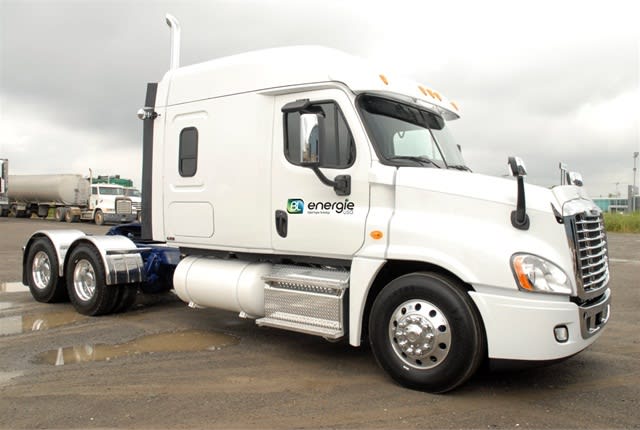
Propane is stored in a saddle tank at 150 to 200 psi, and the system’s working pressure is 312 psi, the national standard for on-road autogas systems, he explained. Compressed natural gas stores at 3,600 psi liquefied NG is kept at super-cold temperatures, which is why those tanks are so expensive.
“We’re aiming for terminal-to-terminal operations, where we could set up a fueling station for the fleet,” Johnson said. A propane autogas station with a tank, pump-dispenser, and electronic metering and data recording would cost about $50,000, but less for a manual pump. That’s a small fraction of the cost of a compressed or liquefied NG station.
“We’re shooting for a system that’s reasonably priced with a reasonable payback using an American product – 98% of propane is produced in America,” Johnson said. “But there are operations where natural gas makes sense, such as for companies with landfills where they’re extracting methane gas. That’s free product.”
Propane autogas prices vary, but usually are comparable to those for compressed natural gas, or half to one-third less than for diesel fuel, according to other sources. Payback for a Blossman-BL Energie propane conversion would be 12 to 14 months for a tractor running 120,000 to 140,000 miles a year, Johnson estimated, and of course longer for lower-mileage operations.
“We expect a certificate of conformity from the EPA for the Detroit engine in the next couple of weeks,” he said, “then we’re ready to go to market.”
More Equipment

Electric Yard Tractors Move Beyond Pilots
Operating-cost savings have overtaken sustainability goals as the leading reason surveyed fleets are adopting battery-electric terminal tractors, according to new NACFE research.
Read More →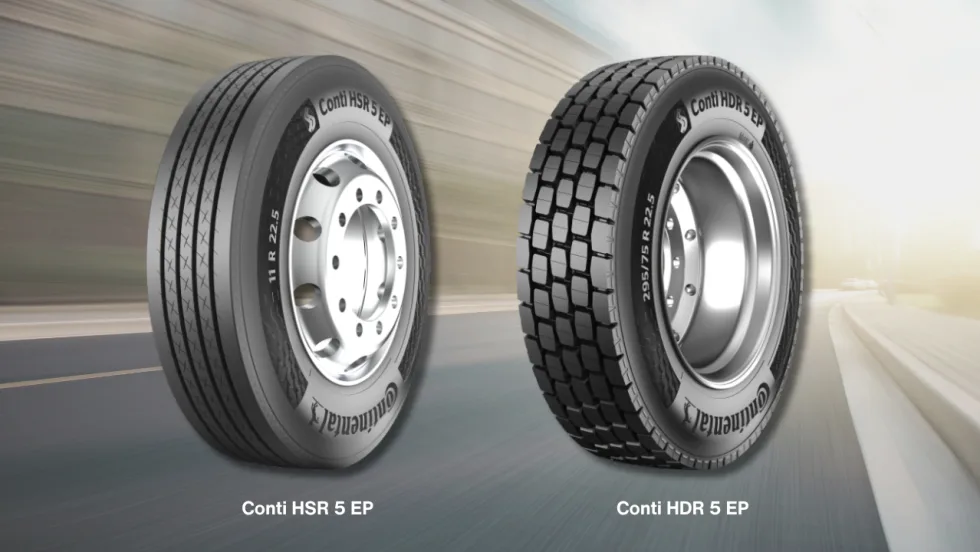
Continental Introduces New Regional Truck Tires
Continental says its new Generation 5 steer and drive tires for regional operations offer longer tread life, with estimated mileage gains of 22% and 19%, respectively.
Read More →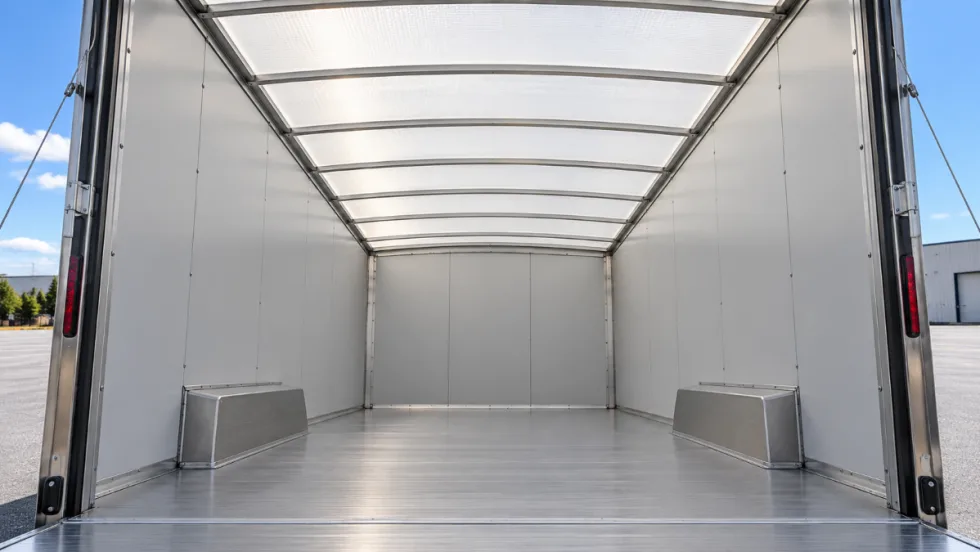
Tekmodo Introduces CargoBright Brand for Translucent Trailer Roofs
CargoBright is designed to diffuse daylight across the cargo area while performing as a working vehicle roof.
Read More →
Fleet Economics Shape Electric Truck Outlook
ACT Research expects costs, charging infrastructure, and technology improvements to drive zero-emission commercial vehicle adoption as federal regulations and incentives retreat.
Read More →
Kodiak Targets Dallas–Houston for Driverless Trucks
The company says its autonomous trucks are completing the I-45 run without a safety observer taking control. It plans to remove the observer by the end of 2026.
Read More →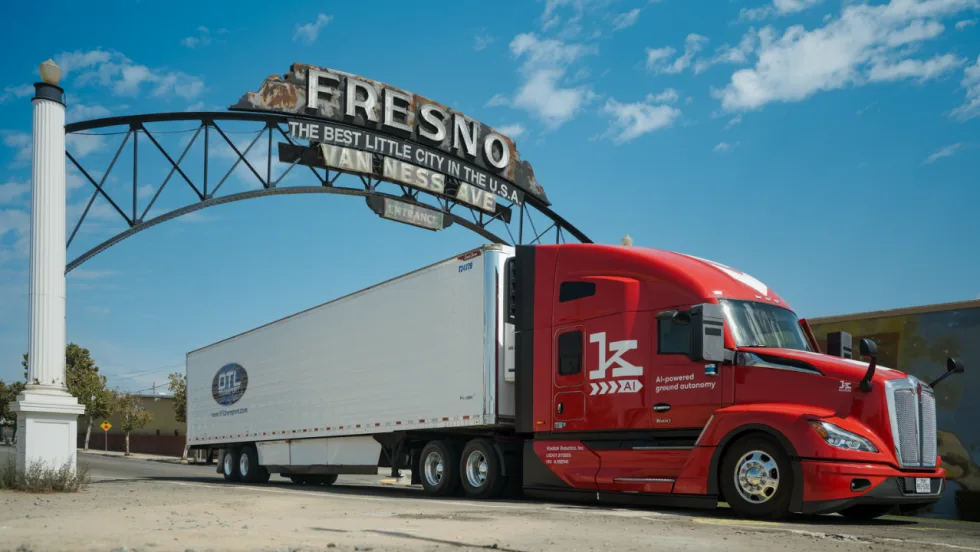
Kodiak Hauls Produce in California Autonomous Truck Pilot
Kodiak AI and DTL Transport have begun hauling produce between Fresno and Los Angeles under California’s new rules for testing heavy-duty autonomous trucks. A safety driver remains behind the wheel.
Read More →
Used-Truck Remarketing Math Is Changing
Used-truck value is no longer just a concern at trade-in. Decisions made throughout a truck’s first life can influence what it’s worth years later.
Read More →
How Volvo Updated Its D13 for EPA 2027 [Watch]
Volvo’s updated D13 promises lower emissions without sacrificing performance or fuel economy. Take a closer look at what changed inside the engine in this HDT Spotlight video.
Read More →
Michelin Tire Improves Efficiency and Durability for Regional Fleets
The Michelin X Multi Energy D2 is a regional haul drive tire engineered to help fleets improve fuel efficiency, durability and traction in demanding stop-and-go operations.
Read More →
ZF Expands Commercial Vehicle Push in North America
ZF is expanding its North American commercial-vehicle presence with new transmission applications, electrification, trailer technology and autonomous-driving systems.
Read More →