




Project 61 Acquisition Brings Tech to Truck Driver Health
Project 61, a nonprofit devoted to truck driver health, has acquired Offshift, a digital health platform built for truck drivers.

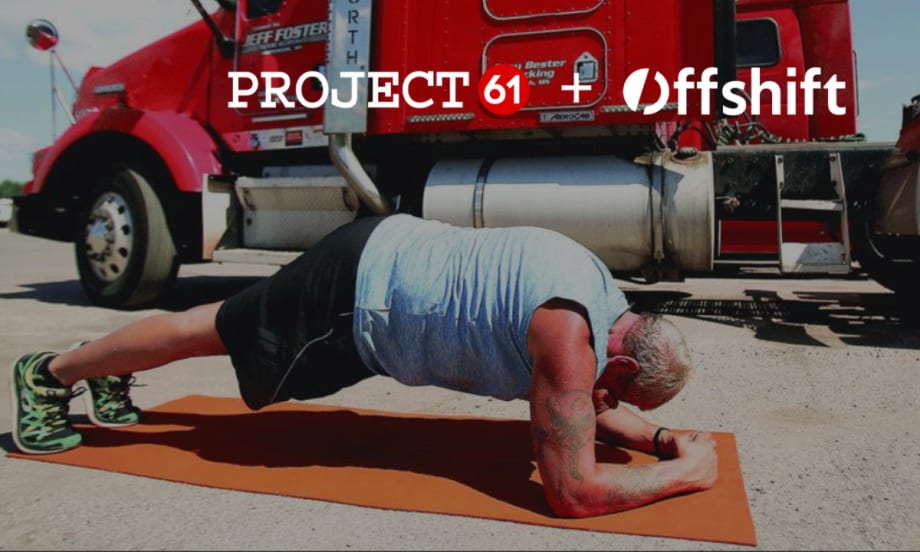
Whether it’s a five-minute workout, healthier food options, or tracking sleep with a wearable, the platform’s features are designed for the realities of life on the road.
Image: HDT Graphic/Project 61 image
Project 61, a nonprofit devoted to truck driver health, has acquired Offshift, a digital health platform built for truck drivers.
Truck drivers have the highest rates of obesity and diabetes of any occupation in the U.S., according to Project 61, and it’s only getting worse. Project 61 is spearheading a movement to reverse that trend.
Offshift’s technology now powers the mobile platform delivering Project 61’s mission of putting free, practical tools and a driver-led community into the hands of truck drivers.
The platform helps drivers build healthier habits around nutrition, movement, and sleep, three critical areas directly tied to longevity, energy, and safety.
Project 61 got its name from the statistic that truck drivers are dying at an average age of 61, according to its website.
Helping Truck Drivers Live Healthier Lives
“If we’re going to address this industry-wide health crisis at scale, technology has to lead the way,” said Jeremy Reymer, founder of Project 61, in a news release.
"With the acquisition of Offshift, we're turning awareness into action through a proven solution that empowers drivers to take daily steps toward a longer, healthier life.”
Whether it’s a five-minute workout from within their cab, healthier options at truck stops, or tracking sleep with a wearable, the platform’s features are designed for the realities of life on the road.
“Offshift was born out of frustration,” said Mark Manera, founder of Offshift, in a news release.
His LinkedIn profile explains that as a physical therapist working with industrial athletes, he saw firsthand how the lifestyle of trucking leads to chronic disease, disability, and burnout.
“We built Offshift to change that," Manera said in the release.
“Now, joining forces with Project 61 lets us turn that vision into reality for the entire trucking industry. Together, we’re not just raising awareness about this health crisis; we’re putting a proven solution into the hands of every driver in North America at no cost.”

Mark Manera and Jeremy Reymer share a passion for improving truck driver health.
Image: HDT Graphic/Project 61 image
Manera will serve as president and chief health officer of Project 61, working with founder and CEO Jeremy Reymer.
Industry-wide health challenges will be a cornerstone of the initiative, designed to foster community between drivers, companies, and families around shared health goals. The first challenge will be launched on October 1.
Investing in Truck Driver Health
The two companies believe that investing in driver health is one of the smartest ways to reduce risk in trucking.
When drivers are unhealthy, risk goes up, they explain in a release, and so do healthcare costs, workers' comp claims, crash rates, and disability payouts.
When drivers are healthier, they’re safer, more alert, and more engaged, according to the news release. Fleets see stronger safety scores, lower turnover, and reduced exposure across the board.
Trucking and insurance companies can offer this program to their drivers and also become corporate partners. Any industry stakeholder can become a corporate partner or individual donor.
More Drivers

Truck Drivers Need More Than Another Alert
Fleets have more visibility into truck health, safety events, and driver activity than ever. The next challenge is turning all that information into useful guidance for the person who has to decide what to do next.
Read More →
FMCSA Removes 110 Truck Driver Training Schools from Certified ELDT List
Federal regulators also are targeting more than 160 additional training providers and launching a nationwide audit of third-party CDL skills testers as part of a broader crackdown on trucking fraud.
Read More →
Hours of Service Pilot Programs: FMCSA Readies for 2027 Rollout
Two pilot programs could eventually reshape hours-of-service rules, giving truck drivers options to pause their 14-hour clock or use longer split sleeper rest periods.
Read More →
Medical Cards, English Proficiency Reshape Roadcheck Violations
Medical-card violations jumped to the top of the driver out-of-service list during CVSA’s 2026 International Roadcheck, while English-language proficiency violations appeared among the leading violations for the first time.
Read More →
Driver Trust Can Make or Break the Success of Fleet Safety Technology
New Teletrac Navman research suggests that onboarding, transparency about driver data, and positive feedback can play a significant role in how commercial drivers respond to safety and coaching technology.
Read More →
EEOC Sues KLLM Over Alleged Sex Discrimination in Driver Training
KLLM is facing a federal sex-discrimination lawsuit over policies the EEOC alleges put female truck driver trainees at a disadvantage.
Read More →
FMCSA Moves to Codify English Language Requirements for Commercial Drivers
By changing regulations on English-language proficiency requirements for commercial drivers, rather than relying on a guidance memo, the FMCSA said future administrations won't be able to walk back the Trump administration's stricter enforcement with just a memo.
Read More →
Drivers Put Western Star Trucks to the Test at Star Nation Experience
Watch to get an inside look at the Western Star trucks, technology, and community behind the Star Nation Experience 2026!
Read More →
Trump Administration Looks to Put More Veterans Behind the Wheel
The Freedom Haulers program pulls together existing and expanded programs at several federal agencies to recruit veterans to drive commercial heavy-duty trucks and cut the red tape for them to get a CDL, training, and employment.
Read More →
Putting Mack’s Command Steer to the Test
A test drive of Mack’s Command Steer active steering system evaluates how it can make truck driving easier and less tiring.
Read More →