




Pilot Flying J President Reportedly Out
A high-ranking official with the truckstop chain Pilot Flying J is reportedly no longer with the company, some 13 months after it was raided by federal agents.

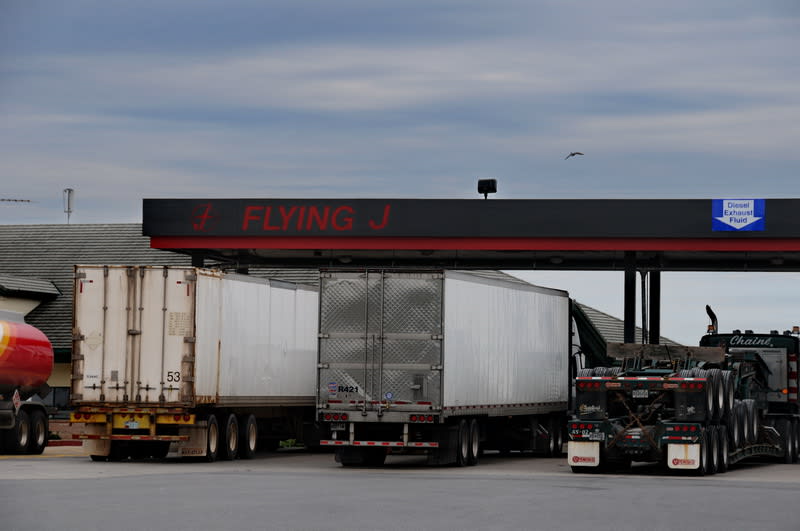
UPDATED -- A high-ranking official with the truckstop chain Pilot Flying J is reportedly no longer with the company, some 13 months after it was raided by federal agents.
Company President Mark Hazelwood is gone, “effective immediately,” according to an email obtained by the Knoxville Metro Pulse newspaper and posted to its Twitter feed. It was reportedly sent to company employees by Pilot Flying J CEO Jimmy Haslam.
Just in: Mark Hazelwood is no longer employed by Pilot Flying J. Here's the email CEO Jimmy Haslam sent out to staff: pic.twitter.com/0FQ4oYqfkj
— Metro Pulse (@metropulse) May 19, 2014
Officials with Pilot Flying J have not publicly offered a reason for the departure. WATE-TV in Knoxville, where the company is based, attempted to get comment, but was told Pilot Flying J does not comment on personnel matters.
In addition, another employee, Scott Wombold, has left the company, according to the Cleveland Plain Dealer. Wombold served as the vice president of national accounts and was supervised by Hazelwood. No reason has been given for his departure either.
On April 15, 2013, agents with the FBI and IRS raided Pilot Flying J as part of a criminal investigation into allegations the company purposely withheld rebates from fuel purchases by trucking company customers in order the inflate the truckstop operator’s profits. According to the FBI, the affidavit used to secure the search warrant had transcripts of secretly recorded conversations indicating Hazelwood and other top Pilot Flying J executives knew of the alleged scheme.
Since that time at least 10 current or former Pilot Flying J employees have pleaded guilty to charges stemming from the investigation but not have been sentenced.
Pilot Flying J and CEO Jimmy Haslam have denied any wrongdoing or knowledge of such an alleged scheme, despite settling a class action lawsuit late last year worth nearly $85 million, while it continues to face lawsuits by those who elected not to take part in the settlement.
Update adds Scott Wombold information.
More Fuel Smarts

New California Law Could Shed Light on Electric Truck Prices
Why do battery-electric Class 8 trucks remain so expensive? A California bill signed by Gov. Gavin Newsom would give fleets and state agencies more visibility into what manufacturers charge.
Read More →
How Volvo Updated Its D13 for EPA 2027 [Watch]
Volvo’s updated D13 promises lower emissions without sacrificing performance or fuel economy. Take a closer look at what changed inside the engine in this HDT Spotlight video.
Read More →
Diesel Price Spike Shortens Payback for Natural Gas Trucks, Report Says
Energy Vision estimates fleets could recover the higher purchase price of an RNG-fueled Class 8 tractor in 1.3 to 2.8 years under current fuel-price scenarios.
Read More →

Calstart Becomes Catalyst Mobility, Reflecting Broader Focus
Calstart is now Catalyst Mobility, reflecting the nonprofit’s growing national role in clean transportation, including zero-emission trucks, infrastructure and incentive programs.
Read More →
Record Diesel Prices Squeeze Trucking Fleets
Average U.S. diesel prices have climbed to nearly $6 a gallon, surpassing the 2022 record as tight refinery capacity and Middle East disruptions keep fuel costs elevated.
Read More →
How Fuel Delivery Shapes Engine Performance
Fuel delivery depends on more than what happens at the injector. For fleet, maintenance and technical professionals, looking at the full path from pump to injector can provide useful context for understanding engine performance.
Read More →
East Coast Port Launches $45M Electric Truck Push
The Port Authority of New York and New Jersey announced millions in incentives for zero-emission drayage trucks, yard tractors, and new charging hubs near the port.
Read More →
Detroit Opens Orders for EPA 2027 Engines
Detroit isn’t starting from scratch to meet EPA 2027 diesel emissions standards. Its Gen 6 DD13 and DD15 engines keep much of today’s platform while updating the fuel and aftertreatment systems.
Read More →
Zero-Emission Truck Corridor Planned for West Coast
California, Oregon, Washington, British Columbia and Baja California are coordinating plans for truck charging and hydrogen fueling from Canada to Mexico.
Read More →
A Closer Look at Kenworth’s Electric T880E Vocational Truck [Video]
Learn more about Kenworth's T880E battery-electric vocational truck at the Paccar Technical Center, including its range, applications, upfitting considerations, and PTO options, in this HDT Spotlight video.
Read More →