




Otto Co-Founder Launches New Autonomous Truck Startup Company
Don Burnett, who had leading roles with both Otto and Uber's autonomous truck division has announced $40 million in funding for his new startup.


Don Burnett, who had leading roles with both Otto and Uber's autonomous truck division has announced $40 million in funding for his new start-up company.
Photo courtesy Kodiak Robotics
A mere week after announcing that Uber will no longer pursue autonomous vehicle technology for trucking, a new autonomous trucking company has stepped onto trucking's main stage and, interestingly, its founder has a strong connection to both Otto and Uber.
Uberfamously jumped into the autonomous truck research field by acquiring startup tech firm Otto. And now, one of Otto’s co-founders, Don Burnette, has teamed up with former venture capitalist Paz Eshel to launch Kodiak, a self-driving truck startup that will continue to research and develop autonomous technology for commercial vehicles. According to CNBC, Burnett left Uber last March.
According to news reports, Kodiak has made a splash in the market by announcing it has raised $40 million in funding for its autonomous research efforts.
According to CNBC, Burnett’s Otto co-founder, Anthony Levandowski, has also recently announced that he is returning to the autonomous trucking world with his own startup technology firm, called Kache.ai. Meanwhile, another Otto alum, engineer Nancy Sun has reportedly launched a low-profile autonomous trucking startup of her own.
These are the latest developments in an on-going soap opera among tech developers to stake out a leadership position in autonomous trucking, along with the potential for huge profits should the technology ultimately prove out and gain widespread market acceptance.
Burnett gave few specifics on the business, but he did tell CNBC, "that he sees no risk of IP issues with Otto, in part because his new startup plans to buy off-the-shelf Lidar, cameras, radar, and other sensor technology that it will pair with custom software."
CNBC noted that despite Uber's failure, self-driving truck research and development are not going away because of the potential growth possible in the trucking industry. According to figures released by the American Trucking Associations, trucking is worth around $700 billion in annual revenue in the United States alone. It is also an industry famously hobbled by an ongoing driver shortage which ATA pegged at a shortfall of 51,000 last year, and projects will get exponentially worse in coming years as in-home grocery deliveries and online shopping habits increase dramatically.
Kodiak will join several other startups focused on autonomous trucks, including Starsky Robotics, Embark and TuSimple, among others.
“People tend to think that self-driving trucks are a lot like self-driving cars — that if you're running a self-driving department at a very large company with a lot of resources, you want to find as much synergy between the two projects as you can," Burnett told CNBC. "But we found that there's so much difference between driving trucks on highways and cars on downtown streets that trying to force an overlap in the algorithmic systems ends up hindering both platforms."
If you separate the two projects, like Uber did and like Waymo has, you have to decide where you're going to dedicate more of your resources, and in both of those cases, it has proven to be cars, not trucks, Burnett added.
More Equipment

How Volvo Updated Its D13 for EPA 2027 [Watch]
Volvo’s updated D13 promises lower emissions without sacrificing performance or fuel economy. Take a closer look at what changed inside the engine in this HDT Spotlight video.
Read More →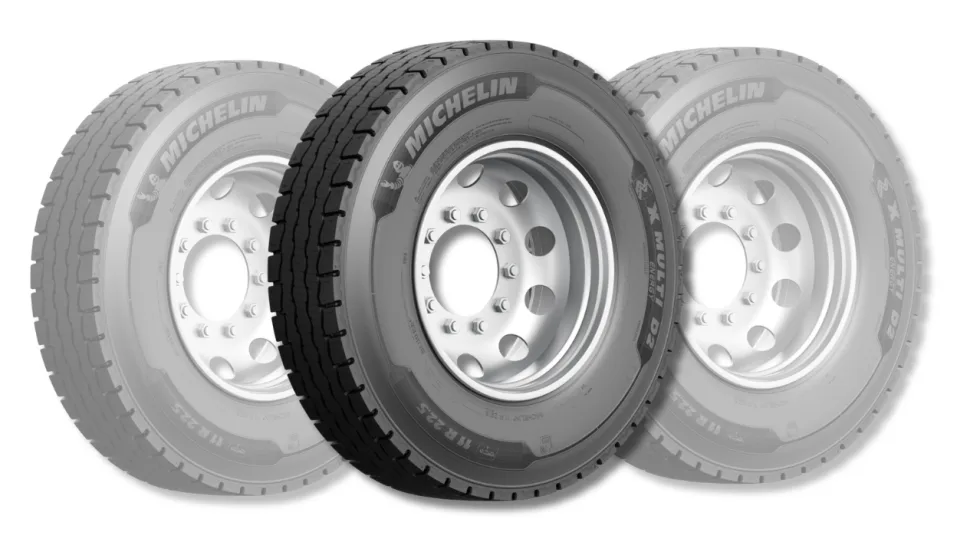
Michelin Tire Improves Efficiency and Durability for Regional Fleets
The Michelin X Multi Energy D2 is a regional haul drive tire engineered to help fleets improve fuel efficiency, durability and traction in demanding stop-and-go operations.
Read More →
ZF Expands Commercial Vehicle Push in North America
ZF is expanding its North American commercial-vehicle presence with new transmission applications, electrification, trailer technology and autonomous-driving systems.
Read More →
Tesla Wants a Self-Driving Semi. Are Cameras Enough?
Could Tesla’s camera-only autonomous driving technology work on an 80,000-pound Semi? In this commentary, HDT's Deborah Lockridge takes a look at Tesla, Cybercab, and how autonomous trucks see the road.
Read More →
Kodiak: Driverless Long-Haul Truck Launch on Track for 2026
Kodiak AI says its driverless long-haul safety case is 93% complete and it remains on track to begin commercial operations by year-end 2026.
Read More →
What DOT’s Automated Vehicle Strategy Means for Trucking
The U.S. Department of Transportation issued a new automated-vehicle strategy that outlines plans for driverless-truck regulations, cross-state freight corridors, and federal safety standards.
Read More →
East Coast Port Launches $45M Electric Truck Push
The Port Authority of New York and New Jersey announced millions in incentives for zero-emission drayage trucks, yard tractors, and new charging hubs near the port.
Read More →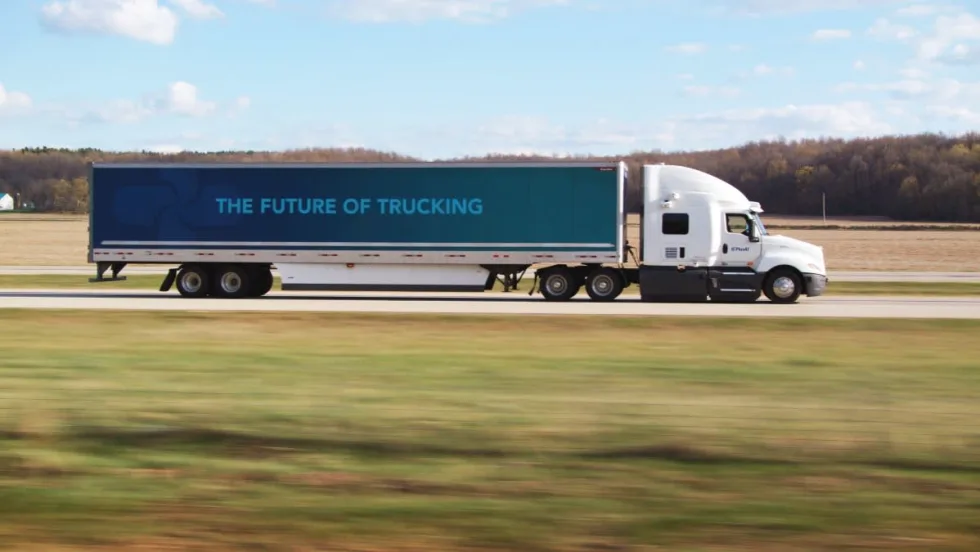
PlusAI Going Public to Fund Autonomous Truck Launch
A SPAC deal could provide PlusAI with up to $300 million as it works toward a 2027 commercial launch of factory-built autonomous trucks.
Read More →
NHTSA Moves to Rewrite Truck Fuel-Economy Rules
The National Highway Traffic Safety Administration says it lacks authority to regulate medium- and heavy-duty truck engines separately from complete vehicles, but the existing standards have not yet been eliminated.
Read More →
Detroit Opens Orders for EPA 2027 Engines
Detroit isn’t starting from scratch to meet EPA 2027 diesel emissions standards. Its Gen 6 DD13 and DD15 engines keep much of today’s platform while updating the fuel and aftertreatment systems.
Read More →