




NHTSA Will Go Ahead with Vehicle-to-Vehicle Communications Initiative for Cars
The National Highway Traffic Safety Administration has decided to go ahead with a regulation that will require vehicle-to-vehicle communications systems in new cars. The move signals that trucks are likely to be included at some point in the future.

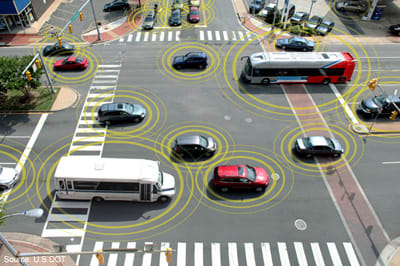
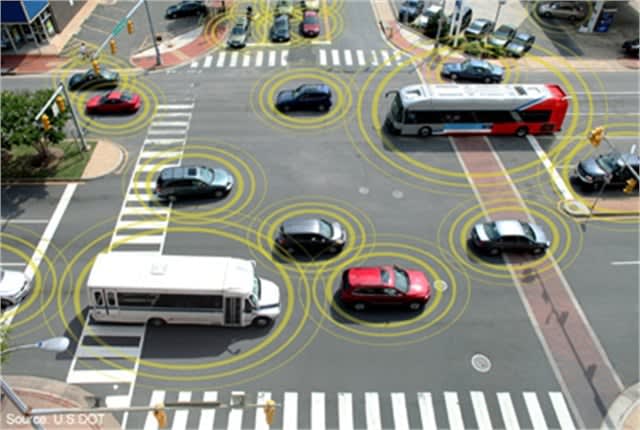
The National Highway Traffic Safety Administration has decided to go ahead with a regulation that will require vehicle-to-vehicle communications systems in new cars.
The agency has been testing V2V systems in commercial trucks, as well as cars, but Monday’s move does not cover trucks.
It does signal, however, that the agency is seriously considering a similar move for trucks.
“The light vehicle decision will be a very important factor in the 2014 heavy vehicle decision later this year,” a NHTSA spokesman said in response to an email query.
“Many aspects of V2V technology used by light vehicles will apply, but there are also additional issues we must consider. NHTSA will consider all types of heavy vehicles in its decision process.”
V2V systems can transmit information on speed and location to warn drivers of an impending collision or the need to slow down.
Experts say these wireless warnings can provide a quantum leap in highway safety.
“Vehicle-to-vehicle technology represents the next generation of auto safety improvements, building on the life-saving achievements we’ve already seen with safety belts and air bags,” said Transportation Secretary Anthony Foxx in a statement.
“By helping drivers avoid crashes, this technology will play a key role in improving the way people get where they need to go while ensuring that the U.S. remains the leader in the global automotive industry.”
In a report published last fall, the Government Accountability Office said a V2V network can improve safety by communicating warnings, but the benefits depend on broad deployment and acceptance by the public.
The report looked into specific truck concerns about the technology. Among them are data and communications security, and the adequacy of the available radio-frequency spectrum.
NHTSA has been field-testing the technology in cars and trucks in Michigan and will publish a report on that experience soon.
It then will begin work on a regulatory proposal that would require V2V systems in cars some years in the future.
The move is intended in part to send a signal to manufacturers that will promote further development of the systems and pave the way for their penetration into the market, the agency said.
Reaction so far is generally positive.
The American Association of State Highway and Transportation Officials described the move as a step toward greater safety and efficiency.
“This is a significant announcement for the future of safe mobility and a day that will lead to great reductions in traffic fatalities,” said former AASHTO President and Michigan DOT Director Kirk Steudle in a statement.
Scott Belcher, president and CEO of the Intelligent Transportation Society of America, expressed similar sentiments.
“While the auto industry has made great strides to reduce fatalities and injuries after a crash, the next giant leap is to enable real-time communication between vehicles and with the world around them so crashes can be avoided in the first place,” he said.
“This announcement represents a significant step forward in advancing the next generation of vehicle safety and automotive innovation, and is the result of years of collaboration between the transportation and high-tech industries and our federal, state and local partners.”
More Safety & Compliance

FMCSA Pauses Biennial-Update Enforcement Amid Motus Transition
Carriers whose updates were due on or after June 1 have more time, while FMCSA works to stabilize its new registration system and warns of phishing sites impersonating its new carrier registration system, Motus.
Read More →
ZF Expands Commercial Vehicle Push in North America
ZF is expanding its North American commercial-vehicle presence with new transmission applications, electrification, trailer technology and autonomous-driving systems.
Read More →
Truck Drivers Need More Than Another Alert
Fleets have more visibility into truck health, safety events, and driver activity than ever. The next challenge is turning all that information into useful guidance for the person who has to decide what to do next.
Read More →
Tesla Wants a Self-Driving Semi. Are Cameras Enough?
Could Tesla’s camera-only autonomous driving technology work on an 80,000-pound Semi? In this commentary, HDT's Deborah Lockridge takes a look at Tesla, Cybercab, and how autonomous trucks see the road.
Read More →
What DOT’s Automated Vehicle Strategy Means for Trucking
The U.S. Department of Transportation issued a new automated-vehicle strategy that outlines plans for driverless-truck regulations, cross-state freight corridors, and federal safety standards.
Read More →
NYC Expands Speed, Pedestrian Safety Tech Across Fleet
New York City is expanding intelligent speed assistance and pedestrian-alert systems across its municipal fleet, moving the technologies from pilot programs into vehicle procurement and retrofit requirements.
Read More →
FMCSA Removes 110 Truck Driver Training Schools from Certified ELDT List
Federal regulators also are targeting more than 160 additional training providers and launching a nationwide audit of third-party CDL skills testers as part of a broader crackdown on trucking fraud.
Read More →
Beyond DOT Compliance: What Makes a Trucking Fleet Truly Safe?
A trucking fleet can follow every rule and still make unsafe decisions. The real test comes when safety conflicts with freight, productivity, or cost.
Read More →
Hours of Service Pilot Programs: FMCSA Readies for 2027 Rollout
Two pilot programs could eventually reshape hours-of-service rules, giving truck drivers options to pause their 14-hour clock or use longer split sleeper rest periods.
Read More →
New Guide Offers Pet Safety Tips for Truck Drivers
Hundreds of thousands of pets travel in truck cabs. A new safety guide from Volvo Trucks and the Center for Pet Safety offers practical advice for truck drivers who bring dogs and cats along for the ride.
Read More →