




New Limits for Illinois Biometrics Privacy Law
Illinois has enacted a new law putting some limits on the state’s strict biometrics privacy law, including the ability for people to sue for every single instance of biometrics use.

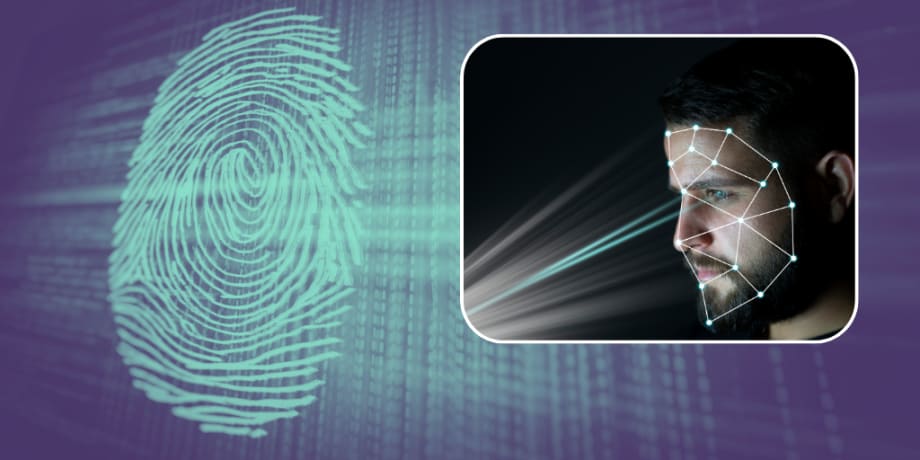
A business-friendly amendment updates Illinois' strict biometrics privacy law.
Image: HDT Graphic
Illinois has enacted a new law putting some limits on the state’s strict biometrics privacy law.
On Aug. 2, Illinois Gov. J.B. Pritzker signed SB2979, a bill that amends certain provisions of the Illinois Biometric Information Privacy Act.
The changes allow electronic signatures to be used for the “written release” in the biometrics law. (BIPA originally took effect in 2008, before electronic signatures became common.)
More importantly, the amendment to the biometrics law says a private entity that collects or discloses a person's biometric information from the same person in violation of the law more than once has committed a single violation.
This essentially overturns the Illinois Supreme Court’s ruling in Cothron v. White Castle System, Inc. that an individual can recover penalties for each separate biometric scan.
The Illinois Biometric Law and Trucking
Biometric information is used to detect driver fatigue via in-cab cameras, to provide security locks on devices, to better manage a workforce, and other purposes. The use of these biometric scans is now commonplace across the transportation industry, according to the transportation attorneys at Scopelitis, Garvin, Light, Hanson & Feary, as they explained in a 2022 HDT interview.
That interview followed a court decision in a class action lawsuit against Maverick Transportation and Lytx, which claimed the Drivecam dashcam illegally collected facial geometry data, saying it was non-consensual data collection violating BIPA.
Later that year, more than 44,000 truck drivers were awarded $228 million in damages after a Chicago federal jury ruled that BNSF Railway unlawfully scanned drivers’ fingerprints without proper permission while they were picking up and dropping off loads at rail yards.
HDT explored that ruling in an episode of HDT Talks Trucking:
Biometrics Amendment Effective Immediately
With the governor’s signature, SB2979 went into effect immediately on Friday. The bill was passed by the state legislature in May.
“Not only did we preserve the protections in BIPA, we made sure to clarify damages so businesses in our states are not crushed by penalties for violation,” said State Sen. Bill Cunningham, sponsor of the bill, a Democrat who represents portions of Chicago.
The National Law Review notes, “This amendment follows previous failed attempts at similar reforms to stem the fold of BIPA class action litigation that has plagued companies that have enacted fingerprint time cards or other biometric fraud and security measures without strictly complying with BIPA.”
Other states have BIPA-like biometrics laws, including a recently enacted law in Colorado, but only Illinois’ law have a “privacy right of action” allowing lawsuits to be filed. Other states’ laws may only be enforced by the states.
“SB2979 does not indicate whether the Illinois legislature intended for its amendments to apply to claims arising prior to the bill’s effective date,” said the transportation attorneys at Scopelitis, Garvin, Light, Hanson & Feary in an email alert. “As a result, that question remains to be answered by the courts.”
From the HDT Archives (2019): Smarter Video Telematics Wave Arrives
More Drivers

Truck Drivers Need More Than Another Alert
Fleets have more visibility into truck health, safety events, and driver activity than ever. The next challenge is turning all that information into useful guidance for the person who has to decide what to do next.
Read More →
FMCSA Removes 110 Truck Driver Training Schools from Certified ELDT List
Federal regulators also are targeting more than 160 additional training providers and launching a nationwide audit of third-party CDL skills testers as part of a broader crackdown on trucking fraud.
Read More →
Hours of Service Pilot Programs: FMCSA Readies for 2027 Rollout
Two pilot programs could eventually reshape hours-of-service rules, giving truck drivers options to pause their 14-hour clock or use longer split sleeper rest periods.
Read More →
Medical Cards, English Proficiency Reshape Roadcheck Violations
Medical-card violations jumped to the top of the driver out-of-service list during CVSA’s 2026 International Roadcheck, while English-language proficiency violations appeared among the leading violations for the first time.
Read More →
Driver Trust Can Make or Break the Success of Fleet Safety Technology
New Teletrac Navman research suggests that onboarding, transparency about driver data, and positive feedback can play a significant role in how commercial drivers respond to safety and coaching technology.
Read More →
EEOC Sues KLLM Over Alleged Sex Discrimination in Driver Training
KLLM is facing a federal sex-discrimination lawsuit over policies the EEOC alleges put female truck driver trainees at a disadvantage.
Read More →
FMCSA Moves to Codify English Language Requirements for Commercial Drivers
By changing regulations on English-language proficiency requirements for commercial drivers, rather than relying on a guidance memo, the FMCSA said future administrations won't be able to walk back the Trump administration's stricter enforcement with just a memo.
Read More →
Drivers Put Western Star Trucks to the Test at Star Nation Experience
Watch to get an inside look at the Western Star trucks, technology, and community behind the Star Nation Experience 2026!
Read More →
Trump Administration Looks to Put More Veterans Behind the Wheel
The Freedom Haulers program pulls together existing and expanded programs at several federal agencies to recruit veterans to drive commercial heavy-duty trucks and cut the red tape for them to get a CDL, training, and employment.
Read More →
Putting Mack’s Command Steer to the Test
A test drive of Mack’s Command Steer active steering system evaluates how it can make truck driving easier and less tiring.
Read More →