




New Jersey has the Worst Traffic Bottleneck in the Country
Traffic is a major time suck and it only seems to be getting worse, according to ATRI's latest list of the most congested bottlenecks for trucks in the U.S. This year, a bottleneck in Fort Lee, New Jersey took top honors.

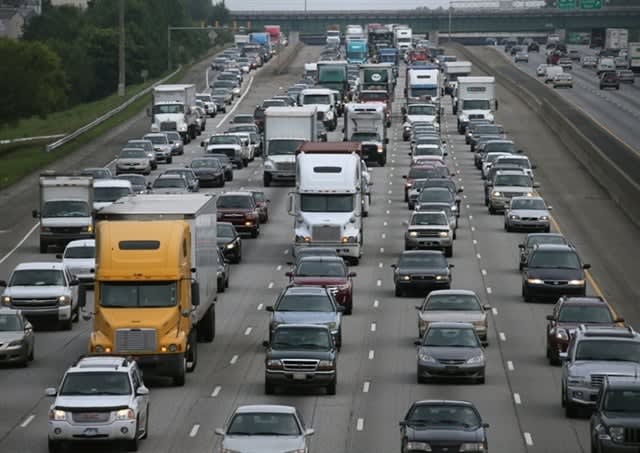
Truck speeds at the top 10 most congested locations in the U.S. dropped by nearly 9% as congestion worsened along the nation's busiest freight roadways.
Photo via U.S. DOT
For the first time since 2014, New Jersey has topped the American Transportation Research Institute’s annual list of the most congested bottlenecks for trucks in the country.
The Intersection of Interstate 95 and State Route 4 in Fort Lee, New Jersey was the worst freight bottleneck in the U.S., based on GPS data taken from nearly 1 million heavy duty trucks. If you find yourself driving through this bottleneck at peak traffic hours, your average speed will be just 23 mph. While New Jersey holds the dubious honor this year, it may be the city of Atlanta that sucks the most hours out of a truck driver’s day. The capital of Georgia hosts three of the ten worst bottlenecks in the country.
Houston’s bottleneck where Interstate 45 meets Interstate 69/U.S. 59 was only the fifth worst bottleneck on the list, but Texas as a whole was the state with worst congestion overall. The state also held positions 13, 16, 22, 24, 27 and 42 in the top 100, split between locations in Houston, Dallas and Austin.
"Texas has a growing population and a booming economy," said John D. Esparza, Texas Trucking Association president and CEO. "But traffic congestion could bring all of that to a standstill. Using ATRI's bottleneck analysis as a guide, we need to ensure that our investment in transportation infrastructure aligns with our desire to continue that growth.”
The rest of the Top 10 includes:
2. Atlanta: I-285 at I-85 (North)
3. Atlanta: I-75 at I-285 (North)
4. Los Angeles: SR 60 at SR 57
5. Houston: I-45 at I-69/US 59
6. Cincinnati: I-71 at I-75
7. Chicago: I-290 at I-90/I-94
8. Nashville: I-24/I-40 at I-440 (East)
9. Atlanta: I-20 at I-285 (West)
10. Los Angeles: I-710 at I-105
ATRI’s analysis found that year-over-year truck speeds across the top 10 locations dropped by an average of nearly 9% as congestion worsened along the nation’s busiest freight roadways. ATRI compiles the yearly list of the top 100 most congested locations in the country to support the U.S. Department of Transportation’s freight mobility initiatives. Researchers look at 300 locations across the country and collect terabytes of data from trucking operations to produce a congestion impact ranking for each location.
The full list of top congested locations is available on ATRI’s website at TruckingResearch.org.
“This report should be a wakeup call for elected leaders at all levels of government that we must act quickly to address our increasingly congested highway system,” said Chris Spear ATA president and CEO. “Without meaningful investment in our nation’s infrastructure, carriers will continue to endure billions of dollars in congestion-related costs – which results in a self-inflicted drag on our economy.”
More Fleet Management

What Will ATA’s New Leader Bring to Trucking's Table?
Incoming President and CEO Mark Colson’s record in Alabama offers clues about his priorities and approach following Chris Spear’s abrupt departure as the head of the American Trucking Associations.
Read More →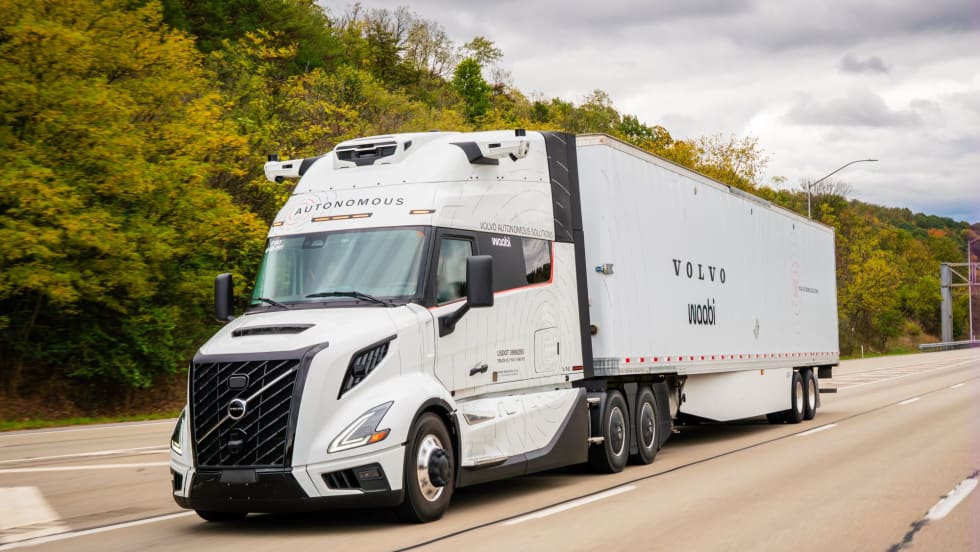
Volvo, Waabi Start Commercial Autonomous Operations in Texas
Volvo VNL Autonomous trucks, powered by the Waabi Driver, are hauling freight directly to third-party facilities for a customer in Texas.
Read More →
Samsara Launches Custom AI Agent Builder
Agent Studio lets fleets create AI tools for hours-of-service monitoring, reporting and driver support, including agents that communicate by phone.
Read More →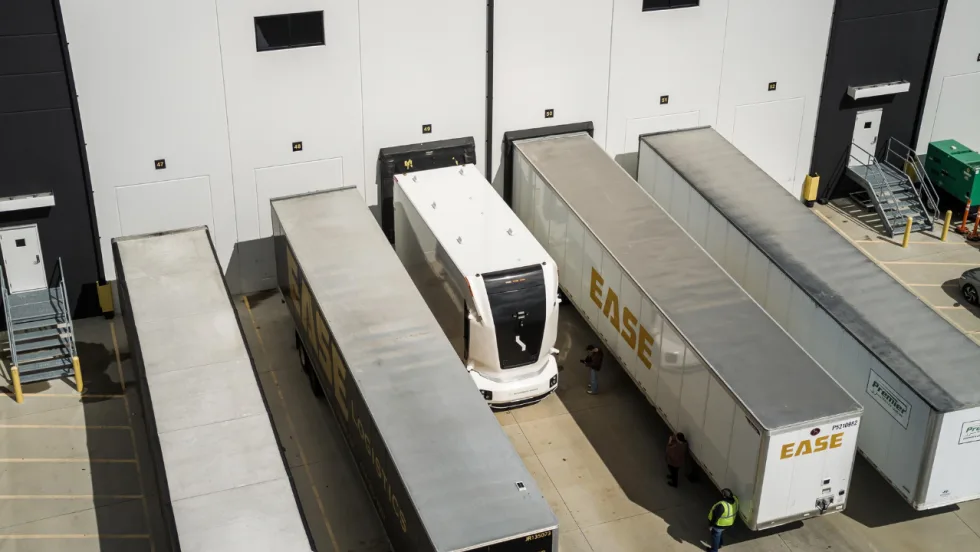
Einride Driverless Electric Trucks Begin Daily Freight Operations in Ohio
Two cabless electric trucks are hauling freight between EASE Logistics facilities in Marysville, Ohio, as part of a multi-state truck automation project.
Read More →
Geotab Links Fleet Card to Vehicle Data
The new card combines fuel discounts with telematics-based purchase controls. Geotab’s analysis also points to potential savings from choosing lower-priced fuel stops.
Read More →
How MFA Helps Protect Trucking Fleets
Multi-factor authentication adds protection when passwords are stolen. Here’s how it works and where fleets should start.
Read More →
How Better Freight Data Helps Trucking Teams Get Ahead of Disruption
Trucking and logistics teams have plenty of data. The problem is getting the right information in front of the right people soon enough to act. Better-connected data can help teams spot trouble earlier and make smarter decisions before small problems become big ones.
Read More →
Trimble: Taking Artificial Intelligence in Trucking Beyond Faster Tasks
At Insight 2026, Trimble executives argued that fleets may need to redesign workflows to get more from AI as it introduced new products and enhancements. AI’s value will depend on how fleets combine automation with their people's knowledge.
Read More →
Build a bulletproof fleet: Uniting ELDs and dash cams for total compliance
An ELD can prove compliance, but it cannot always prove what happened on the road. Discover how uniting accurate ELD data with AI-powered dash cam video can help your fleet strengthen compliance, defend against liability, protect drivers and reduce operational costs.
Read More →
Nominations Open for HDT Emerging Leaders
Heavy Duty Trucking is looking for accomplished trucking fleet professionals under 40 who are making an impact and helping lead the industry forward.
Read More →