




Navistar Sells RV Business, Drops eStar Van as Part of Its Turnaround Plan
UPDATED-- Navistar Inc. announced that it has sold parts of its recreational vehicle business to Allied Specialty Vehicles (ASV), a leading producer of RVs as well as fire & emergency and commercial & industrial vehicles to worldwide markets.
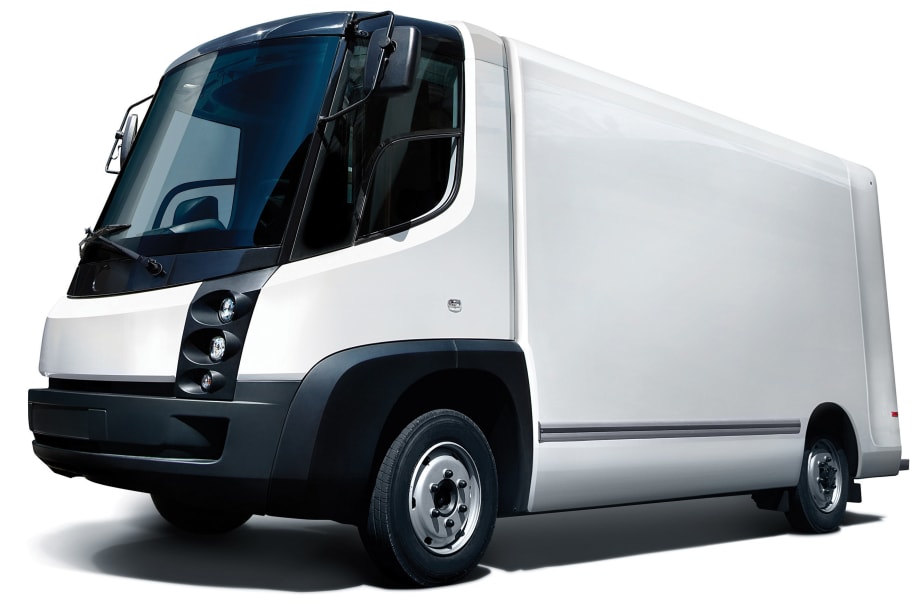
Navistar discontinued its eStar electric van.

Navistar has sold its RV business, which makes models such as this Monaco Camelot.
UPDATED-- Navistar Inc. announced that it has sold parts of its recreational vehicle business to Allied Specialty Vehicles (ASV), a leading producer of RVs as well as fire & emergency and commercial & industrial vehicles to worldwide markets.
Navistar also disclosed that it had discontinued its eStar electric van, in March of this year. The eStar was introduced in 2010 in partnership with Modec of the UK and with the help of a $39.4 million grant from the U.S. Department of Energy. Navistar bought the intellectual rights to the van out of Modec’s bankruptcy the following year.
About this time, Navistar had purchased the Monaco motor home brand and manufacturing assets, which included plants in Oregon and Indiana. Those plants are included in the sale of RV assets to ASV, as are the Monaco, Holiday Rambler and R-Vision products and brands, Navistar said on Thursday. ASV has also entered into a multi-year leasing agreement for Navistar RV's Elkhart, Ind., facility. The sale does not include Bison Coach, Navistar's horse trailer manufacturing business.
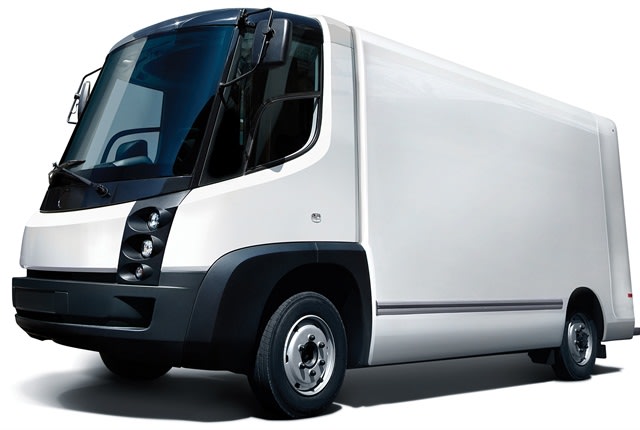
Navistar discontinued its eStar electric van.
The sell-off of Navistar RV and dropping of eStar and other products are part of the company’s restructuring begun under previous leadership and continuing under new top executives who took over in March.
“The decision was tied to our Drive to Deliver turnaround plan which focuses on strengthening our core North American business,” spokesperson Elissa Koc said. “We’ve also taken a disciplined Return-On-Invested-Capital approach to evaluating non-core businesses and product programs for potential sale, closing or fixing.”
She said this has included:
suspending development and production of Navistar’s 15-liter truck diesel;
announcing the closure of its plant in Garland, Texas;
selling its stake in a truck and engine joint venture with Mahindra in India; and
subleasing approximately 25% of its Alabama engine facility to FreightCar America, a maker of railroad freight cars.
Last fall, Navistar shut down its Workhorse Custom Chassis subsidiary, which built walk-in van and motor home chassis in Union City, Ind. Navistar had bought it several years earlier after selling diesels to the then-independent producer.
Navistar embarked on cost-cutting following heavy financial losses due to problems with MaxxForce diesels that avoided use of selective catalytic reduction for exhaust treatment. A stockholder revolt brought about the management change, and to its relenting on the SCR issue.
Related Story:Navistar's Clarke Talks Change, Opportunity, Turnaround
More Fuel Smarts

How Volvo Updated Its D13 for EPA 2027 [Watch]
Volvo’s updated D13 promises lower emissions without sacrificing performance or fuel economy. Take a closer look at what changed inside the engine in this HDT Spotlight video.
Read More →
Diesel Price Spike Shortens Payback for Natural Gas Trucks, Report Says
Energy Vision estimates fleets could recover the higher purchase price of an RNG-fueled Class 8 tractor in 1.3 to 2.8 years under current fuel-price scenarios.
Read More →
Calstart Becomes Catalyst Mobility, Reflecting Broader Focus
Calstart is now Catalyst Mobility, reflecting the nonprofit’s growing national role in clean transportation, including zero-emission trucks, infrastructure and incentive programs.
Read More →

Record Diesel Prices Squeeze Trucking Fleets
Average U.S. diesel prices have climbed to nearly $6 a gallon, surpassing the 2022 record as tight refinery capacity and Middle East disruptions keep fuel costs elevated.
Read More →
How Fuel Delivery Shapes Engine Performance
Fuel delivery depends on more than what happens at the injector. For fleet, maintenance and technical professionals, looking at the full path from pump to injector can provide useful context for understanding engine performance.
Read More →
East Coast Port Launches $45M Electric Truck Push
The Port Authority of New York and New Jersey announced millions in incentives for zero-emission drayage trucks, yard tractors, and new charging hubs near the port.
Read More →
California Bill Could Shed Light on Electric Truck Prices
Why do battery-electric Class 8 trucks remain so expensive? A California bill headed to Gov. Gavin Newsom would give fleets and state agencies more visibility into what manufacturers charge.
Read More →
Detroit Opens Orders for EPA 2027 Engines
Detroit isn’t starting from scratch to meet EPA 2027 diesel emissions standards. Its Gen 6 DD13 and DD15 engines keep much of today’s platform while updating the fuel and aftertreatment systems.
Read More →
Zero-Emission Truck Corridor Planned for West Coast
California, Oregon, Washington, British Columbia and Baja California are coordinating plans for truck charging and hydrogen fueling from Canada to Mexico.
Read More →
A Closer Look at Kenworth’s Electric T880E Vocational Truck [Video]
Learn more about Kenworth's T880E battery-electric vocational truck at the Paccar Technical Center, including its range, applications, upfitting considerations, and PTO options, in this HDT Spotlight video.
Read More →