





Related: NACFE Sees Regional Haul Sparking Electric-Truck Movement
NACFE, RMI Report Offers Electrification Framework Analysis
The North American Council for Freight Efficiency (NACFE), along with the Rocky Mountain Institute (RMI), released a report on a three-prong electrification framework that could make electric trucks a reality in states other than just California.
August 24, 2020

The three-prong framework helped NACFE and RMI decide which areas are best suited for eletric trucks.
Source: NACFE, RMI
3 min to read
The North American Council for Freight Efficiency (NACFE), along with the Rocky Mountain Institute (RMI), released a report on a three-prong electrification framework that could make electric trucks a reality in states other than just California.
“We’ve learned a lot that will help us make better decisions on where to move next,” said NACFE Executive Director Mike Roeth, adding that the information derived from the report will not only help state policymakers decide how best to spend electrification dollars, but also for fleets looking to make a shift into this new technology.
The framework focuses on three areas in which the two groups used to determine the best areas of the country to focus on electrifying regional/short-haul fleets:
Technology: Regions that are most favorable to the unique attributes of the technology itself
Need: Regions that exhibit the greatest need for the technology.
Support: Regions that provide the most support for the technology.
In terms of technology, this covers not just the actual electric truck technology, such as range and regenerative braking, but also the availability and cost of electric infrastructure. When reaching out to utility companies concerning the availability of electric infrastructure, NACFE and RMI found that these companies have changed their opinions on electric vehicles and are seeing it as a big opportunity for them. According to the report, fleets can also expect “less volatile prices by switching to electricity since prices are highly regulated and less subject to market fluctuations than diesel.”
When defining the “need” aspect of the framework, NACFE and RMI focused on states and regions that are battling poor air quality issues and an immediate need to reduce tailpipe emissions. The benefits of electric vehicles not only stress improved public health, but also advancing equity and environmental justice to areas that “disproportionality impacted by air and carbon pollution,” like disadvantaged communities that are historically more likely to be located near truck corridors. Freight activity, which obviously increases emissions, was also another framework consideration.
Without the last tier of the framework — support — the change to electric trucks would be less a reality and more of a pipedream for any region. Mandates such as the California Air Resources Board rule requiring every new truck sold in California to be zero-emission by 2045. State programs like the Hybrid and Zero-Emission Truck and Bus Voucher Incentive Project in California and and New York’s Truck Voucher Incentive Program can help fleets afford these new electric trucks, which can sometimes cost double the price of a diesel truck.
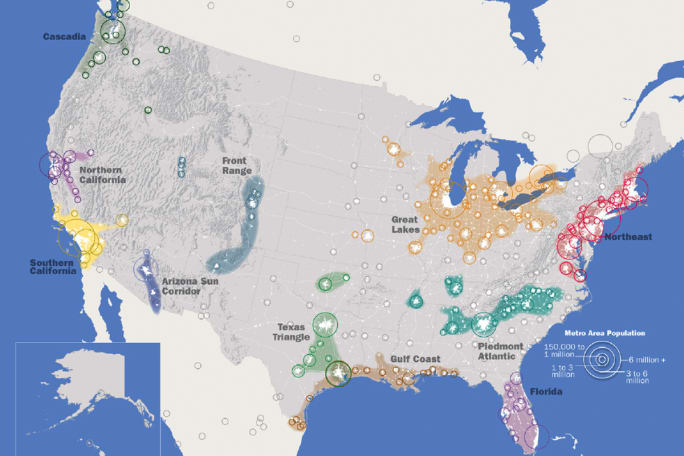
There are six mega-regions that will likely benefit the most from electrification, including Northern California, Southern California, Texas Triangle, Cascadia, Front Range, and Northeast.
Source: Regional Plan Association
After analyzing the different areas of the country using the aforementioned framework, NACFE and RMI found that regions such as the Northern California, Southern California, Texas Triangle, Cascadia, Front Range, and Northeast mega-regions show the highest potential for electrification. Since many larger trucking companies — which are more likely to try out new truck technology — are not always confined to one state, electrification would work best at a regional level, according to the report. Fleets that have routes in the range of approximately 230 miles would benefit the greatest from electric trucks, as well as the availability of charging infrastructure either on-site or nearby.
For the full report, visit the NACFE website.
More Fuel Smarts

How Volvo Updated Its D13 for EPA 2027 [Watch]
Volvo’s updated D13 promises lower emissions without sacrificing performance or fuel economy. Take a closer look at what changed inside the engine in this HDT Spotlight video.
Read More →
Diesel Price Spike Shortens Payback for Natural Gas Trucks, Report Says
Energy Vision estimates fleets could recover the higher purchase price of an RNG-fueled Class 8 tractor in 1.3 to 2.8 years under current fuel-price scenarios.
Read More →
Calstart Becomes Catalyst Mobility, Reflecting Broader Focus
Calstart is now Catalyst Mobility, reflecting the nonprofit’s growing national role in clean transportation, including zero-emission trucks, infrastructure and incentive programs.
Read More →

Record Diesel Prices Squeeze Trucking Fleets
Average U.S. diesel prices have climbed to nearly $6 a gallon, surpassing the 2022 record as tight refinery capacity and Middle East disruptions keep fuel costs elevated.
Read More →
Sponsored•September 9, 2026
How Fuel Delivery Shapes Engine Performance
Fuel delivery depends on more than what happens at the injector. For fleet, maintenance and technical professionals, looking at the full path from pump to injector can provide useful context for understanding engine performance.
Read More →
East Coast Port Launches $45M Electric Truck Push
The Port Authority of New York and New Jersey announced millions in incentives for zero-emission drayage trucks, yard tractors, and new charging hubs near the port.
Read More →
California Bill Could Shed Light on Electric Truck Prices
Why do battery-electric Class 8 trucks remain so expensive? A California bill headed to Gov. Gavin Newsom would give fleets and state agencies more visibility into what manufacturers charge.
Read More →
Detroit Opens Orders for EPA 2027 Engines
Detroit isn’t starting from scratch to meet EPA 2027 diesel emissions standards. Its Gen 6 DD13 and DD15 engines keep much of today’s platform while updating the fuel and aftertreatment systems.
Read More →
Zero-Emission Truck Corridor Planned for West Coast
California, Oregon, Washington, British Columbia and Baja California are coordinating plans for truck charging and hydrogen fueling from Canada to Mexico.
Read More →
A Closer Look at Kenworth’s Electric T880E Vocational Truck [Video]
Learn more about Kenworth's T880E battery-electric vocational truck at the Paccar Technical Center, including its range, applications, upfitting considerations, and PTO options, in this HDT Spotlight video.
Read More →