




Mexican Truckers Seek Strike Over NAFTA Provisions
Late last week, Mexican truckers threatened to call a strike if President Vicente Fox allows U.S. trucks to enter their country freely beginning in 2003
Late last week, Mexican truckers threatened to call a strike if President Vicente Fox allows U.S. trucks to enter their country freely beginning in 2003.
Manuel Gomez, president of the National Bureau of Cargo Transportation (Canacar), said the Fox administration must declare a moratorium on the transportation provisions of the North American Free-Trade Agreement (NAFTA).
Gomez said that as long as Mexican trucks are not allowed to enter the United States freely, U.S. trucks should receive the same treatment from Mexico. The Canacar president said a strike would have serious consequences for the country, but that Mexican truckers "cannot continue to submit to discriminatory U.S. laws."
"The last thing we want to do is paralyze the economy, since 80% of all merchandise moved depends on ground transportation," he said.
Just before Thanksgiving, President Bush announced the end to a moratorium and said the United States will open its borders to Mexican trucks starting next year -- but with some restrictions.
The trucks will only be allowed to enter the United States after passing safety inspections, obtaining insurance and when carrying maintenance records from U.S. firms. In addition, drivers will have to submit to drug and alcohol tests.
According to the Mexican government and Canacar, which represents 4,500 companies and 32,000 independent truckers, the requirements are discriminatory.
Canacar said only 30,000 of the 140,000 trucks it represents meet the U.S. requirements today.
More Equipment

Kodiak Targets Dallas–Houston for Driverless Trucks
The company says its autonomous trucks are completing the I-45 run without a safety observer taking control. It plans to remove the observer by the end of 2026.
Read More →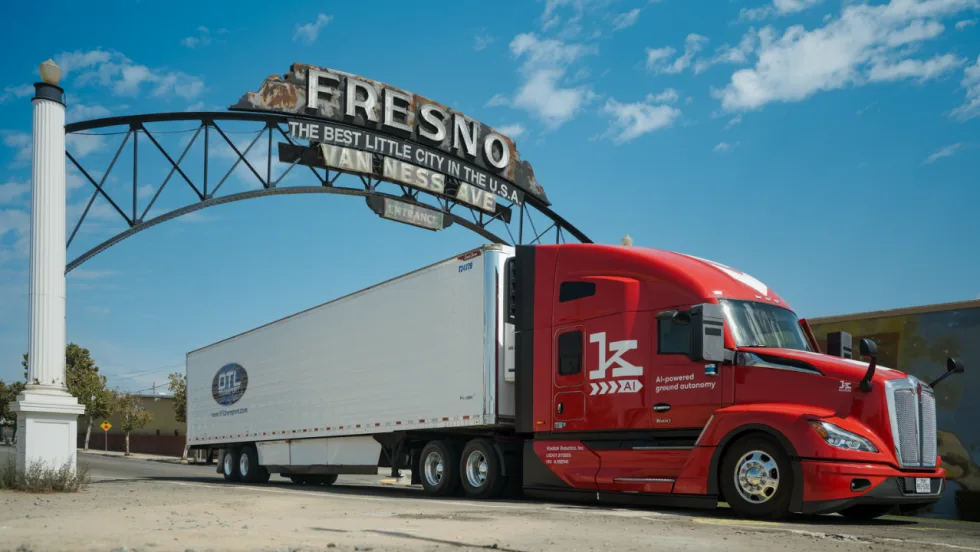
Kodiak Hauls Produce in California Autonomous Truck Pilot
Kodiak AI and DTL Transport have begun hauling produce between Fresno and Los Angeles under California’s new rules for testing heavy-duty autonomous trucks. A safety driver remains behind the wheel.
Read More →
Used-Truck Remarketing Math Is Changing
Used-truck value is no longer just a concern at trade-in. Decisions made throughout a truck’s first life can influence what it’s worth years later.
Read More →
How Volvo Updated Its D13 for EPA 2027 [Watch]
Volvo’s updated D13 promises lower emissions without sacrificing performance or fuel economy. Take a closer look at what changed inside the engine in this HDT Spotlight video.
Read More →
Michelin Tire Improves Efficiency and Durability for Regional Fleets
The Michelin X Multi Energy D2 is a regional haul drive tire engineered to help fleets improve fuel efficiency, durability and traction in demanding stop-and-go operations.
Read More →
ZF Expands Commercial Vehicle Push in North America
ZF is expanding its North American commercial-vehicle presence with new transmission applications, electrification, trailer technology and autonomous-driving systems.
Read More →
Tesla Wants a Self-Driving Semi. Are Cameras Enough?
Could Tesla’s camera-only autonomous driving technology work on an 80,000-pound Semi? In this commentary, HDT's Deborah Lockridge takes a look at Tesla, Cybercab, and how autonomous trucks see the road.
Read More →Kodiak: Driverless Long-Haul Truck Launch on Track for 2026
Kodiak AI says its driverless long-haul safety case is 93% complete and it remains on track to begin commercial operations by year-end 2026.
Read More →
What DOT’s Automated Vehicle Strategy Means for Trucking
The U.S. Department of Transportation issued a new automated-vehicle strategy that outlines plans for driverless-truck regulations, cross-state freight corridors, and federal safety standards.
Read More →
East Coast Port Launches $45M Electric Truck Push
The Port Authority of New York and New Jersey announced millions in incentives for zero-emission drayage trucks, yard tractors, and new charging hubs near the port.
Read More →