




Related: Mack Trucks Announces Proactive Maintenance Telematics Program
Mack Trucks Forecast Buoyed by Strong Construction Sector
With strong demand for comemrcial trucks, especially by a strengthening construction sector, Mack Trucks now forecasts 325,000 Class 8 units this year.
by John G. Smith
August 15, 2019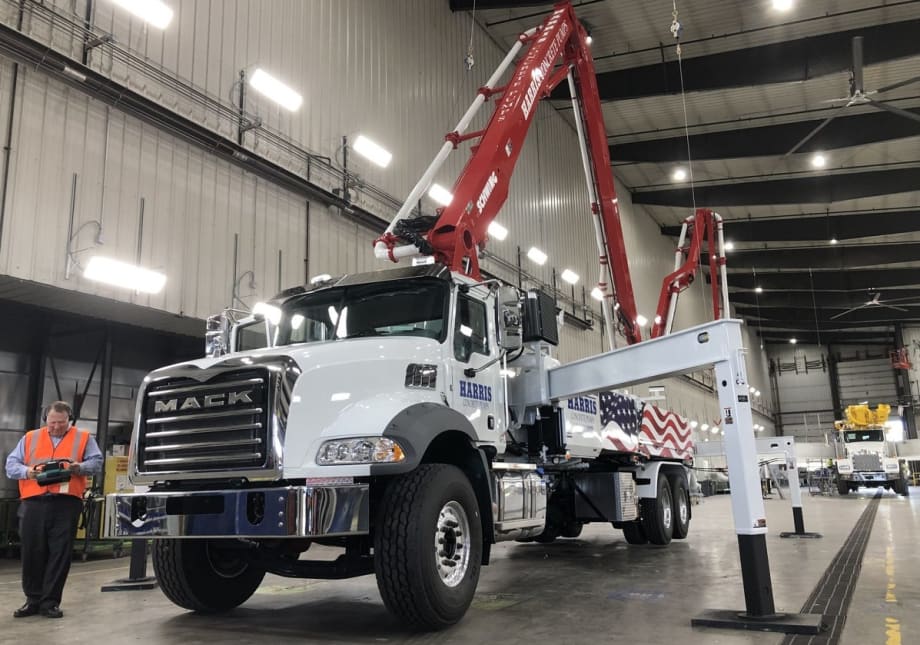
With strong demand for comemrcial trucks, especially by a strengthening construction sector, Mack Trucks now forecasts 325,000 Class 8 units this year.
Photo: John G. Smith
4 min to read
The demand for commercial trucks remains strong, buoyed by factors including a strong construction sector, and Mack Trucks now forecasts a North American market for 325,000 Class 8 units this year.
“July was strong. Our retail [sales] were very good for NAFTA, I think about 30,000 trucks,” said Jonathan Randall, senior vice-president North American sales and marketing, referring sales figures that recovered after a slower June.
While order intakes have dropped, that is to be expected given the industry’s existing backlog, he said. “You can’t fill an already-full cup.”
Mack Trucks has a few openings on its assembly line for late 2019, but most of the orders taken today involve trucks to be manufactured in 2020.
“Order intake will be good — but it’s not going to be what we’ve seen a year ago at this time,” Randall stressed. “We still believe, historically, it’s going to be a good market.”
The market challenges
Robust demand presents challenges of its own, and that was especially apparent in 2018 as OEMs scrambled to address an unexpected surge in truck orders.
“We did not forecast a 300,000 market it turned into,” Randall said.
Component suppliers struggled to keep up as a result. And while issues in the supply chain have largely been resolved, a tight labor market continues to be a challenge, he said. This year Mack Trucks has added more than 500 employees at its Lehigh Valley Operations (LVO) in Pennsylvania, where two shifts are running to produce conventional trucks, and one shift is devoted to producing cabovers.
Price pressures also continue despite the removal of metal tariffs on steel and aluminum.
“We still see inflationary pressure as the results of not only tariffs, but threats of tariffs,” Randall said.
The nature of the demand for trucks, meanwhile, is shifting. Long haul trucks account for about 49% of registrations this year, but Mack expects that share to drop to 44% in 2020. Straight trucks, while currently flat in terms of equipment counts, are expected to account for a bigger share of business next year.
That bodes well for Mack, which has a strong presence in the construction segment. Housing starts, traditionally one of the “canaries in the coal mine” when it comes to economic indicators, still continues to be robust south of the border and are up 6.2% year over year, Randall said. Construction spending is down just 2.1% year over year.
Public construction spending, meanwhile, is up 6.12% year over year.
For its part, the OEM is actively lobbying the U.S. government to invest in ailing infrastructure. The American Road and Transportation Builders Association has identified 47,000 bridges in need of repair.
“We support user fees, and we support raising - as part of that - fuel taxes in targeted ways,” Randall said. However, Mack doesn’t support the 12% Federal Excise Tax or the tolling of existing highways to collect the funds.
Concrete business opportunities
Randall made the comments during a visit to the headquarters of Schwing America, the largest concrete pump manufacturing facility in North America. Much of the equipment that it produces is mounted on Mack trucks including Granite and TerraPro models.
The business – a subsidiary of the Germany-headquartered Schwing Group — makes concrete pumps, truck mixers, and truck-mounted loop conveyors, as well as batch plants, reclaimers, and parts. It also has a presence in China’s Xuzhou Construction Machinery Group (XCMG). And it has seven manufacturing facilities globally.
High-profile Schwing projects include New York City’s Freedom Tower, which used a pair of high-pressure stationary pumps to push concrete over 1,600 vertical feet, as well as U.S. Bank Stadium and San Francisco’s Bay Bridge.
“Our business is really chained to housing. Not tied, chained,” said Tom O’Malley, Schwing’s senior vice-president of sales and marketing.
Pumping equipment in general is proving its worth as a tool to boost productivity on job sites. A load of ready-mix concrete has a shelf life of just 90 minutes, O’Malley noted. With equipment like this, teams are able to turn their trucks around more quickly.
While 45% of concrete is placed through tailgating, pumping now accounts for 34% of the work, with 9% moved by wheelbarrows, and 2% by cranes and buckets, Concrete Pumping Holdings reports.
It’s a significant shift. Just 20% of the U.S. concrete was pumped as recently as 2000.
The concrete pumping business is now worth about $1.75 billion in the U.S., and that’s expected to grow to $2.3 billion by 2021.
John G. Smith is the editor of the award-winning Canadian publication Today's Trucking. This article was used under a cooperative editorial sharing agreement between HDT and its Canadian counterpart.
More Equipment
DTNA Plans New U.S. Truck Plant as Manufacturing Footprint Shifts
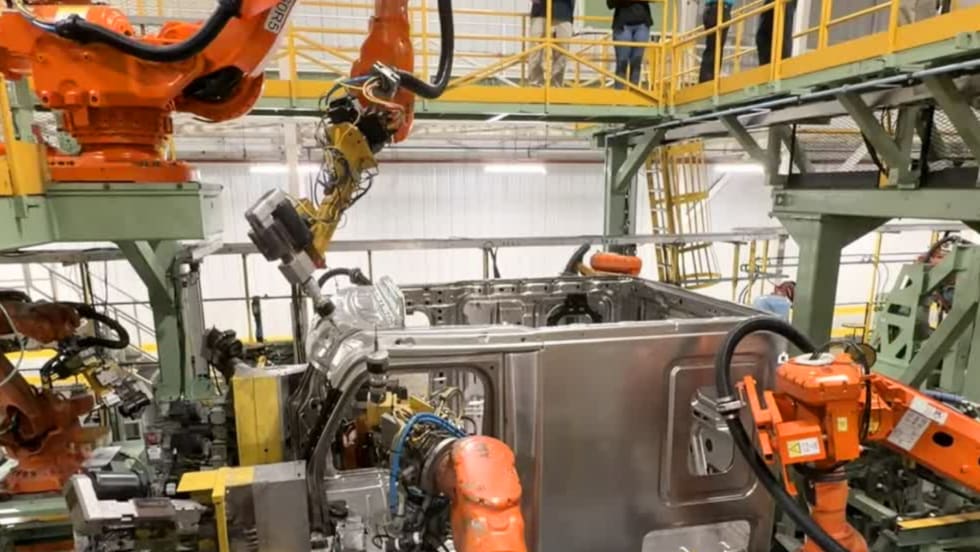
Daimler Truck North America is evaluating sites for a new assembly plant expected to open in 2029 while winding down operations at its longtime Portland manufacturing facility.
Read More →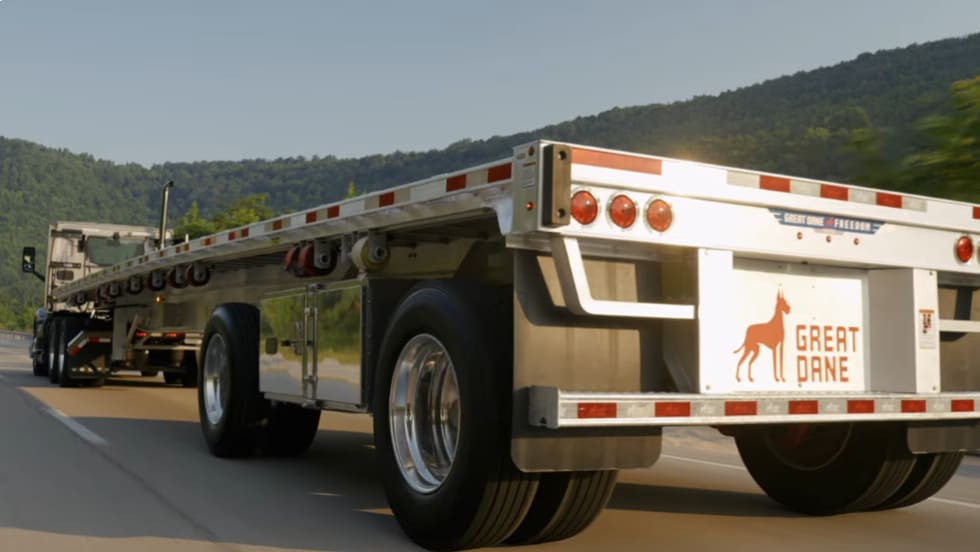
Great Dane Flatbed Trailer Offers Light Weight and Strength
Freedom Ultra is designed for a wide range of open-deck applications, including building materials, lumber, machinery, steel products, industrial freight, and coil hauling.
Read More →
What It's Like Inside this Custom 2025 Peterbilt 589?
Take a driver's-eye tour of this customized 2025 Peterbilt 589 in this video, as longtime driver Ingrid Brown explains its features, compares it to previous models, and shares plenty of personality along the way.
Read More →
Drivers Put Western Star Trucks to the Test at Star Nation Experience
Watch to get an inside look at the Western Star trucks, technology, and community behind the Star Nation Experience 2026!
Read More →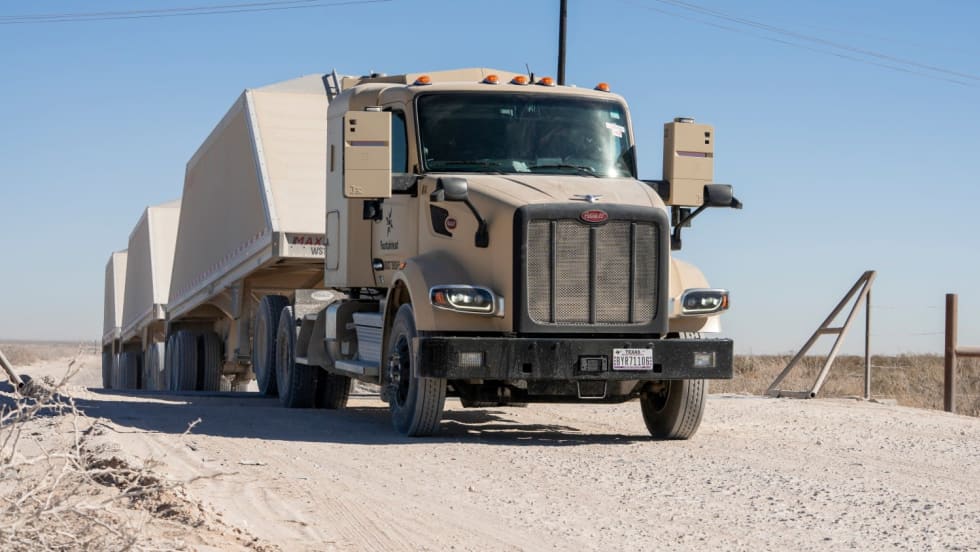
Atlas Expands Kodiak Driverless Truck Fleet in Permian Basin
Atlas Energy Solutions is expanding autonomous frac sand hauling in the Permian Basin with a second load-out location and plans for 100 driverless trucks by mid-2027.
Read More →
Putting Mack’s Command Steer to the Test
A test drive of Mack’s Command Steer active steering system evaluates how it can make truck driving easier and less tiring.
Read More →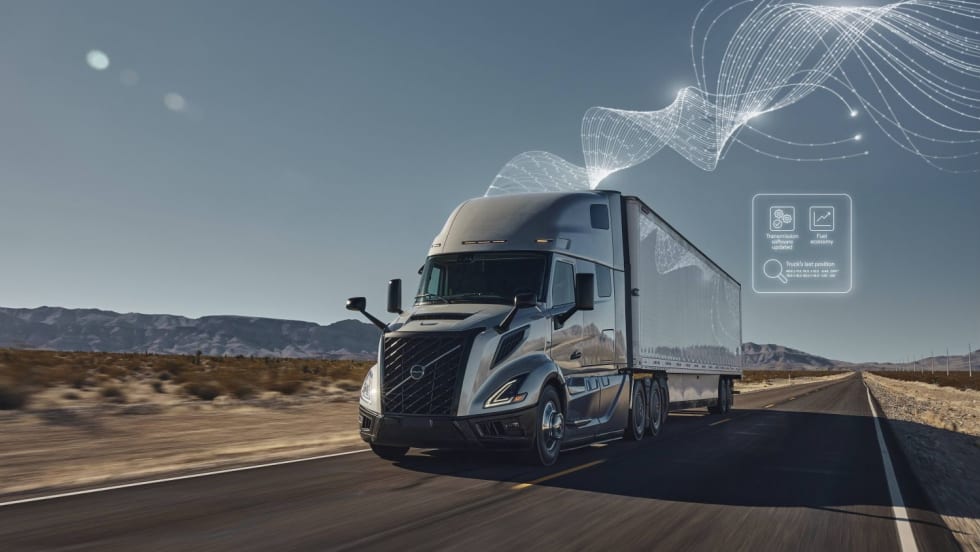
Mack, Volvo Expand DEF Derate Software Updates
The updated software gives Mack and Volvo truck owners more time to address DEF-related issues before the engine derates or the vehicle goes into reduced-speed inducement, following new EPA guidance.
Read More →
Rush, MCT Team Up to Grow Refrigeration Service Network
The joint venture will operate MCT's network of Carrier Transicold dealerships and mobile service locations, with the companies promising greater service capacity and uptime for refrigerated fleets.
Read More →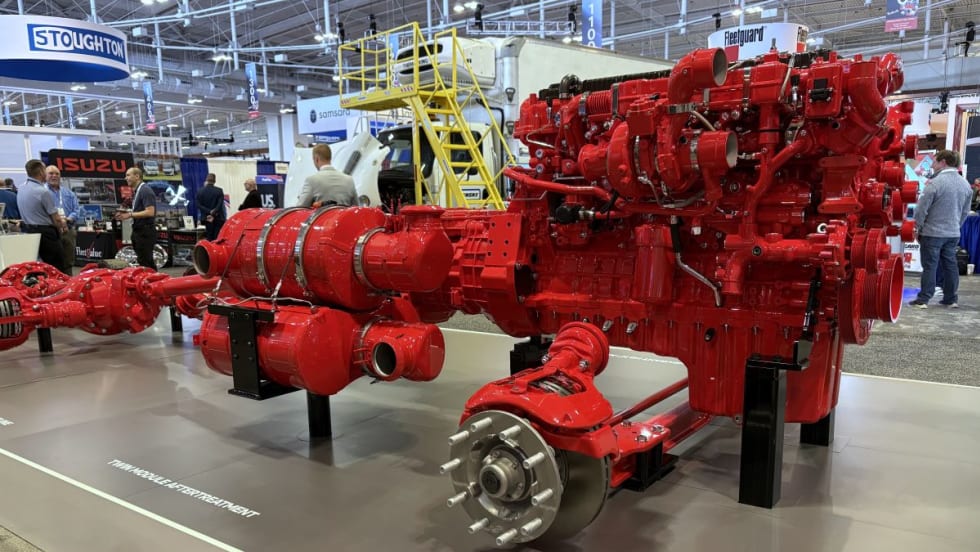
Cummins Adjusts 2027 Engine Rollout After EPA Proposal
The engine maker will gradually introduce its new Model Year 2027 diesel engines while continuing to offer current models during the transition, citing the EPA's proposed emissions rule changes.
Read More →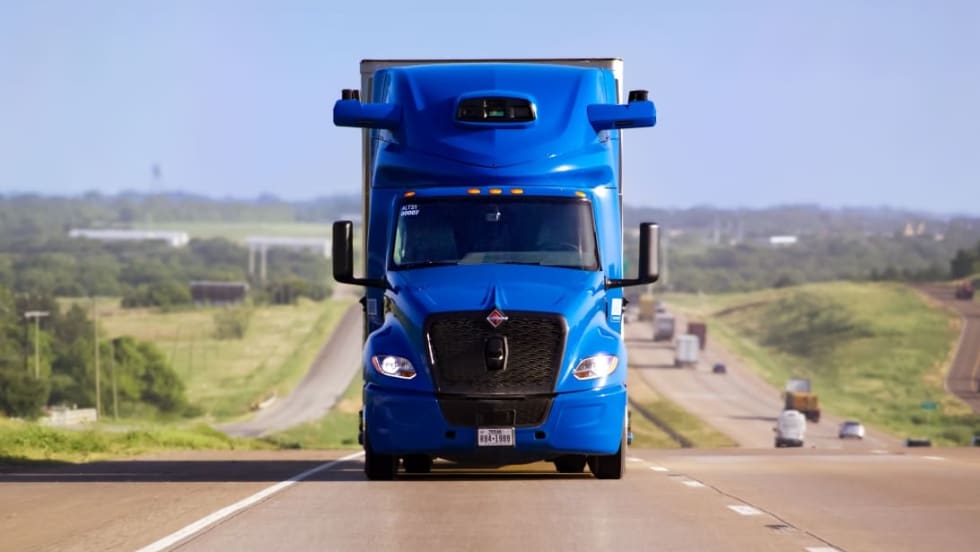
Aurora Rolls Out Next Generation of Driverless Trucks for Commercial Freight
Aurora's latest autonomous trucks it's rolling out with International feature lower-cost hardware designed for a million miles as the company expands commercial driverless freight operations across the U.S. Sun Belt.
Read More →