




Latest Aviation Bill Ditches Pro-Trucking Reform
The effort to inject a reform proposal widely viewed as favorable to trucking into an aviation bill has crashed and burned. At least for now.


U.S. Capitol Photo: David Cullen

U.S. CapitolPhoto: David Cullen
The effort to inject a reform proposal widely viewed as favorable to trucking into an aviation bill has crashed and burned. At least for now.
House leaders introduced a short-term aviation bill on March 10. The Airport and Airway Extension Act of 2016 (H.R. 4721) would extend authorization for Federal Aviation Administration programs through July 15.
If an extension isn’t passed by both chambers of Congress, authority for FAA programs will expire at the end of this month.
Separately, just the day before on March 9, the Senate Commerce Committee introduced long-term legislation that would reauthorize FAA programs through Sept. 30, 2017. The committee is slated to vote March 16 on forwarding its bill to the full Senate.
While the House Transportation and Infrastructure Committee in February approved legislation that would fund FAA until 2022, that bill is meeting resistance from many House Democrats and aviation stakeholders over a provision that would detach the nation’s air traffic control system from the aviation agency.
Hence, House leaders saw the need to put forth the short-term patch.
The long-term House bill, the Aviation Innovation, Reform, and Reauthorization (AIRR) Act (H.R.444)contains a trucking reform proposal aimed at preventing states from enacting their own meal and rest break rules for CDL drivers. It would also prohibit states from requiring that those drivers be paid certain types of added compensation, such as detention pay.
However, neither the Senate committee’s proposal for a long-term aviation bill nor the House short-term measure contains the pro-trucking reforms.
The trucking reforms sought are stated as such in Section 611 of the House AIRR ACT:
“A State… may not enact or enforce a law, regulation, or other provision…prohibiting employees whose hours of service are subject to [federal] regulation…
“A State… may not enact or enforce a law, regulation, or other provision…that requires a motor carrier that compensates employees on a piece-rate basis to pay those employees separate or additional compensation, provided that the motor carrier pays the employee a total sum that when divided by the total number of hours worked during the corresponding work period is equal to or greater than the applicable hourly minimum wage of the State…”
The wording is identical to that of an amendment proposed for inclusion in the last highway bill by Rep. Jeff Denham (R-CA). That language did not survive the conferencing process that finalized the FAST Act late last year.
The language landed anew in the AIRR bill because its supporters in the trucking, railroad, intermodal, logistics, manufacturing and retailing industries are committed to keep fighting for it. It’s also considered germane to the bill because a “preemption provision” to address the issue of states attempting to override federal regulation of interstate commerce had been included in the FAA Authorization Act (FAAAA) of 1994.
It appears unlikely the pro-trucking reforms will get worked into the short-term House FAA bill and even more unlikely the language will be written into any short-term aviation patch that comes out of the Senate.
That means the trucking groups that favor the reforms (including the American Trucking Associations, the 50 ATA-affiliated state trucking associations, the National Private Truck Council and the Truckload Carriers Association) as well as the rail, intermodal and shipper groups that support the changes will have to keep lobbying to keep the language in the long-term House bill.
As for landing the reforms in the multi-year bill FAA that eventually will emerge from the Senate, that promises to be no milk run.
More Drivers

From One Generation to the Next: How Mentorship Builds Safer Truck Drivers
After three decades in trucking, Harold Perry shares what he's learned about driver safety, mentorship, and helping the next generation build confidence behind the wheel.
Read More →
Truck Drivers Need More Than Another Alert
Fleets have more visibility into truck health, safety events, and driver activity than ever. The next challenge is turning all that information into useful guidance for the person who has to decide what to do next.
Read More →
FMCSA Removes 110 Truck Driver Training Schools from Certified ELDT List
Federal regulators also are targeting more than 160 additional training providers and launching a nationwide audit of third-party CDL skills testers as part of a broader crackdown on trucking fraud.
Read More →
Hours of Service Pilot Programs: FMCSA Readies for 2027 Rollout
Two pilot programs could eventually reshape hours-of-service rules, giving truck drivers options to pause their 14-hour clock or use longer split sleeper rest periods.
Read More →
Medical Cards, English Proficiency Reshape Roadcheck Violations
Medical-card violations jumped to the top of the driver out-of-service list during CVSA’s 2026 International Roadcheck, while English-language proficiency violations appeared among the leading violations for the first time.
Read More →
Driver Trust Can Make or Break the Success of Fleet Safety Technology
New Teletrac Navman research suggests that onboarding, transparency about driver data, and positive feedback can play a significant role in how commercial drivers respond to safety and coaching technology.
Read More →
EEOC Sues KLLM Over Alleged Sex Discrimination in Driver Training
KLLM is facing a federal sex-discrimination lawsuit over policies the EEOC alleges put female truck driver trainees at a disadvantage.
Read More →
FMCSA Moves to Codify English Language Requirements for Commercial Drivers
By changing regulations on English-language proficiency requirements for commercial drivers, rather than relying on a guidance memo, the FMCSA said future administrations won't be able to walk back the Trump administration's stricter enforcement with just a memo.
Read More →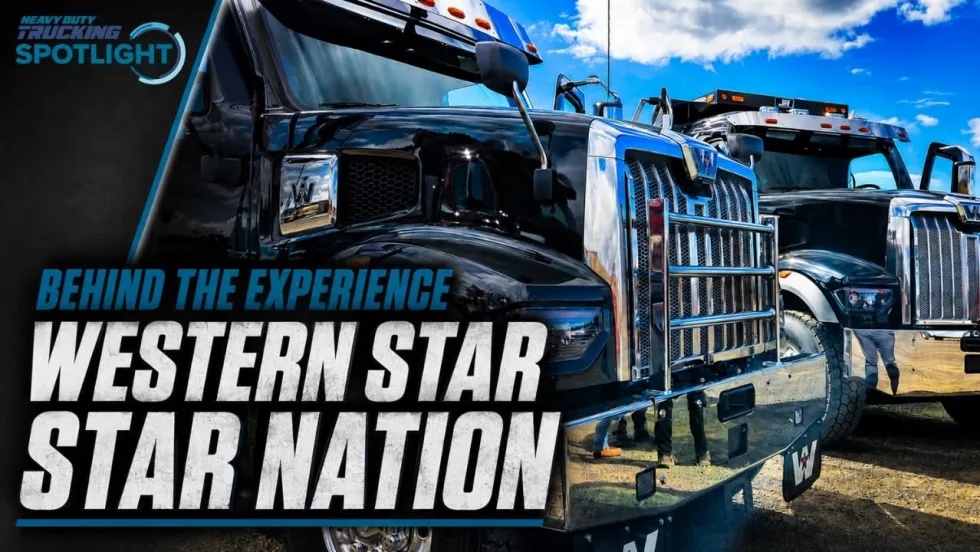
Drivers Put Western Star Trucks to the Test at Star Nation Experience
Watch to get an inside look at the Western Star trucks, technology, and community behind the Star Nation Experience 2026!
Read More →
Trump Administration Looks to Put More Veterans Behind the Wheel
The Freedom Haulers program pulls together existing and expanded programs at several federal agencies to recruit veterans to drive commercial heavy-duty trucks and cut the red tape for them to get a CDL, training, and employment.
Read More →