





More Information: Labor Department Wants to Withdraw New Independent Contractor Definition
Labor Department Withdraws Independent Contractor Rule
In a widely expected move, the U.S. Department of Labor has withdrawn a rule published in the last days of the Trump administration that changed the definition of independent contractor.
May 5, 2021
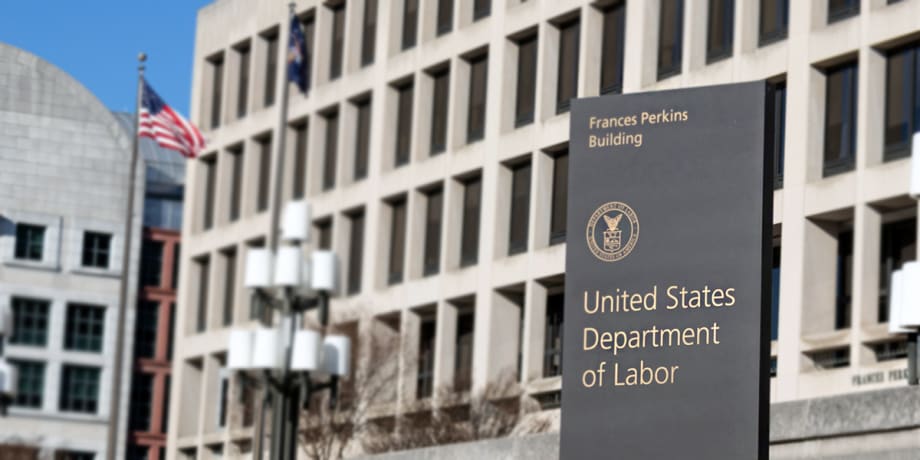
In a widely expected move, the U.S. Department of Labor has withdrawn a rule published in the last days of the Trump administration that changed the definition of independent contractor.
Photo: Gettyimages.com/JL Images
4 min to read
The U.S. Department of Labor announced the withdrawal of a rule that would have made it harder to prove workers were employees rather than independent contractors under the Fair Labor Standards Act.
The rule that was intended to change the definition of independent contractor was published in the last days of the Trump administration. But the Trump-era effort was put on hold by the Biden administration, and the Labor Department issued a proposal in March to withdraw the rule.
The Fair Labor Standards Act sets forth laws regarding minimum wage and overtime requirements, and also affects issues such as benefits and workers compensation. It applies only to employees, not to independent contractors. But the law’s definitions of “employee” are extremely broad. As a result, the issue of who is an employee and who is an independent contractor has been the subject of many a court case, with some workers saying they were "misclassified" as contractors but treated like employees – but without the FLSA protections granted to employees.
Under the Trump administration, the Department of Labor tried to simplify that definition of independent contractor, adopting an “economic reality” test to determine a worker’s status as an employee or an independent contractor. The test would have considered whether a worker is in business for himself or herself (independent contractor) or is economically dependent on a putative employer for work (employee). The now-withdrawn rule set up two "core factors" in making the determination: Nature and degree of control over work, and opportunity for profit or loss based on initiative and/or investment. It also addressed in its preamble issues relevant to the traditional leased owner-operator model in trucking, including long-term relationships between parties, the issue of how safety and other government mandates may affect the contractor relationship, and that piece rates (e.g., pay by load or mile) would not conclusively define IC status.
However, in the widely expected move, the department announced May 5 that it is withdrawing the rule, effective May 6. In its announcement, DOL cited several reasons, including:
The independent contractor rule was in tension with the FLSA’s text and purpose, as well as relevant judicial precedent.
The rule’s “core factors” for determining employee status under the FLSA would have undermined the economic realities test and court decisions requiring a review of the totality of the circumstances related to the employment relationship.
The rule would have narrowed the facts and considerations comprising the analysis of whether a worker is an employee or an independent contractor, resulting in workers losing FLSA protections.
The department also said it anticipates that the withdrawal will avoid a reduction in workers’ access to employer-provided fringe benefits such as health insurance and retirement plans, as well as unemployment insurance and workers compensation coverage.
“By withdrawing the Independent Contractor Rule, we will help preserve essential worker rights and stop the erosion of worker protections that would have occurred had the rule gone into effect,” said U.S. Secretary of Labor Marty Walsh in the announcement. “Legitimate business owners play an important role in our economy but, too often, workers lose important wage and related protections when employers misclassify them as independent contractors. We remain committed to ensuring that employees are recognized clearly and correctly when they are, in fact, employees so that they receive the protections the Fair Labor Standards Act provides.”
Trucking Responds
When the independent contractor rule was first introduced, much of the trucking industry hailed the change. The American Trucking Associations said the final rule addressed issues such as long-term relationships not automatically implying "control" of the worker.
The Teamsters, however, opposed the change and asked the Biden administration to negate the rule.
The Owner-Operator Independent Drivers Association issued a statement May 5 expressing its disappointment with the rule's withdrawal.
"Under the new rule, OOIDA believes that owner-operators could have generally continued working under their existing arrangements with carriers without fear of being reclassified as an employee," it said.
"The department’s final rule, for the most part, would have helped provide new certainty and clarity to owner-operators," said Lewie Pugh, OOIDA executive vice president. "While there were certainly some provisions that needed to be fixed, this could have been done without the wholesale withdrawal of the rule.
“As we’ve seen with the disastrous roll out of the ABC Test in California, the implementation of one-size-fits-all rules for worker classification just won’t work in the trucking industry,” Pugh added. “The independent contractor rule issued by the Trump administration would have provided some protection against this from happening on a national scale, and we’re disappointed that the rule is being withdrawn.”
OOIDA previously submitted comments to DOL on April 12, urging them to address specific problems in the final rule without fully repealing it.
Updated 4:30 p.m. EDT May 5, 2021, to add OOIDA comments
More Drivers

Truck Drivers Need More Than Another Alert
Fleets have more visibility into truck health, safety events, and driver activity than ever. The next challenge is turning all that information into useful guidance for the person who has to decide what to do next.
Read More →
FMCSA Removes 110 Truck Driver Training Schools from Certified ELDT List
Federal regulators also are targeting more than 160 additional training providers and launching a nationwide audit of third-party CDL skills testers as part of a broader crackdown on trucking fraud.
Read More →
Hours of Service Pilot Programs: FMCSA Readies for 2027 Rollout
Two pilot programs could eventually reshape hours-of-service rules, giving truck drivers options to pause their 14-hour clock or use longer split sleeper rest periods.
Read More →
Medical Cards, English Proficiency Reshape Roadcheck Violations
Medical-card violations jumped to the top of the driver out-of-service list during CVSA’s 2026 International Roadcheck, while English-language proficiency violations appeared among the leading violations for the first time.
Read More →
Driver Trust Can Make or Break the Success of Fleet Safety Technology
New Teletrac Navman research suggests that onboarding, transparency about driver data, and positive feedback can play a significant role in how commercial drivers respond to safety and coaching technology.
Read More →
EEOC Sues KLLM Over Alleged Sex Discrimination in Driver Training
KLLM is facing a federal sex-discrimination lawsuit over policies the EEOC alleges put female truck driver trainees at a disadvantage.
Read More →
FMCSA Moves to Codify English Language Requirements for Commercial Drivers
By changing regulations on English-language proficiency requirements for commercial drivers, rather than relying on a guidance memo, the FMCSA said future administrations won't be able to walk back the Trump administration's stricter enforcement with just a memo.
Read More →
Drivers Put Western Star Trucks to the Test at Star Nation Experience
Watch to get an inside look at the Western Star trucks, technology, and community behind the Star Nation Experience 2026!
Read More →
Trump Administration Looks to Put More Veterans Behind the Wheel
The Freedom Haulers program pulls together existing and expanded programs at several federal agencies to recruit veterans to drive commercial heavy-duty trucks and cut the red tape for them to get a CDL, training, and employment.
Read More →
Putting Mack’s Command Steer to the Test
A test drive of Mack’s Command Steer active steering system evaluates how it can make truck driving easier and less tiring.
Read More →