




Isuzu FTR Test Drive Addresses 4-Cylinder Engine Questions
Isuzu unveiled the 2018 Isuzu FTR Class 6 cabover truck for closed track test drives this week. The company also disclosed the results of comparison road tests conducted by a third party.
June 8, 2017

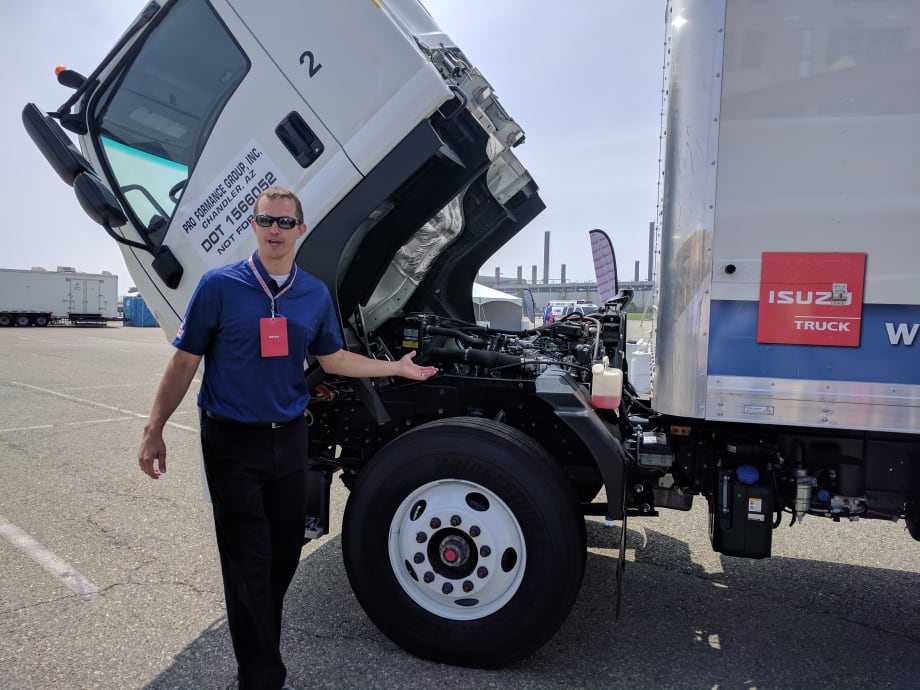
Photo: Chris Brown
3 min to read
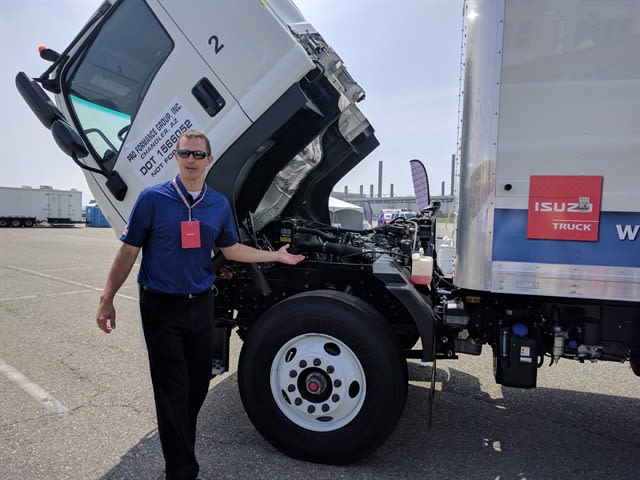
Photo: Chris Brown
This week, Isuzu Commercial Truck of America offered the 2018 Isuzu FTR Class 6 cabover for limited driving at an event at Auto Club Speedway in Fontana, California. Similar events, attended by dealer sales, service, and parts staff; fleet customers, and media, were held in Chicago and New York.
The redesigned Isuzu FTR is available for the first time since the model line was discontinued in 2009.
The event, attended by Bobit editors of Work Truck Magazine, Heavy Duty Trucking, and Business Fleet Magazine, included a business briefing and product demonstration followed by closed-track test drives of the 2018 Isuzu FTR against competitive trucks. The tests included a cone course designed to exhibit the FTR’s handling and maneuverability and a timed “drag race” with competitive vehicles at maximum GVWR.
The 2018 Isuzu FTR, rated at 25,950 lbs. GVWR, is available in one powerplant configuration, a 5.2L four-cylinder engine with an Allison six-speed transmission. The FTR is rated at 215 standard horsepower and 520 lbs-ft. standard torque.
At the business briefing, Shaun Skinner, president of Isuzu Commercial Truck of America, highlighted the expected sales growth of the medium-duty segment in conjunction with U.S. population growth that will concentrate on urban centers. “The FTR is designed to meet the needs of moving cargo in urban centers,” Skinner said.
Isuzu also unveiled results of comparative road tests conducted by Flexible Force LLC, an independent automotive testing and training company, in December 2016. The “blind comparative” tests, certified by the Sports Car Club of America (SCCA), measured the FTR’s performance in acceleration, braking, turning radius, and fuel economy.
The FTR was tested against current models of Kenworth K270, Navistar 4300, Hino 268A, Freightliner M2, and Ford F-650.
All vehicles were loaded to exactly 25,975 lbs., according to Roger Johnson, owner of Flexible Force LLC. The tests were conducted on a city route of 120.7 miles with 24 stops and a mountain route with a 6.5% grade and climbs from 1,500 ft. to 4,500 ft.
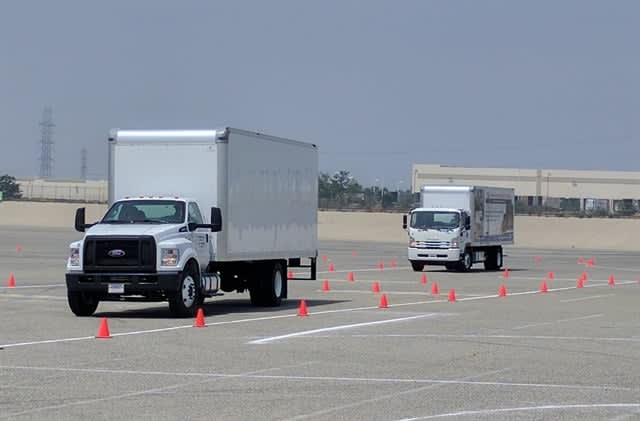
A cone course designed to exhibit the FTR’s handling and maneuverability was set up at the Auto Club Speedway in Fontana, Calif.Photo: Steven Martinez
Of the six vehicles, the FTR placed third and fourth in acceleration tests of varying miles-per-hour limits. In two braking tests, the FTR placed fourth and tied for third place. The FTR placed first in turning radius. Measuring fuel economy, the FTR won first place in both the mountain and city routes. In the city route, the FTR beat the next competitor by 16.1% and 22.3% over the last place finisher.
“People that spend time in (medium-duty) trucks, their expectations have traditionally been that they’re going to run a six cylinder,” Johnson said. “You didn’t expect to run a four-cylinder; the technology just wasn’t there.”
Johnson said the industry has seen incremental improvements in performance, emissions, and fuel economy with six-cylinder engines. “The next step in that improvement is displacement,” he said. “I believe in six to eight years a four-cylinder engine will be standard in Class 6. There is no comparative decrease in performance in a four-cylinder diesel truck engine today.”
Production of the 2018 Isuzu FTR began May 8 at Isuzu’s Charlotte, Michigan, plant. Isuzu expects to ship orders in mid-June.
More Equipment

How GP Transco Cuts Trucking Fuel Costs, a Tenth of a Gallon at a Time
What’s another tenth of a mile per gallon worth? GP Transco shares how equipment upgrades and driver coaching turn small gains into meaningful fuel savings.
Read More →
Electric Yard Tractors Move Beyond Pilots
Operating-cost savings have overtaken sustainability goals as the leading reason surveyed fleets are adopting battery-electric terminal tractors, according to new NACFE research.
Read More →
Continental Introduces New Regional Truck Tires
Continental says its new Generation 5 steer and drive tires for regional operations offer longer tread life, with estimated mileage gains of 22% and 19%, respectively.
Read More →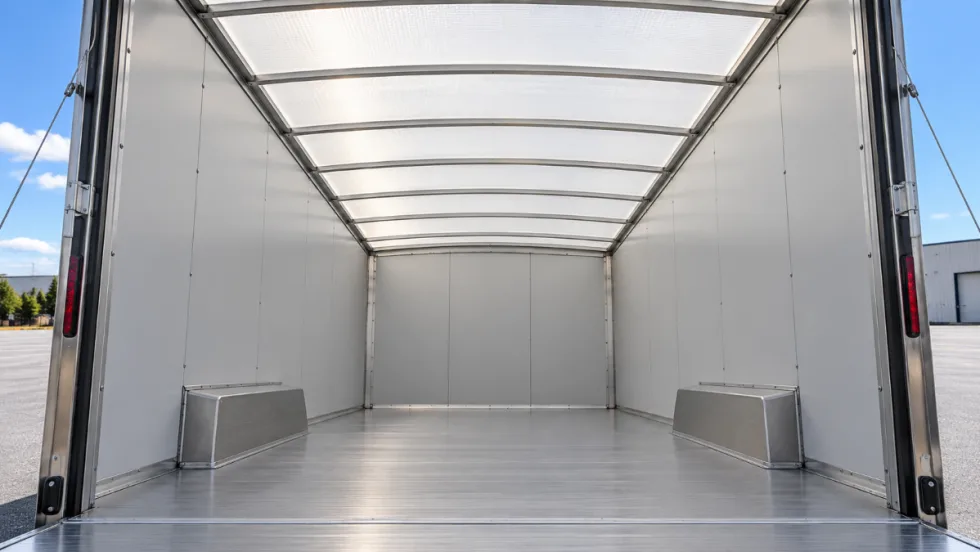
Tekmodo Introduces CargoBright Brand for Translucent Trailer Roofs
CargoBright is designed to diffuse daylight across the cargo area while performing as a working vehicle roof.
Read More →
Fleet Economics Shape Electric Truck Outlook
ACT Research expects costs, charging infrastructure, and technology improvements to drive zero-emission commercial vehicle adoption as federal regulations and incentives retreat.
Read More →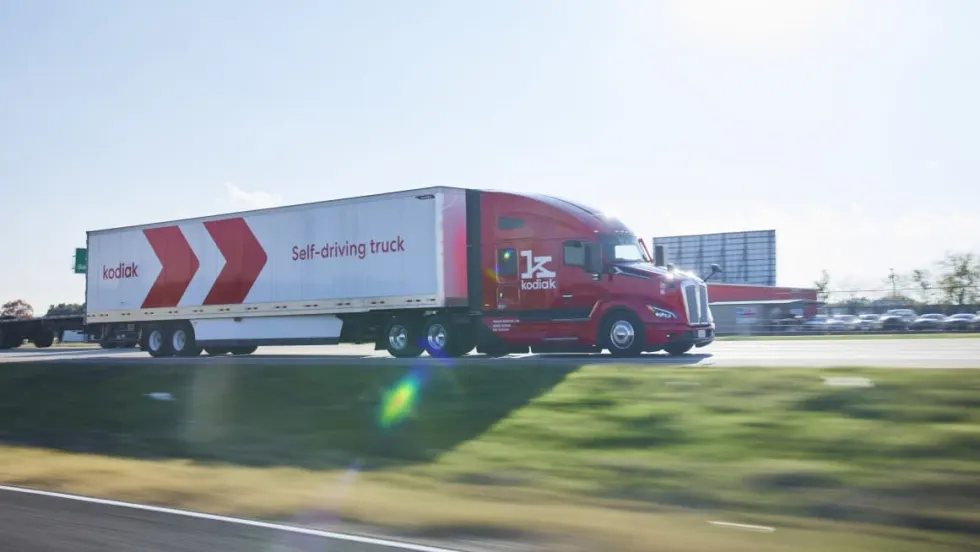
Kodiak Targets Dallas–Houston for Driverless Trucks
The company says its autonomous trucks are completing the I-45 run without a safety observer taking control. It plans to remove the observer by the end of 2026.
Read More →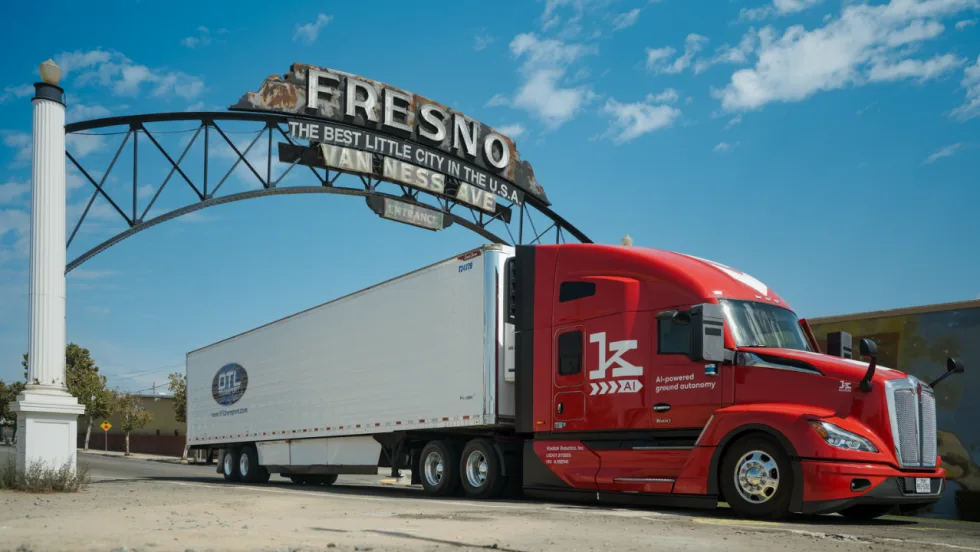
Kodiak Hauls Produce in California Autonomous Truck Pilot
Kodiak AI and DTL Transport have begun hauling produce between Fresno and Los Angeles under California’s new rules for testing heavy-duty autonomous trucks. A safety driver remains behind the wheel.
Read More →
Used-Truck Remarketing Math Is Changing
Used-truck value is no longer just a concern at trade-in. Decisions made throughout a truck’s first life can influence what it’s worth years later.
Read More →
How Volvo Updated Its D13 for EPA 2027 [Watch]
Volvo’s updated D13 promises lower emissions without sacrificing performance or fuel economy. Take a closer look at what changed inside the engine in this HDT Spotlight video.
Read More →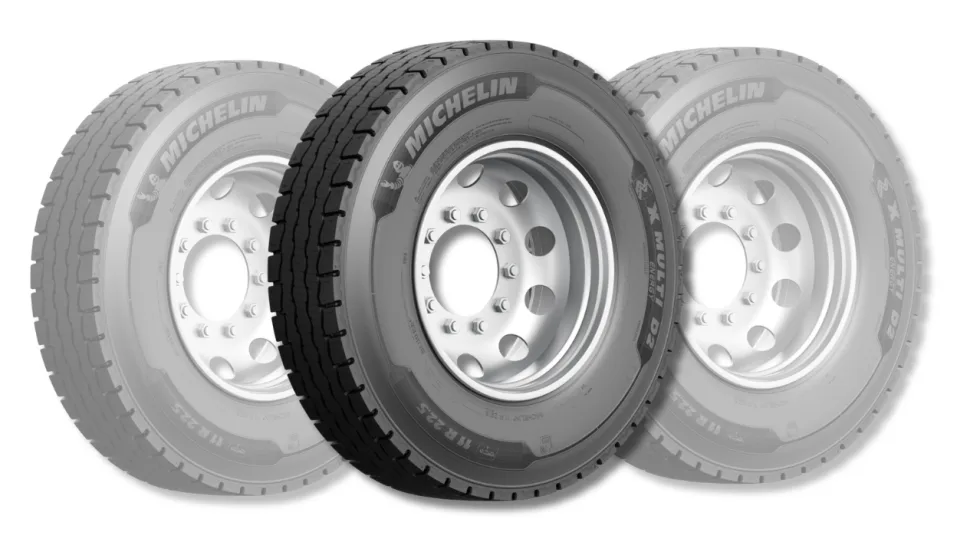
Michelin Tire Improves Efficiency and Durability for Regional Fleets
The Michelin X Multi Energy D2 is a regional haul drive tire engineered to help fleets improve fuel efficiency, durability and traction in demanding stop-and-go operations.
Read More →