




IHS Automotive: New and Used CV Registrations Rise in Q1 2014
While combined year-over-year commercial vehicle registrations rose from the first quarter of the 2013, the combined unit volume trend over the past 13 quarters has been relatively flat at an average unit volume of 312,000 units.
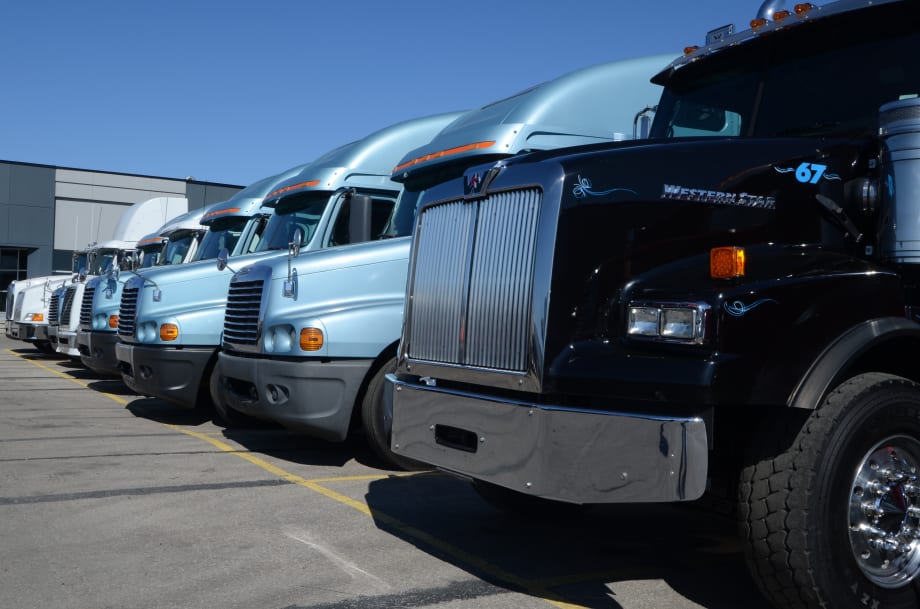
Photo by Jim Park.
Combined new and used Class 3-8 commercial vehicle registrations were up 5% in the first quarter to 319,045 units.

Photo by Jim Park.
According to recent analysis from IHS Automotive, new registrations were up during the first quarter 8.3% year-over-year and used transactions were up 2.4% from the first quarter of the 2013. While combined year-over-year commercial vehicle registrations rose from the first quarter of the 2013, the combined unit volume trend over the past 13 quarters has been relatively flat at an average unit volume of 312,000 units.
Used commercial vehicle transactions during first quarter 2014 totaled 175,800 units, representing the highest Q1 level since the first quarter of 2011. In the quarter, used transactions accounted for 55.1% of total registrations and continued the five-year quarterly trend in which used transactions outnumbered new transactions.
The demand for clean Class 8 vehicles remains strong, as these transactions accounted for 39.7% of used registrations and were 3.5 percent better than the first quarter of the 2013 calendar year.
“Our analysis continues to reflect strong demand for clean used equipment, especially Class 8 vehicles, which are replacing significantly older models in the vehicle population,” said Gary Meteer, director, commercial vehicle solutions at IHS Automotive. “As recently as the end of the 2012, 38% of all Class 8 vehicles in operation in the U.S. were model-year 2000 or older. At the end of March 2014, that category of vehicles represented just 34.2% of the total Class 8 population.”
First Quarter 2014 Used Vehicle Transactions
Vehicle
Class Jan-Mar/14
(000's) Jan-Mar/13
(000's) % change
2014 vs. 2013 Jan-Mar/14
Class % of total Jan-Mar/13
Class % of total Class 3 53.2 52.1 2.0 30.1 30.4 Class 4 16.2 15.3 5.8 9.1 8.8 Class 5 8.7 8.8 -1.3 5.1 5.3 Class 6 13.9 14.7 -5.0 8.0 8.8 Class 7 14.2 13.5 4.9 8.0 7.6 Class 8 69.6 67.3 3.5 39.7 39.1 Total 175.8 171.7 2.4 100 100
Source: IHS Automotive, Polk Used Commercial Vehicle Transactions
New Commercial Vehicle Registrations Increase 8.3 Percent
New registrations of 143,245 units in first quarter 2014 calendar year were up 8.3% from the same quarter in 2013, but declined from the last quarter of 2013.
“When we analyze the quarter-to- quarter movement, our analysis indicates that new registrations for all classes of commercial vehicles have been relatively flat since mid-2011,” Meteer said. “Following the bottoming of the market in 2009, there was the expected surge in demand. However, since mid-2012, demand appears to have settled into a relatively flat unit range. Our analysis indicates that the demand for commercial vehicles represents primarily replacement demand with little strong news to drive companies into an overall expansion mode.”
New registrations by GVW are as follows:
Overall New Commercial Vehicle Registrations by Calendar Year Quarter
2006 2009 2010 2011 2012 2013 2014 Q1 196749 87292 65606 102406 135551 132272 143245 Q2 215347 79116 94420 116281 135786 144307 Q3 211262 81606 97638 125317 143915 152872 Q4 181984 81594 97932 127247 136212 147657 Total 805342 329608 375596 471251 551464 577108
Source: IHS Automotive, Polk 2006-14 new commercial vehicle registration data.
A complete copy of the 2014 First Quarter Commercial Vehicle Report is available here.
More Fleet Management

Why Private Fleets Are Taking More Freight
Private fleets are putting their own trucks on demanding customers and high-cost lanes as companies seek greater control over service, costs, and capacity.
Read More →
Color Match Smarter: Tools That Restore & Perform
For fleet managers and collision repair professionals keeping heavy-duty trucks on the road, getting the color right the first time isn't just about appearance — it's about efficiency, turnaround time, and bottom-line results. Discover how today's digital color tools are transforming the repair process from guesswork to precision.
Read More →
FMCSA Pauses Biennial-Update Enforcement Amid Motus Transition
Carriers whose updates were due on or after June 1 have more time, while FMCSA works to stabilize its new registration system and warns of phishing sites impersonating its new carrier registration system, Motus.
Read More →


2026 Blueprint for Countering Smarter Supply Chain Theft
Cargo theft is no longer just the cost of doing business. It's a multi-billion-dollar criminal enterprise exploiting vulnerabilities across your fleet, drivers, and supply chain.
Read More →
How Telematics Improves Visibility, Control, and Performance in Refrigerated Fleets
Explore how telematics help refrigerated fleets improve visibility, uptime, efficiency, compliance, and cargo protection across connected cold chain operations.
Read More →
What the U.S.-Canada Trade War Means for Trucking
Escalating U.S.-Canada tariffs could disrupt cross-border freight, reduce truck volumes, raise costs, and create new uncertainty for carriers on both sides of the border.
Read More →
What Are Trucking’s Top Concerns for 2026?
The American Transportation Research Institute wants to know what's worrying trucking fleet managers, drivers, and other stakeholders in its annual Industry Issues survey.
Read More →
American Trucking Associations Looks for a New Leader
ATA President and CEO Chris Spear abruptly left his job at the association on August 21, at a pivotal time for the trucking industry.
Read More →
Public Wi-Fi Cybersecurity Risks: How Truck Drivers and Fleets Can Protect Their Data
Public Wi-Fi can expose truck drivers and fleets to credential theft, malware, and other cyber threats. Here’s how to reduce the risk on the road.
Read More →
For Nicky Cupp, Fleet Innovation Starts With Frustration
HDT Truck Fleet Innovator Nicky Cupp turns everyday pain points at Fraley & Schilling into opportunities for better technology and smarter processes.
Read More →