




Hub Group Profits Move Slightly Lower
Hub Group Inc. did something few other large publicly traded trucking operations have done in announcing earnings: It reported a slight decline in profits.
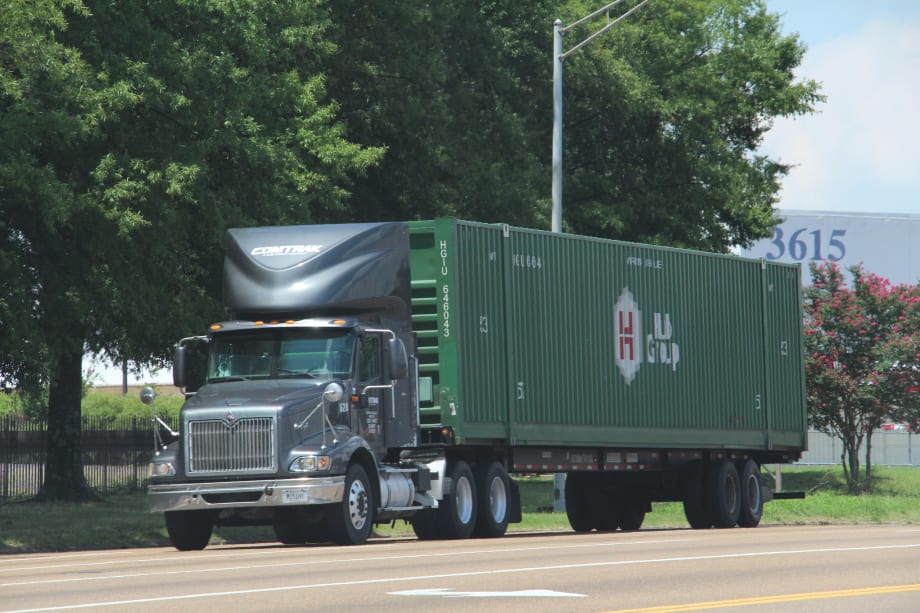
Photo: Evan Lockridge
Photo: Evan Lockridge
Hub Group Inc. did something few other large publicly traded trucking operations have done in announcing earnings: It reported a slight decline in profits.
Net income for the intermodal, truck brokerage and logistics services provider was $16.4 million for the fourth quarter of 2014, down from $16.5 million a year earlier. Diluted earnings per share were unchanged at 45 cents over the comparable time periods.
Revenue increased 3% to $915 million from $885 million a year earlier for the Illinois-based company.
Income for the year was $51.6 million compared to $69.1 in 2013. Diluted earnings per share for 2014 were $1.40 compared to $1.87 a year earlier.
Hub Group's revenue increased 6% to $3.6 billion from $3.4 billion in 2013.
“Like the rest of the industry, we continued to be challenged with rail service issues throughout the fourth quarter,” said CEO Dave Yeager on an investor conference call. “The service challenges created significant inefficiencies within our Intermodal network and while we do believe that rail service will incrementally improve near-term, it is not expected to become more normalized until the second half of the year. However, we continue to be very optimistic about the future of intermodal.”
The company’s Mark Yeager, vice chairman, president and chief operating officer noted that rail service has improved since hitting a low point in December, but is still below levels from a year ago.
“We also incurred unusually high maintenance and repair expenses associated with older tractors and rail-furnished chassis. Nonetheless, as a result of our efforts, we were able to maintain customer on-time performance above 90% throughout the quarter,” he said. “Rail service appears to have stabilized and late in the quarter, we were able to bring drivers home, terminate most of the expensive leased equipment, and get back into a more normalized maintenance and repair cycle. As discussed last quarter, we have a number of initiatives currently in place designed to lower cost, enhance execution and improve service.”
More Fleet Management

How Telematics Improves Visibility, Control, and Performance in Refrigerated Fleets
Explore how telematics help refrigerated fleets improve visibility, uptime, efficiency, compliance, and cargo protection across connected cold chain operations.
Read More →
What the U.S.-Canada Trade War Means for Trucking
Escalating U.S.-Canada tariffs could disrupt cross-border freight, reduce truck volumes, raise costs, and create new uncertainty for carriers on both sides of the border.
Read More →
What Are Trucking’s Top Concerns for 2026?
The American Transportation Research Institute wants to know what's worrying trucking fleet managers, drivers, and other stakeholders in its annual Industry Issues survey.
Read More →

American Trucking Associations Looks for a New Leader
ATA President and CEO Chris Spear abruptly left his job at the association on August 21, at a pivotal time for the trucking industry.
Read More →
Public Wi-Fi Cybersecurity Risks: How Truck Drivers and Fleets Can Protect Their Data
Public Wi-Fi can expose truck drivers and fleets to credential theft, malware, and other cyber threats. Here’s how to reduce the risk on the road.
Read More →
For Nicky Cupp, Fleet Innovation Starts With Frustration
HDT Truck Fleet Innovator Nicky Cupp turns everyday pain points at Fraley & Schilling into opportunities for better technology and smarter processes.
Read More →
Adam Buttgenbach’s Approach to Electric Trucks: Start With Where They Fit
HDT Truck Fleet Innovator Adam Buttgenbach helped PepsiCo build one of North America’s largest EV fleets by focusing on where electric trucks make operational sense.
Read More →
Deen Albert: Let Automation Do the Math, People Make the Decisions
HDT Truck Fleet Innovator Deen Albert makes sure people are still at the heart of operations at Grand Island Express, even while adopting artificial intelligence tools. AI-assisted dispatch helped boost revenue 25% with the same number of trucks.
Read More →
Trimble’s New AI Agent Takes Aim at Fleet Back-Office Busywork
Arc Agent works across Trimble TMS products to automate repetitive tasks such as freight orders, maintenance, invoices, fuel costs and more.
Read More →
How HDT’s 2026 Truck Fleet Innovators Are Rethinking Fleet Operations
Meet five trucking leaders who are challenging assumptions, solving operational problems, and putting innovative ideas to work.
Read More →