




How Bettaway Handled Logistics for a New Beverage-Market Entrant
When a global non-alcoholic spirits brand wanted to expand into the U.S. market, it needed a logistics partner that knew beverage logistics and could flex and scale quickly. See what it found.

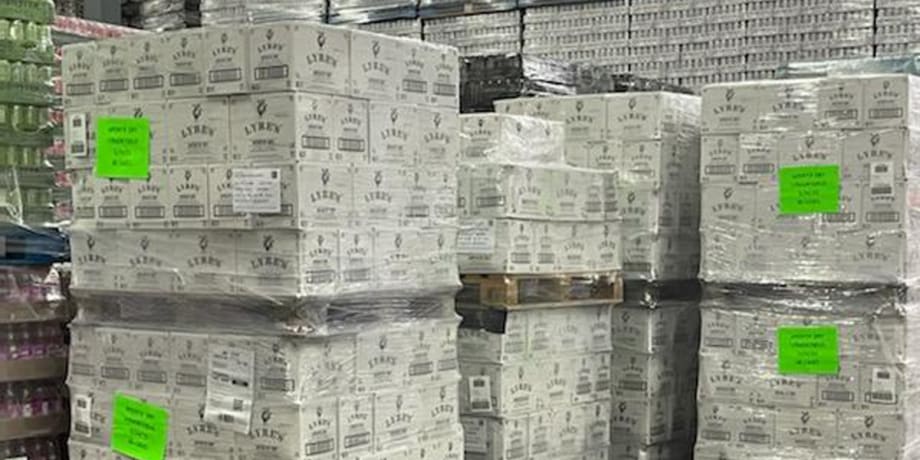
South Plainfield, New Jersey-based Bettaway, is an integrated material handling, transportation, and supply chain management company.
Photo: Bettaway
When Australian-based Lyre’s, a global non-alcoholic spirits brand, wanted to expand into the U.S. market, it needed a logistics partner that knew beverage logistics and could flex and scale quickly. It turned to South Plainfield, New Jersey-based Bettaway, an integrated material handling, transportation, and supply chain management company.
“We wanted someone with beverage logistics experience,” says Joshua Carlos, Lyre’s SVP for North America. “We had two critical needs: a partner who could immediately support us as a startup, with a direct-to-consumer strategy, filling e-commerce orders from our website; and scale and agility — someone who could provide the infrastructure resources, domain expertise, technology and speed to market, as our supply chain needs grew and evolved.”
A conversation with a former Snapple executive led to a meeting with John Vaccaro, President of Bettaway. The Lyre’s team outlined their needs, particularly an accelerated e-commerce-driven go-to-market plan.
“We put together a single-source solution that included warehousing and managing product flow, e-commerce order fulfillment, custom packaging, inventory tracking and visibility,” Vaccaro says.
Layered into that was a program of Bettaway’s 3PL services for phase two: extending Lyre’s into wholesale beverage distribution, taking in orders, building pallet-loads, and staging orders for shipping to wholesale distributors and other large customers, such as grocery and liquor stores.
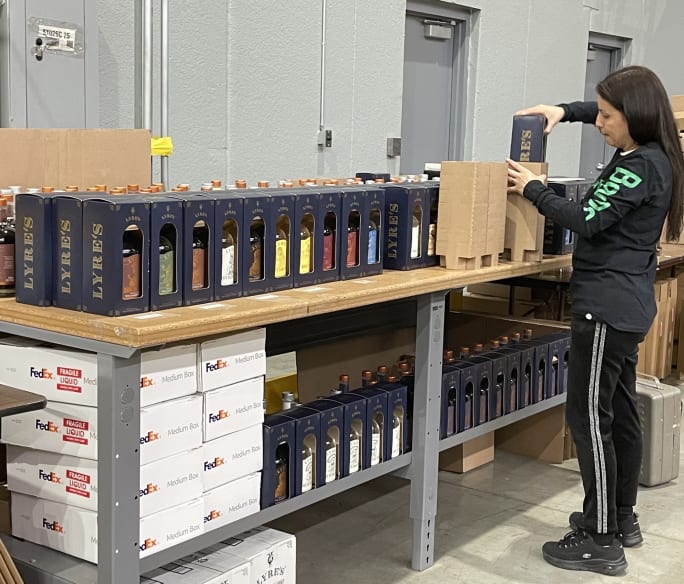
Bettaway designed a program for Lyle’s that included warehousing and managing product flow, e-commerce order fulfillment, custom packaging, inventory tracking and visibility.
Photo: Bettaway
Bettaway was able to integrate immediately with Lyre’s direct-to-consumer business for e-commerce fulfillment, while also providing a bundled 3PL service that supported Lyre’s B-to-B clients with larger-volume deliveries.
“They spun it up in less than a month,” Carlos says. “We got both services under one roof, and the technology capabilities to cost-effectively manage our supply chain and meet our customers’ needs. As the product’s popularity accelerated, that saved us in logistics and transportation costs and gave us the distribution infrastructure, resources and expertise to manage rapidly growing demand.”
From ‘Bottle One Case One’ to 12,000
Initially, Lyre’s shipped its products via ocean from Australia, with Bettaway providing 3PL drayage services from the Port of Los Angeles, then unloading and staging product in a Compton, California, facility.
Bettaway launched “bottle one case one” of its program for Lyre’s in April 2020, starting with 13 flavors and fulfilling its first e-commerce order. Bettaway’s East Coast distribution center, BevDS in Piscataway, New Jersey, was added later that summer with product arriving from the Port of New York and New Jersey. This enabled Bettaway to fulfill and deliver Lyre’s e-commerce orders via parcel carriers, within one or two days from the two DC locations on the East and West Coasts.
That initial April e-commerce order foreshadowed an untapped demand among consumers for Lyre’s products. Within 18 months, Bettaway was fulfilling more than 1,000 direct-to-consumer e-commerce orders a week for Lyre’s, peaking at nearly 12,000 e-commerce-ordered bottles for “dry January.”
Expanding Lyre’s Distribution Logistics
As the direct-to-consumer business grew, Lyre’s added a distributor channel, contracting with Southern Glazier’s Wine and Spirits as its more traditional wholesale spirits distributor. Bettaway then began receiving electronic orders for the distributor, building out palletized less-than-truckload and truckload shipments for delivery to Southern Glazier’s facilities. Later expansions added orders via Amazon and drop-shipments to major retailers like Target.
Carlos cited as a key advantage Bettaway’s flexibility and agility, as well as its systems and the ability to provide real-time reporting on inventory down to the SKU, product, and sell-by level. Its beverage experience and packing line systems also enabled flexibility for different types of packaging configurations, as well as efficient order management for both e-commerce and truckload or less-than-truckload distributor shipments.
“This was a classic beverage go-to-market start-up that had all the typical challenges and pressures,” Vaccaro says, noting that the market for non-alcoholic spirits is one of the fastest-growing segments in the beverage industry. “We consider it a real feather in our cap that Lyre’s came to us, and we have been able to support and scale as their business has grown and their supply chain needs evolved.”
An edited version of this article first appeared in the March 2022 issue of Heavy Duty Trucking.
More Fleet Management

Geotab Links Fleet Card to Vehicle Data
The new card combines fuel discounts with telematics-based purchase controls. Geotab’s analysis also points to potential savings from choosing lower-priced fuel stops.
Read More →
How MFA Helps Protect Trucking Fleets
Multi-factor authentication adds protection when passwords are stolen. Here’s how it works and where fleets should start.
Read More →
How Better Freight Data Helps Trucking Teams Get Ahead of Disruption
Trucking and logistics teams have plenty of data. The problem is getting the right information in front of the right people soon enough to act. Better-connected data can help teams spot trouble earlier and make smarter decisions before small problems become big ones.
Read More →

Trimble: Taking Artificial Intelligence in Trucking Beyond Faster Tasks
At Insight 2026, Trimble executives argued that fleets may need to redesign workflows to get more from AI as it introduced new products and enhancements. AI’s value will depend on how fleets combine automation with their people's knowledge.
Read More →
Build a bulletproof fleet: Uniting ELDs and dash cams for total compliance
An ELD can prove compliance, but it cannot always prove what happened on the road. Discover how uniting accurate ELD data with AI-powered dash cam video can help your fleet strengthen compliance, defend against liability, protect drivers and reduce operational costs.
Read More →
Nominations Open for HDT Emerging Leaders
Heavy Duty Trucking is looking for accomplished trucking fleet professionals under 40 who are making an impact and helping lead the industry forward.
Read More →
Why Private Fleets Are Taking More Freight
Private fleets are putting their own trucks on demanding customers and high-cost lanes as companies seek greater control over service, costs, and capacity.
Read More →
Color Match Smarter: Tools That Restore & Perform
For fleet managers and collision repair professionals keeping heavy-duty trucks on the road, getting the color right the first time isn't just about appearance — it's about efficiency, turnaround time, and bottom-line results. Discover how today's digital color tools are transforming the repair process from guesswork to precision.
Read More →
FMCSA Pauses Biennial-Update Enforcement Amid Motus Transition
Carriers whose updates were due on or after June 1 have more time, while FMCSA works to stabilize its new registration system and warns of phishing sites impersonating its new carrier registration system, Motus.
Read More →
2026 Blueprint for Countering Smarter Supply Chain Theft
Cargo theft is no longer just the cost of doing business. It's a multi-billion-dollar criminal enterprise exploiting vulnerabilities across your fleet, drivers, and supply chain.
Read More →