




Highway Deaths Decreased, Except When Large Trucks Were Involved
Highway fatality numbers are down overall except in cases involving large trucks. According to the latest Department of Transportation statistics, there were 673 fewer highway deaths in 2017 than in 2016.

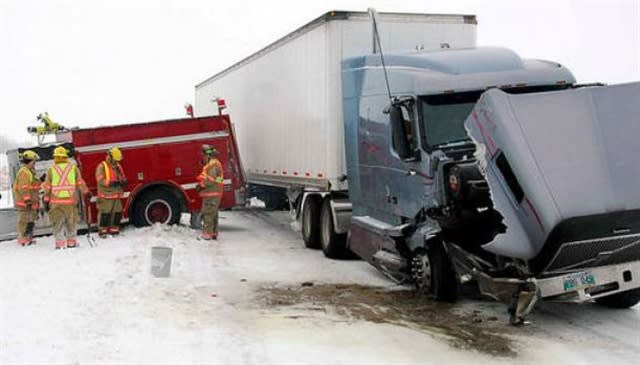
Fatalties involving large trucks increased in 2017, increasing to 4,761 deaths for the year.
Photo via FMCSA
Highway fatality numbers are down overall except in cases involving large trucks, the National Highway Traffic Safety Administration announced on Oct. 2.
According to the latest Department of Transportation statistics, there were 673 fewer highway deaths in 2017 than in 2016 and in most categories there was a decrease.
NHTSA said that fatalities in crashes involving "large" trucks increased by 9% from 2016 to 2017. NHTSA defines a large truck as as any truck with a GVWR greater than 10,000 pounds— including commercial and non-commercial vehicles. However, anything over 10,000 pounds GVWR is separated for data purposes into tractor-trailers and straight trucks.
Fatalities increased by 5.8% in crashes involving tractor-trailer combinations while deaths increased 18.7% in crashes involving single-unit straight trucks. There were 4,761 fatalities involving large trucks last year, compared to all fatalities, which numbered 37,133 fatalities. This represents a total increase of 392 fatalities in large truck crashes. The only other segment with an increase in fatalities was SUVs, which increased by 3% from 2016 to 2017.
“Safety is the Department’s number-one priority,” said Secretary of Transportation Elaine Chao. “The good news is that fatalities are trending downward after increasing for the two previous years. But the tragic news is that 37,133 people lost their lives in motor vehicle crashes in 2017. All of us need to work together to reduce fatalities on the roads.”
In a call with reporters to discuss the statistics, Federal Motor Carrier Safety Administrator Ray Martinez further clarified that not all vehicles weighting over 10,000 pounds are regulated as commercial vehicles by FMCSA. He also pointed out that failing to wear a seatbelt was responsible for a quarter of occupant deaths in large truck-involved accidents.
Overall, the fatality rate per 100 million vehicle miles traveled decreased by 2.5% in 2017— and has been trending steadily downward since the 1980s. This is despite the fact that there was a 1.2% increase in vehicle miles traveled in 2017.
NHTSA’s report is detailed, breaking down fatalities by vehicle type, location, contributing factors, and age and it is available online. It is still preliminary data however, and the complete report is expected to be available in late fall of 2019. The agency cautioned that until the final data is released, it is too soon to speculate on the reasons for or potential implications of any changes in deaths on our roadways.
NHTSA also released its early estimate of vehicle fatalities for the first six months of 2018 and it is predicting another decrease in traffic deaths this year, of 3.1%. So far, the agency estimates that there have been 17,120 highway deaths in 2018 compared to 17,664 fatalities in the same period of 2017.
“Dangerous actions such as speeding, distracted driving, and driving under the influence are still putting many Americans, their families and those they share the road with at risk,” said NHTSA Deputy Administrator Heidi R. King. “Additionally, we must address the emerging trend of drug-impaired driving to ensure we are reducing traffic fatalities and keeping our roadways safe for the traveling public.”
More Safety & Compliance

FMCSA Pauses Biennial-Update Enforcement Amid Motus Transition
Carriers whose updates were due on or after June 1 have more time, while FMCSA works to stabilize its new registration system and warns of phishing sites impersonating its new carrier registration system, Motus.
Read More →
ZF Expands Commercial Vehicle Push in North America
ZF is expanding its North American commercial-vehicle presence with new transmission applications, electrification, trailer technology and autonomous-driving systems.
Read More →
Truck Drivers Need More Than Another Alert
Fleets have more visibility into truck health, safety events, and driver activity than ever. The next challenge is turning all that information into useful guidance for the person who has to decide what to do next.
Read More →
Tesla Wants a Self-Driving Semi. Are Cameras Enough?
Could Tesla’s camera-only autonomous driving technology work on an 80,000-pound Semi? In this commentary, HDT's Deborah Lockridge takes a look at Tesla, Cybercab, and how autonomous trucks see the road.
Read More →
What DOT’s Automated Vehicle Strategy Means for Trucking
The U.S. Department of Transportation issued a new automated-vehicle strategy that outlines plans for driverless-truck regulations, cross-state freight corridors, and federal safety standards.
Read More →
NYC Expands Speed, Pedestrian Safety Tech Across Fleet
New York City is expanding intelligent speed assistance and pedestrian-alert systems across its municipal fleet, moving the technologies from pilot programs into vehicle procurement and retrofit requirements.
Read More →
FMCSA Removes 110 Truck Driver Training Schools from Certified ELDT List
Federal regulators also are targeting more than 160 additional training providers and launching a nationwide audit of third-party CDL skills testers as part of a broader crackdown on trucking fraud.
Read More →
Beyond DOT Compliance: What Makes a Trucking Fleet Truly Safe?
A trucking fleet can follow every rule and still make unsafe decisions. The real test comes when safety conflicts with freight, productivity, or cost.
Read More →
Hours of Service Pilot Programs: FMCSA Readies for 2027 Rollout
Two pilot programs could eventually reshape hours-of-service rules, giving truck drivers options to pause their 14-hour clock or use longer split sleeper rest periods.
Read More →
New Guide Offers Pet Safety Tips for Truck Drivers
Hundreds of thousands of pets travel in truck cabs. A new safety guide from Volvo Trucks and the Center for Pet Safety offers practical advice for truck drivers who bring dogs and cats along for the ride.
Read More →