




HDT's Anniversary: Covering Trucking for 90 Years (Part One)
In late 1922, a magazine called Western Drayman & Warehouseman changed its name to Western Truck Owner. A subscription was $2.50 a year and a single issue cost 25 cents
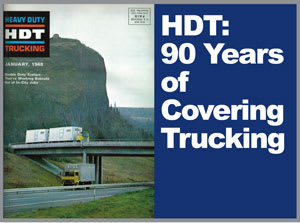
In late 1922, a magazine called Western Drayman & Warehouseman changed its name to Western Truck Owner. A subscription was $2.50 a year and a single issue cost 25 cents.
That magazine would go through a couple more name changes before finally becoming Heavy Duty Trucking.
Western Truck Owner got its start at the dawn of trucking as more than a local delivery option. A few years earlier, at the close of World War I, tire maker Firestone launched a $2 million Ship by Truck campaign that advocated using trucks to reduce the cost of living through the more efficient transport of manufactured goods.
As trucking grew and changed, this magazine reported on the news, the trends and the challenges affecting truck fleets.
Trucking, as we know it, was made possible by the growth of the highway system. In 1919, a transcontinental truck convoy that included then-Lt. Col. Dwight D. Eisenhower drove more than 3,000 miles from Washington, D.C., to Oakland, Calif, a trip that is widely believed to have been the beginnings of his later support of the Interstate Highway System.
The U.S Highway System was created by the Federal Aid Highway Act of 1925, and the end of the decade saw the opening of the famous Route 66.
By 1928, truck transport had caught on to the point where what's largely credited as the nation's first truckstop opened in McLean, 111., after Route 66 came through the town: Truckers Dixie Home (later changed to Dixie Truckers Home and eventually Dixie Travel Plaza).
With trucks also came concerns about the men behind the wheel. A December 1928 Western Truck Owner feature, "What About Your Driver?" was part of a three-part series that recognized drivers as the "vital factor in the success or failure of your business."
The burgeoning trucking industry got the attention of the federal government, and in 1932, the Federal Motor Carrier Act gave the Interstate Commerce Commission power to regulate trucking.
The Motor Carrier Act of 1935 required interstate for-hire carriers to obtain operating authority from the ICC by proving they were providing an unfilled need for services in the area. Prices or rates had to be filed with the ICC, individually or collectively through rate bureaus that operated under antitrust immunity granted by Congress.
Regulation wasn't limited to economic matters. The first hours-of-service rules went into effect on March 1, 1939.
The '30s also saw the dawn of the diesel. In 1931, Cummins Engine Co. was founded. Clessie Cummins didn't invent the diesel (that credit goes to Rudolph Diesel and Germany's MAN Works in the 1890s), but he had a lot to do with popularizing the technology in America. To promote diesel power, he raced diesel-powered vehicles at the Indianapolis speedway.
In 1933, Kenworth was the first truck maker to install diesel engines as standard. By 1937, GM formed Detroit Diesel, and in 1938, Mack introduced its first diesels.
By the late 1930s, with more states imposing length and weight limits, truck makers start offering models with the the cab mounted over the engine, cutting as much as 4 feet off the tractor.
World War II brought legal limits on the number of non-military trucks sold. Tires were rationed and trailer production stopped. To conserve fuel and prolong vehicle life, the national speed limit was set at 40 mph and later reduced to 35 mph.
Many fleet shops become mini-factories, building vehicles from "junk" parts robbed from other trucks. Former truck factories were building war goods, not just trucks for the military but also things like airplane components and machine guns.
Highway building continued; the 160-mile Pennsylvania Turnpike opened in 1940, and in 1944, a year before WWII ended, Congress authorized a 40,000-mile highway system linking 90% of U.S. cities with populations of 50,000 or more.
At the dawn of the decade, Consolidated Freightways' Leland James and his team built a cabover that was 2,000 pounds lighter than other trucks. Freightliner, as it became known, was later spun off due to antitrust concerns. It offered the industry's first commercial vehicle with an all-aluminum cab, the Model 600, nicknamed the "shovelnose."
Western Truck Owner was now owned by the Hutchinson family, which would own it until 2012. A 1953 article predicted, accurately, that with trucking-minded Dwight Eisenhower in the White House, motor transport could look forward to growth of as much as 20% by 1956.
Then the Federal Aid Highway Act of 1956 authorized the greatest long-range highway program ever undertaken, to build an Interstate system to meet traffic needs into 1975. It also essentially capped truck weights at 73,280 pounds in most states and set a maximum width of 96 inches.
Better highways meant diesel engines finally caught on, as well as the birth of the "travel plaza" or "truckers oasis."
Fuller introduced the Road-ranger, a single transmission that combined main and auxiliary boxes, and Allison produced the first fully automatic transmission for on-high way trucks. By the late '50s, standard horsepower ratings ranged from 180 to 220.
In 1957, Jimmy Hoffa was elected Teamsters president.
In 1962, the name of the magazine was changed to Western Trucking Motor Transportation. The next year, motor carrier revenue exceeded rail freight revenue for the first time in history - and the Clean Air Act passed, legislation that would have far-reaching consequences for trucks. Regulation had split the industry into well-defined slots:
- Common carriers offered services to the public in general, but scope of their operations and markets was defined by the authority granted them by the ICC. In the late 1960s, there were close to 15,000.
- Contract carriers were for-hire carriers who only hauled under contract for a limited number of customers. There were about 2,800 by the end of the decade.
- Exempt carriers hauled commodities not subject to federal regulations, including most agricultural products. They did not need operating authority. This was a popular way for owner-operators to break into the business. There were an estimated 29,000.
- Private carriers were the largest group, with an estimated 77,000 fleets operating interstate.
In 1966, the Department of Transportation was created, consolidating about 30 existing transportation agencies. A new Federal Highway Administration was given responsibility for highways and safety. The ICC retained authority for economic regulation of trucking.
Dave Dudley's song "Six Days on the Road' helped establish the notion that truckers were amphetamine-fueled speed demons. A 1967 Western Trucking article, "Highway Nightmare," featured an interview with a "long-line" driver, once addicted to narcotics, who spoke about why drivers used drugs and the dangers involved.
A 1965 article on "trends in horsepower" said it was up and going higher, with fleets moving from 250 horsepower to 280, 335 and even 350 and 375 horsepower. In 1969, the popularity of V-8 gasoline engines peaked, with more than 67% of new trucks equipped with them.
In a 1967 interview, Ford's chief engineer of turbine operations predicted turbines would "rule Interstate routes in the 70s."
In 1964, Teamsters leader Jimmy Hoffa was convicted of mail fraud and jury tampering, but remained free on appeals until 1967. Before he went to jail, Hoffa pushed for "stabilizers, drive-alert systems, anti-jackknife equipment" and other safety technology.
In January 1968, the name of the magazine was changed to Heavy Duty Trucking. The cover story asked, "Are Bobtails Doomed?" Fleets were moving to double or semi trailers with city tractors rather than straight-truck "bobtails" for in-city pickup and delivery. Another feature highlighted the rotary combustion engine as a "promising new power source for certain highway applications," a third the size of a gas engine and 60% lighter than diesel.
And in May 1968, in a story titled "Owner-Operator: He sits high in the saddle," HDT noted that manufacturers were eager to sell owner-operators a nice "home on the road."
"Some of them make $15,000 or more, and sometimes for nine months of work," we reported. "And the future appears to be unlimited for this 'independent' businessman."
From the September 2012 issue of HDT
More Aftermarket
What Three Fleets Are Doing Differently When Buying Truck Parts in 2026
With freight improving but costs still climbing, fleet maintenance executives explain how they're balancing price, quality, and supplier relationships.
Read More →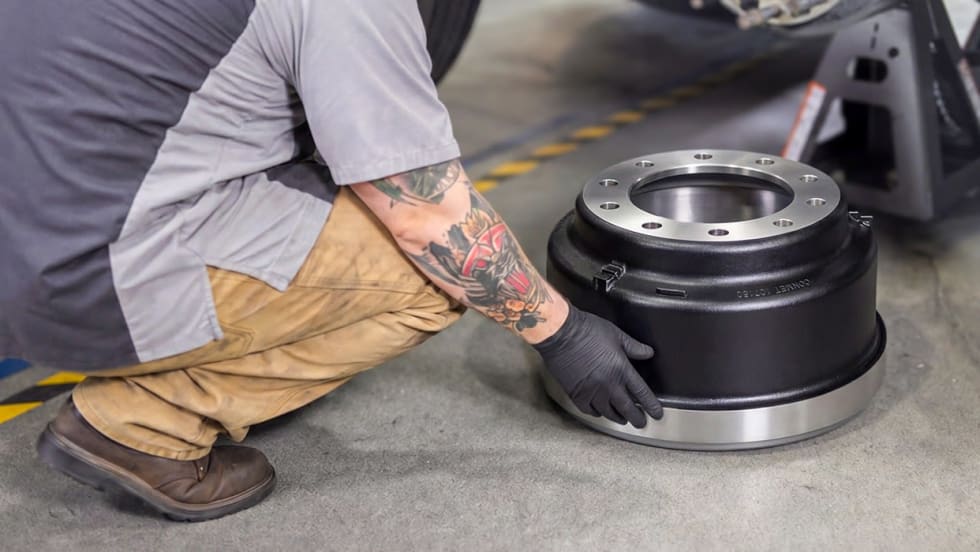
ConMet Expands Aftermarket Brake Drum Lineup With TruCast
A new heavy-duty truck brake drum option in the aftermarket gives customers more flexibility within the ConMet product family.
Read More →
Phillips Opens High-Tech Distribution Center for Faster Parts Delivery
Phillips Industries’ new Cincinnati-area distribution center is now shipping aftermarket trucking parts nationwide, aiming to speed up delivery times for customers.
Read More →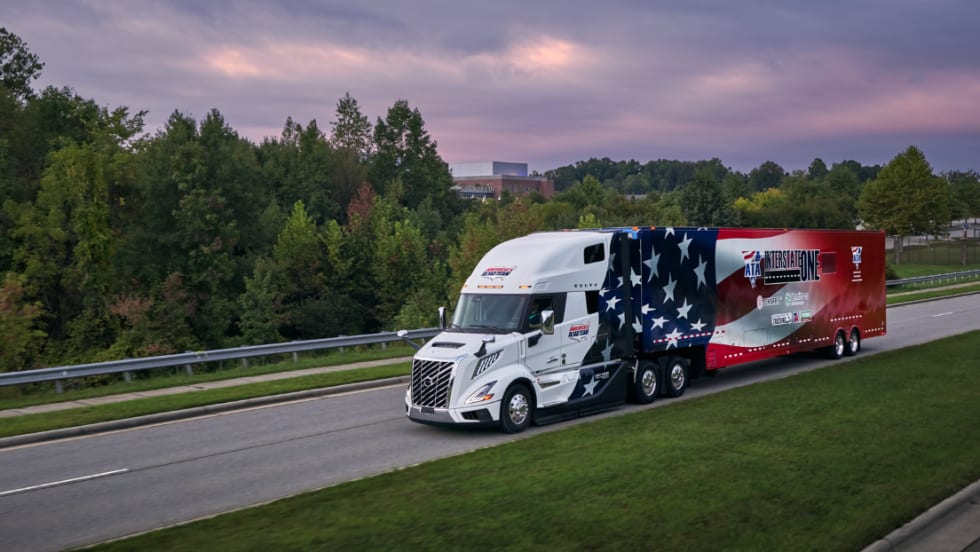
Volvo to Sponsor America’s Road Team for 2025
Volvo Trucks announced that it is extending its exclusive sponsorship of America’s Road Team for 2025.
Read More →
Webb to Start Taking Orders for UltraSet Pre-Adjusted Wheel Hubs
Webb, which recently acquired the Stemco Trifecta pre-adjusted hub program, will soon start taking orders for its replacement pre-assembled hub, the UltraSet.
Read More →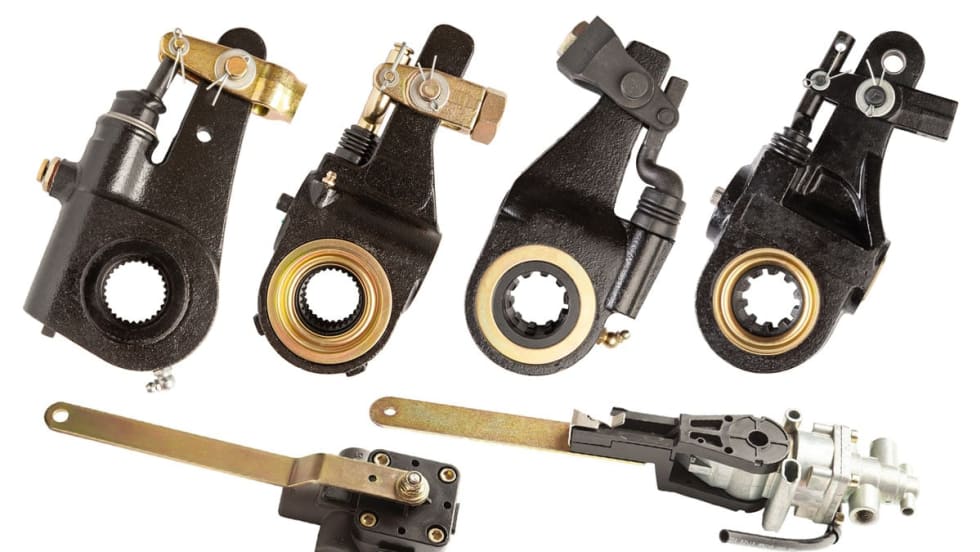
All-Makes Automatic Brake Adjusters, Ride Height Control Valves from Midland
SAF-Holland has added automatic brake adjusters and ride height control valves to its Midland All-Makes Program.
Read More →
ZF Aftermarket Expands [pro]Academy Training
ZF Aftermarket said it is expanding its ZF [pro]Academy training and will be adding 40 new modules this year.
Read More →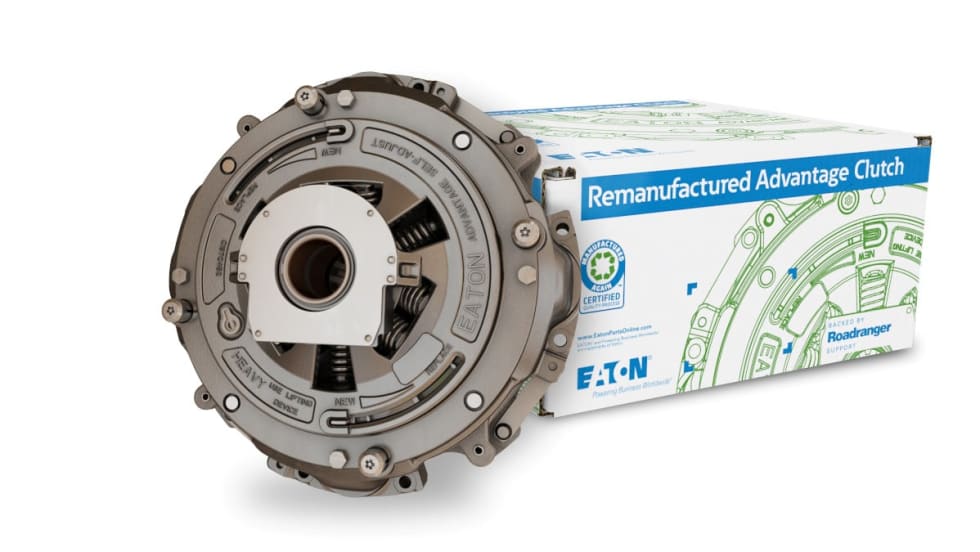
Eaton Adds Remanufactured Advantage Line of Clutches
Eaton has added its Advantage clutches to its remanufactured product line. The clutches feature a unique strap drive intermediate plate designed to allow customers to choose the latest OE specification
Read More →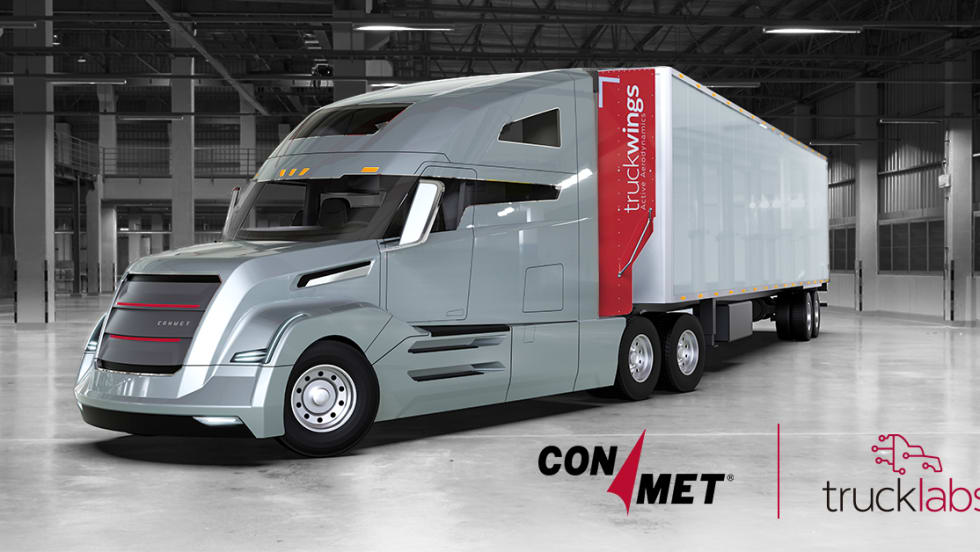
ConMet Acquires TruckLabs, the Creator of TruckWings
Commercial truck and trailer parts provider ConMet acquired TruckLabs, the company that created TruckWings, an aerodynamic device that attaches to truck cabs and deploys to close the gap between truck and trailer. TruckLabs now operates as a subsidiary of ConMet.
Read More →
Diesel Laptops Releases Fault-Code-to-Part-Number Tool
Diesel Laptops said its Truck Fault Codes allows users to input a fault code and immediately identify and order the parts needed to complete repair work.
Read More →