




Freight Shipments Fall in December, 2014 Projected to be Better Than Last Year
North American freight activity followed virtually the same path in 2013 as it did in the previous two years, concluding with the typical December falloff, according to new issue of the Cass Freight Index Report.
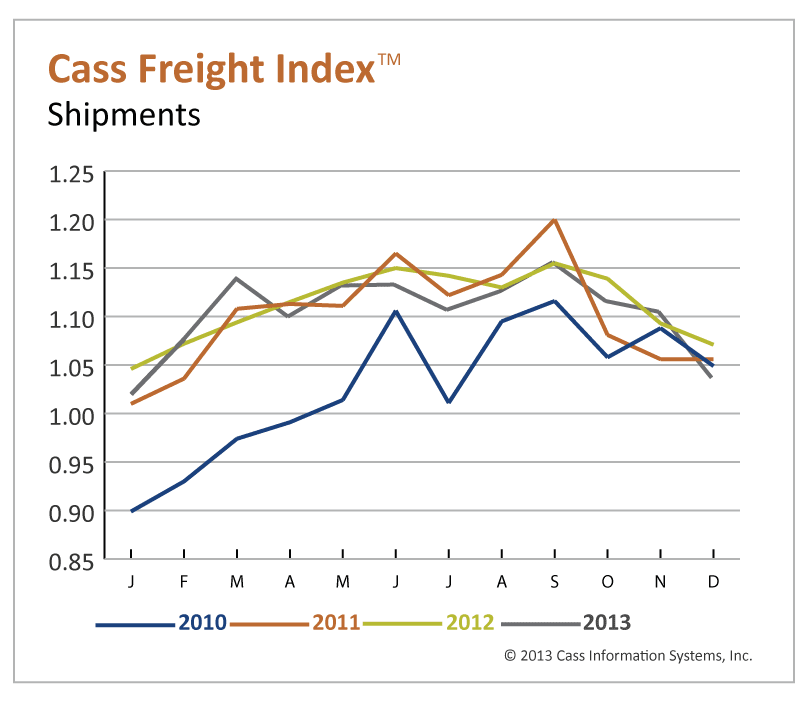
North American freight activity followed virtually the same path in 2013 as it did in the previous two years, concluding with the typical December falloff, according to new issue of the Cass Freight Index Report.

The climate for freight was “mediocre” throughout 2013, with the average number of monthly freight shipments 0.7 % lower than in 2012.
“Inventories remained high, manufacturing stalled mid‐year, and exports and imports were relatively flat for most of the year,” the report says. “All of this contributed to another bumpy year in the recovery that hasn’t quite gotten there.”
Freight volumes in North America plummeted 6.2% from November to December, making this the largest monthly drop in 2013 and the third straight monthly decline. December shipment levels were 3.2% lower than in December 2012 and 1.8% lower than 2011.
“Despite the fact that there were fewer shipments in 2013, other indicators, such as the American Trucking Association’s Truck Tonnage Index, have shown that loads have been getting heavier. This matches well with anecdotal evidence from LTL carriers that they are carrying fuller loads,” according to the report
In looking back at 2013, the report call it a “complicated year from a purely economic point of view” while the major events contributing to this had very little impact on freight.
“As we have experienced for several years now, the first quarter came on strong, then we muddled our way through the rest of the year and entered the following year just slightly above where we were the previous January,” the report says.
Looking forward to 2014, Cass notes there are some hurdles, but the freight picture should strengthen as the year progresses. “Freight growth will still be measurably stronger in 2014, albeit slow and uneven. Volumes will be up consistently for several months, putting pressure on capacity before we see a rise in rates,” Cass says. “The virtual rate freeze that has existed for almost three years should thaw and give way to higher freight expenditures by the second half of the year due to higher costs and volumes.
The Cass Freight Index represents monthly levels of shipment activity in terms of volume and expenditures for freight shipments, based upon the domestic movements of hundreds of Cass clients. Cass Information Systems processes more than $22 billion in annual freight payables on behalf of its clients.
More Drivers

EEOC Sues KLLM Over Alleged Sex Discrimination in Driver Training
KLLM is facing a federal sex-discrimination lawsuit over policies the EEOC alleges put female truck driver trainees at a disadvantage.
Read More →
FMCSA Moves to Codify English Language Requirements for Commercial Drivers
By changing regulations on English-language proficiency requirements for commercial drivers, rather than relying on a guidance memo, the FMCSA said future administrations won't be able to walk back the Trump administration's stricter enforcement with just a memo.
Read More →
Drivers Put Western Star Trucks to the Test at Star Nation Experience
Watch to get an inside look at the Western Star trucks, technology, and community behind the Star Nation Experience 2026!
Read More →
Trump Administration Looks to Put More Veterans Behind the Wheel
The Freedom Haulers program pulls together existing and expanded programs at several federal agencies to recruit veterans to drive commercial heavy-duty trucks and cut the red tape for them to get a CDL, training, and employment.
Read More →
Putting Mack’s Command Steer to the Test
A test drive of Mack’s Command Steer active steering system evaluates how it can make truck driving easier and less tiring.
Read More →
Competition Heating Up for Truck Drivers
New report reveals rising driver hiring costs, the return of sign-on bonuses, growing AI advantages, and the operational factors shaping driver retention.
Read More →
How Fraley & Schilling Improved Logbook Compliance by Over 50%
Fraley & Schilling needed a way to close a compliance workflow gap in its ELD system without adding more work from driver training, reminders, and back-office follow-ups. It found the answer in a custom driver app.
Read More →
Volvo Goes Gaming
Volvo has roared into American Truck Simulator with two new flagship trucks.
Read More →
What the Best Fleets to Drive For Teach About Driver Retention
Survey fatigue, AI-powered routing, owner-operator expectations, and the decline of social media all emerged as themes from this year's Best Fleets to Drive For program.
Read More →
Driver Retention Lessons From the Best Fleets to Drive For
What separates trucking's best workplaces from the rest? Jane Jazrawy shares the biggest lessons from this year's Best Fleets to Drive For program on driver retention, communication, AI, and workforce trends on the HDT Talks Trucking podcast.
Read More →