




FMSCA Extends Safety-Fitness Rulemaking Comment Period
The Federal Motor Carrier Safety Administration has extended the public comment period for its proposed rule on safety fitness determinations for motor carriers.

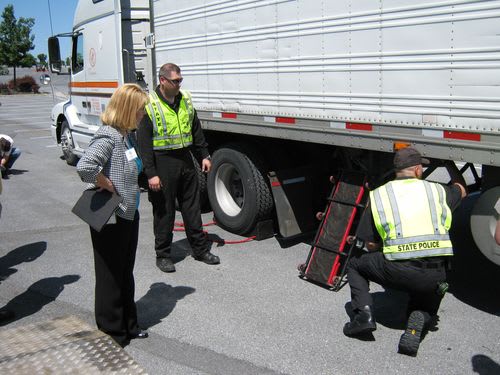
Photo: U.S. DOT

Photo: U.S. DOT
The Federal Motor Carrier Safety Administration has extended the public comment period for its proposed rule on safety fitness determinations for motor carriers.
The deadline for the submission of initial comments is now May 23, 2016. Reply comments will be due on or before June 23, 2016. FMCSA said that stakeholder requests led to the comment extension.
On January 21, the agency published a Notice of Proposed Rulemaking to amend the current methodology for issuing safety fitness determinations. Shortly after, several trucking associations petitioned for a 60-day extension of the comment period. Those requests were followed by the Owner Operator Independent Drivers Association’s petition for an even longer extension of 90 days.
Upon reviewing those requests, FMCSA said it decided to grant a 60-day extension “to provide all interested parties adequate time to submit comments on proposals in this rulemaking.” In the extension notice, FMCSA also corrected the title and date of an American Transportation Research Institute report that the original Notice of Proposed Rulemaking cited about the agency's Safety Measurement System.
FMSCA said the proposed SFD rule would replace the current three-tier federal rating system of “satisfactory–conditional–unsatisfactory,” which has been in place since 1982, with a single determination of “unfit.” A carrier that is determined to be unfit would be required to either improve its operations or cease operations.
The agency also said the proposal would permit FMCSA to assess the safety fitness of approximately 75,000 companies a month. By comparison, it is now only able to investigate 15,000 motor carriers annually– with less than half of those companies receiving a safety rating.
Per FMCSA, the proposed methodology would determine when a carrier is not fit to operate commercial motor vehicles based on:
The carrier’s performance in relation to a fixed failure threshold established in the rule for five of the agency’s Behavior Analysis and Safety Improvement Categories (BASICs)
Investigation results; or
A combination of on-road safety data and investigation information
The requests for extending the comment period reflects the controversy that the SFD rulemaking stirred up— even before it was officially released.
About a week before the NPRM was published, a coalition of eight associations representing trucking interests challenged FMCSA’s intentions in a letter sent to several lawmakers who had championed FMCSA reform provisions within the FAST Act highway bill passed late last year. FMCSA Chief Counsel T.F. Scott Darling III was copied as well.
The group of stakeholders, which includes the Western States Trucking Association and the National Association of Small Trucking Companies, had contended that “FMCSA plans to ignore the clear mandates of the FAST Act… [with a rulemaking] that would change existing standards for determining the safety fitness of individual motor carriers.”
In their Jan. 12 letter, the associations argued that “it is apparent that the proposed [SFD] rule would incorporate the same ‘on-road safety performance data’ that FMCSA has used in calculating BASICs” under SMS and CSA. “We believe that if FMCSA goes ahead with its proposed ‘quickie’ rulemaking on use of SMS/CSA data,” such action would disregard at least three provisions of the FAST Act.
They added that “we are expressing our concerns that any Notice of Proposed Rulemaking involving a safety fitness determination at this time in light of the strictures imposed by the FAST Act is highly inappropriate and will be challenged.”
Both initial and reply comments should be identified by Docket Number FMCSA-2015-0001 and submitted to the agency via any of these methods:
Federal eRulemaking Portal by going to www.regulations.gov and following the online instructions for submitting comments
Fax to 1-202-493-2251
Mail to Docket Services, U.S. Department of Transportation, Room W12-140, 1200 New Jersey Avenue SE., Washington, DC 20590-0001
More Safety & Compliance

How Lance Evans Turns Enforcement Experience Into Better Fleet Safety
HDT Truck Fleet Innovator Lance Evans brings lessons from law enforcement to K&B Transportation’s approach to safety technology, data, driver coaching, and compliance.
Read More →
New FMCSA Chief Safety Officer Has Trucking Industry and Law Enforcement Experience
Steve Dowling joins FMCSA after serving as senior director of safety at Covenant Logistics and in leadership roles in commercial motor vehicle industry organizations.
Read More →
Driver Trust Can Make or Break the Success of Fleet Safety Technology
New Teletrac Navman research suggests that onboarding, transparency about driver data, and positive feedback can play a significant role in how commercial drivers respond to safety and coaching technology.
Read More →
FMCSA: Stop Using These 15 Electronic Logging Devices
Fleets and drivers must replace the revoked ELDs with ones on the FMCSA's registered device list of electronic logging devices.
Read More →
How HDT’s 2026 Truck Fleet Innovators Are Rethinking Fleet Operations
Meet five trucking leaders who are challenging assumptions, solving operational problems, and putting innovative ideas to work.
Read More →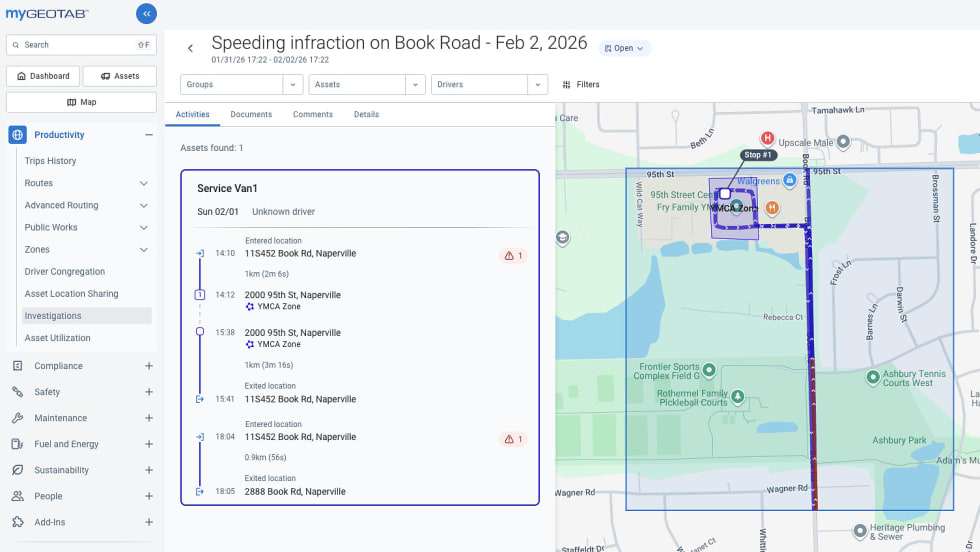
Geotab Launches Tool to Speed Fleet Incident Investigations
Geotab Investigations brings telematics data, video, photos, reports and other evidence into one case file to help fleets determine what happened and resolve incidents faster.
Read More →
FMCSA Moves to Codify English Language Requirements for Commercial Drivers
By changing regulations on English-language proficiency requirements for commercial drivers, rather than relying on a guidance memo, the FMCSA said future administrations won't be able to walk back the Trump administration's stricter enforcement with just a memo.
Read More →
Trump Administration Expands Homeland Security's Role in Trucking Enforcement
The administration's latest trucking crackdown goes beyond roadside inspections, expanding Homeland Security's role in commercial vehicle enforcement and investigations involving CDL training schools.
Read More →
Paccar Recalls 2027 Trucks Built This Summer for Possible Electrical Problem
The nearly 6,000 Kenworth and Peterbilt trucks in the recall could potentially lose engine power, among other things.
Read More →
Brake Safety Week to Focus on Drums and Rotors
Commercial vehicle inspectors will be focusing on brakes during CVSA's Brake Safety Week, August 23-29.
Read More →