




FMCSA Wants Stricter Prescription Narcotics Restrictions
Truck drivers who use prescribed narcotics should not be allowed to drive, say the doctors who advise the Federal Motor Carrier Safety Administration. That could mean changes in driver medical exams.

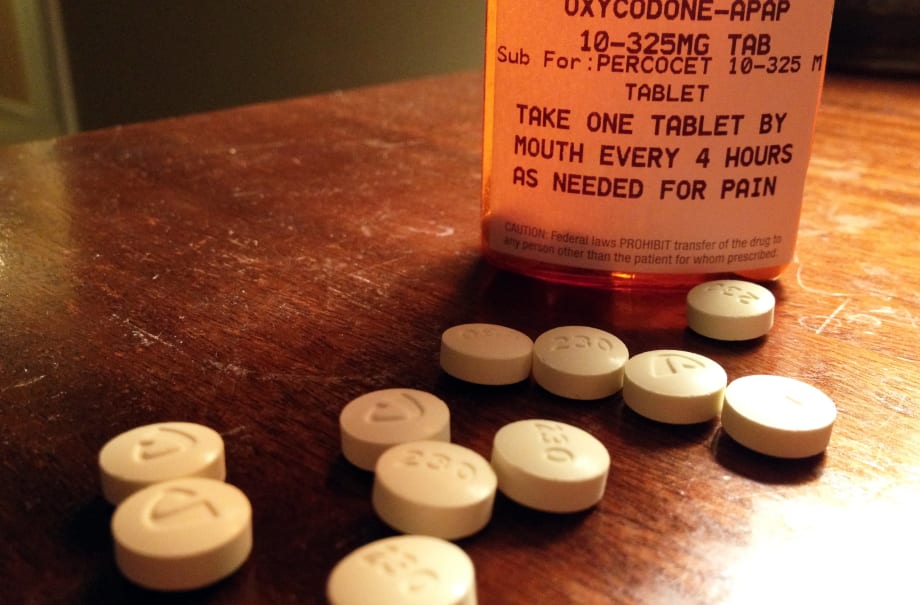

Truck drivers who use prescribed narcotics should not be allowed to drive, say the doctors who advise the Federal Motor Carrier Safety Administration on medical matters. While changing the rules could take years to get through a rulemaking process, a more near-term result could be a change in driver medical exams.
The recommendation by the FMCSA’s Medical Review Board and the Motor Carrier Safety Advisory Committee, approved in an Oct. 27 meeting, would amount to a significant change in medical regulations if it were to become part of the official safety regime.
Right now drivers are permitted to work while taking these drugs, provided the drugs are prescribed by a doctor who is familiar with the driver’s condition.
Any change in that approach would require a formal notice-and-comment rulemaking proceeding, which would require years of work.
The recommendation does, however, signal the deep concern in the medical community about the risks of driving while using Schedule II medications, which include some opioid pain relievers and medications for attention deficit disorder.
The concern arises from research conducted by the agency’s Medical Expert Panel showing that the opioids used in prescription pain relievers add moderate risk to the driver’s job. The research also found that stimulants used to treat attention deficit reduce the risk associated with that condition but can substantially increase driving risk if they are not closely monitored.
Since these medications are now permitted, the board and MCSAC recommended that the current medical guidelines should be revised to include a questionnaire that gives examiners more information about a driver’s condition and medications.
The questionnaire would ask the examiner to list all the medications and dosages he has prescribed, as well as any medications he knows have been prescribed by another healthcare provider. It also would ask what conditions the medications are intended to treat.
The examiner then must say whether or not the medication prescribed, or the condition he or she prescribed it for, would adversely affect the driver’s performance.
The agency will have to clear the questionnaire with the Office of Management and Budget, but it should be available to medical examiners within six months, said Larry Minor, associate administrator for policy and program development at the agency.
Members of the Medical Review Board said the questionnaire will improve safety by giving examiners a better way to account for these medications.
“It will make a difference as far as our examiners are concerned,” said Gina Pervall, medical director for Occupational Medicine Services at Johns Hopkins University.
Will doctors overcompensate?
The decision by MCSAC to accept the board’s recommendation was not unanimous, however. Trucking interests, including American Trucking Associations, were outvoted by the majority.
Rob Abbott, vice president of safety policy at ATA, said he is concerned that the questionnaire might encourage examiners to decline certification for drivers using these medications.
The requirement for the examiner to say if the medication would harm the driver’s performance gives the examiner “everything to lose and nothing to gain” by saying the driver is qualified.
“So it seems like the default answer for many of them will be, well, there’s some level of impairment there so he can’t drive,” Abbott said. “That’s concerning.”
He also worries that the questionnaire could push drivers toward not taking medications that they need.
“I think we have to ask those questions a little more carefully.”
Abbott welcomed the possibility of a rulemaking on the question of whether or not drivers should be able to work while on Schedule II medications.
“A rulemaking would require that we put to the test the notion that there is a need, a real-world safety benefit,” he said. “If we’re confident that there is a problem and this will solve it, then it’s appropriate that we take that step.”
The discussion and voting on the medications issue took place Monday in Alexandria, Va., at a joint meeting of the advisory committee and medical board.
The 20-member advisory panel is made up of carriers, owner-operators, police, labor unions, bus operators and safety advocates who make policy recommendations to the agency.
The medical board has five members, all doctors who serve in leadership positions at leading universities or health care providers.
More Drivers

Truck Drivers Need More Than Another Alert
Fleets have more visibility into truck health, safety events, and driver activity than ever. The next challenge is turning all that information into useful guidance for the person who has to decide what to do next.
Read More →
FMCSA Removes 110 Truck Driver Training Schools from Certified ELDT List
Federal regulators also are targeting more than 160 additional training providers and launching a nationwide audit of third-party CDL skills testers as part of a broader crackdown on trucking fraud.
Read More →
Hours of Service Pilot Programs: FMCSA Readies for 2027 Rollout
Two pilot programs could eventually reshape hours-of-service rules, giving truck drivers options to pause their 14-hour clock or use longer split sleeper rest periods.
Read More →
Medical Cards, English Proficiency Reshape Roadcheck Violations
Medical-card violations jumped to the top of the driver out-of-service list during CVSA’s 2026 International Roadcheck, while English-language proficiency violations appeared among the leading violations for the first time.
Read More →
Driver Trust Can Make or Break the Success of Fleet Safety Technology
New Teletrac Navman research suggests that onboarding, transparency about driver data, and positive feedback can play a significant role in how commercial drivers respond to safety and coaching technology.
Read More →
EEOC Sues KLLM Over Alleged Sex Discrimination in Driver Training
KLLM is facing a federal sex-discrimination lawsuit over policies the EEOC alleges put female truck driver trainees at a disadvantage.
Read More →
FMCSA Moves to Codify English Language Requirements for Commercial Drivers
By changing regulations on English-language proficiency requirements for commercial drivers, rather than relying on a guidance memo, the FMCSA said future administrations won't be able to walk back the Trump administration's stricter enforcement with just a memo.
Read More →
Drivers Put Western Star Trucks to the Test at Star Nation Experience
Watch to get an inside look at the Western Star trucks, technology, and community behind the Star Nation Experience 2026!
Read More →
Trump Administration Looks to Put More Veterans Behind the Wheel
The Freedom Haulers program pulls together existing and expanded programs at several federal agencies to recruit veterans to drive commercial heavy-duty trucks and cut the red tape for them to get a CDL, training, and employment.
Read More →
Putting Mack’s Command Steer to the Test
A test drive of Mack’s Command Steer active steering system evaluates how it can make truck driving easier and less tiring.
Read More →