




FMCSA Still Grappling with HOS Sleeper Rules
The Federal Motor Carrier Administration (FMCSA) said it will take another look at sleeper berth portions of the new hours of service rules.
The Federal Motor Carrier Administration (FMCSA) said it will take another look at sleeper berth portions of the new hours of service rules.
In a memorandum to field and division administrators, Assistant Administrator and Chief Safety Office John Hill said a petition filed by the American Trucking Assns. "Has raised some genuine issues in need of resolution." The ambiguities that FMCSA will address center on the split sleeper berth option which, after Jan. 4, will be the only way a driver can stop the 14-hour on-duty clock. There has also been confusion regarding the length of out-of-service time required when a driver has violated the rules.
No timeline was given for public review and discussion, but the memo did provide what Hill described as FMCSA’s "best judgment on fair and reasonable enforcement policies" on issues in question.
Issue 1: Calculating the 14-hour rule following two qualifying sleeper berth periods totaling 10 hours. Agency policy is to count the time from the end of the prior qualifying sleeper berth period to the beginning of a subsequent qualifying period. To qualify, there must be two sleeper berth periods totaling at least 10 hours and each must be at least two hours. Driving time before and after each period can’t exceed 11 hours when added together. On-duty time can’t exceed 14 hours.
Hill acknowledged that the new rule could be interpreted to mean that two qualifying sleeper periods would start a new 14-hour period but that isn’t the case. As with current rules, time on either side of qualifying sleeper periods will be counted. The only way to restart the 14- or 11-hour clock is with 10 consecutive hours off duty.
Issue 2: Combining sleeper berth and off-duty time. If a driver has at least two qualifying sleeper berth periods totaling at least 10 hours immediately prior to taking 10 or more consecutive hours off-duty, the driver may combine the last sleeper berth period with the 10 hours off-duty.
The confusion here is how to treat a situation where a driver accumulated the 10 hours off-duty using the sleeper berth, then goes off-duty for 10 or more consecutive hours. Hill said FMCSA will allow the last sleeper berth period to be combined with the off-duty period. However, to prevent drivers who don’t regularly use sleeper berths from extending their day with a single sleeper berth period, FMCSA will not allow a driver to combine one sleeper berth period with the 10-hour off-duty period. In those situations, the sleeper berth period will be counted in the 14-hour on-duty calculation.
Issue 3: Use of the 34-hour restart provision. As with current rules, drivers after Jan. 4 will be limited to 60 or 70 hours per six- or seven-day week, depending on the carrier’s work schedule. But the new rules will allow drivers to restart the 60/70-hour period by taking 34 or more consecutive hours off-duty. Hill clarified, however, that the restart option can’t be used if a driver has exceeded the 60/70-hour rule.
Issue 4: Length of out-of-service time when a driver in a sleeper berth operation has violated the 11- or 14-hour rule. Sleeper berth drivers who have violated the driving or on-duty maximum will be placed out-of-service for the minimum amount of time necessary to bring them into compliance.
Again, this coincides with current rules under which the out-of-service period is determined using the number of hours in the driver’s prior qualifying sleeper berth period. Furthermore, said Hill, the prior sleeper berth period will not be counted toward determining if the driver is in violation of the 14- hour rule.
Issue 5: Length of out-of-service time when a driver has exceeded 60/70 hours in 7/8 days. A driver who has exceeded 60/70 hours in 7/8 days will be placed out-of-service until the beginning of the next 24-hour period when the driver would begin the day under the 60/70-hour limit. This is currently determined by the number of hours the driver is in excess of the rule and will not change with new regulations. As noted above, the 34-hour restart can’t be used if the rule has been violated.
More Aftermarket

What Three Fleets Are Doing Differently When Buying Truck Parts in 2026
With freight improving but costs still climbing, fleet maintenance executives explain how they're balancing price, quality, and supplier relationships.
Read More →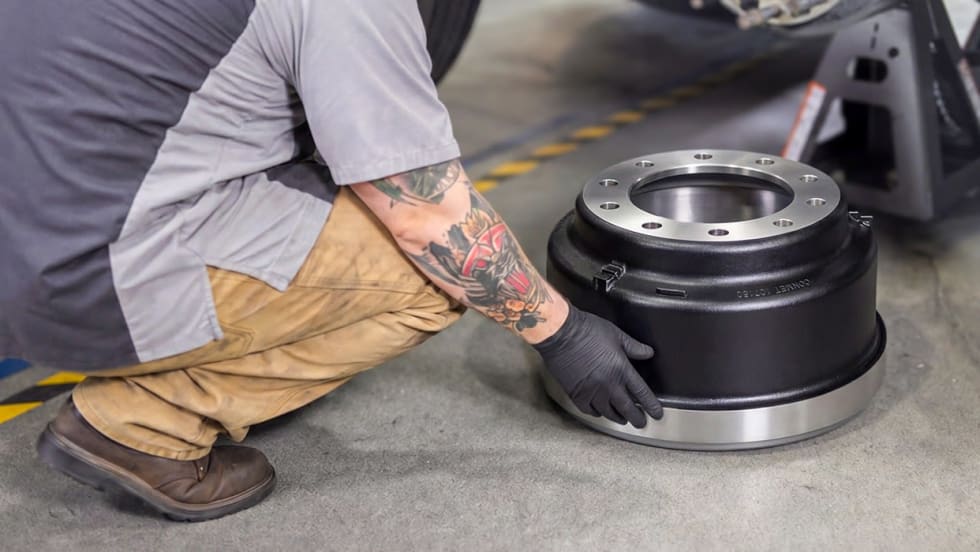
ConMet Expands Aftermarket Brake Drum Lineup With TruCast
A new heavy-duty truck brake drum option in the aftermarket gives customers more flexibility within the ConMet product family.
Read More →
Phillips Opens High-Tech Distribution Center for Faster Parts Delivery
Phillips Industries’ new Cincinnati-area distribution center is now shipping aftermarket trucking parts nationwide, aiming to speed up delivery times for customers.
Read More →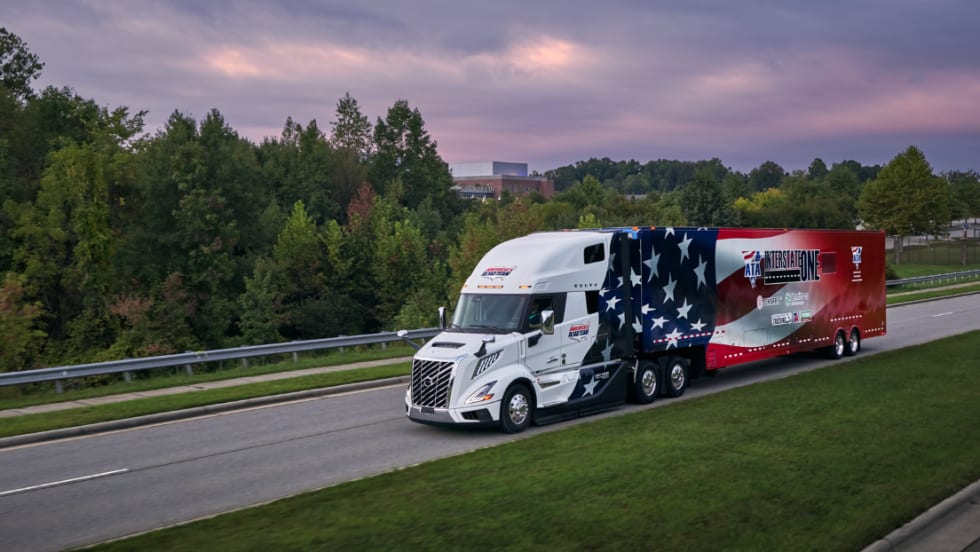
Volvo to Sponsor America’s Road Team for 2025
Volvo Trucks announced that it is extending its exclusive sponsorship of America’s Road Team for 2025.
Read More →
Webb to Start Taking Orders for UltraSet Pre-Adjusted Wheel Hubs
Webb, which recently acquired the Stemco Trifecta pre-adjusted hub program, will soon start taking orders for its replacement pre-assembled hub, the UltraSet.
Read More →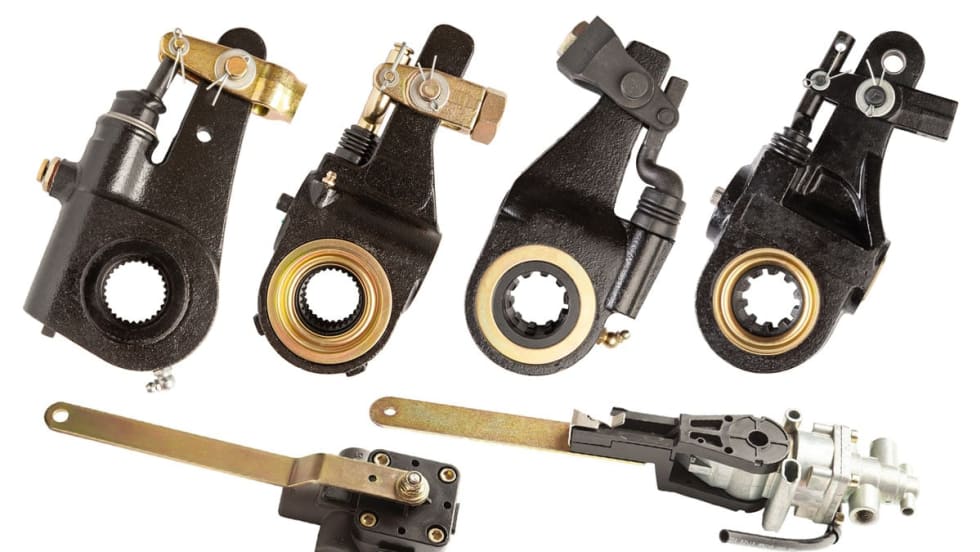
All-Makes Automatic Brake Adjusters, Ride Height Control Valves from Midland
SAF-Holland has added automatic brake adjusters and ride height control valves to its Midland All-Makes Program.
Read More →
ZF Aftermarket Expands [pro]Academy Training
ZF Aftermarket said it is expanding its ZF [pro]Academy training and will be adding 40 new modules this year.
Read More →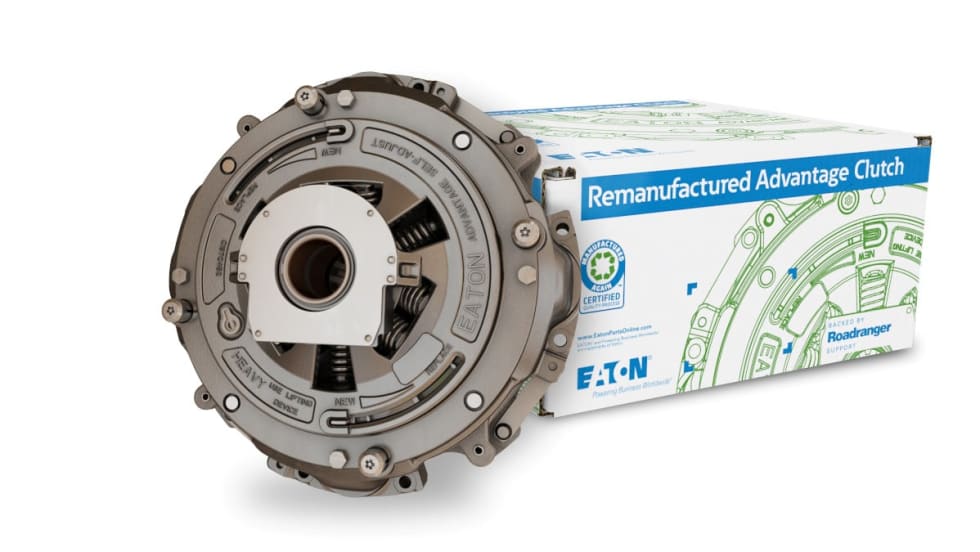
Eaton Adds Remanufactured Advantage Line of Clutches
Eaton has added its Advantage clutches to its remanufactured product line. The clutches feature a unique strap drive intermediate plate designed to allow customers to choose the latest OE specification
Read More →
ConMet Acquires TruckLabs, the Creator of TruckWings
Commercial truck and trailer parts provider ConMet acquired TruckLabs, the company that created TruckWings, an aerodynamic device that attaches to truck cabs and deploys to close the gap between truck and trailer. TruckLabs now operates as a subsidiary of ConMet.
Read More →
Diesel Laptops Releases Fault-Code-to-Part-Number Tool
Diesel Laptops said its Truck Fault Codes allows users to input a fault code and immediately identify and order the parts needed to complete repair work.
Read More →