




Related: Self-Driving Trucks and the Platooning Stepping Stone: How Soon?
Energy Department Project Aims for Fuel Efficiency Gains Through Platooning
Peloton Technology announced its participation in the Next-Generation Energy Technologies for Connected and Autonomous On-Road Vehicles program, or Nextcar, which is sponsored by the U.S. Department of Energy.
by Staff
November 15, 2016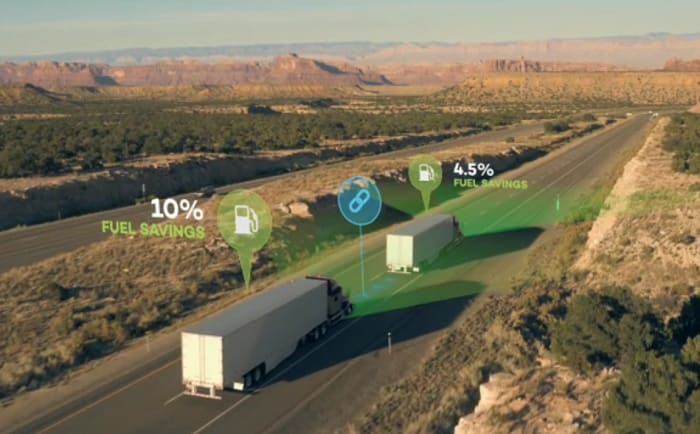
Screenshot via Peloton
2 min to read

Peloton Technology announced its participation in the Next-Generation Energy Technologies for Connected and Autonomous On-Road Vehicles program, or Nextcar, which is sponsored by the U.S. Department of Energy.
The project aims to combine next-generation truck platooning technology and concepts with smart, cloud-connected powertrains to achieve 20% fuel savings for tractor-trailers.
Led by Purdue University, Peloton’s Nextcar project team also includes Cummins, Peterbilt, ZF TRW, the University of Arizona, and the National Renewable Energy Laboratory. Contributions from partners include Peloton’s current platooning system and higher-automation platooning technology under development, advanced powertrain solutions from Cummins, steering controls from ZF TRW, and trucks from Peterbilt.
“Our first truck platooning system is coming to market in 2017,” said Josh Switkes, Peloton CEO. “This project will build upon our existing system and is complementary to the higher-automation solutions we are developing next.”
Nextcar partners will develop, integrate and demonstrate a set of co-optimized powertrain and automated driving controls in order to improve efficiency. The team aims to reduce fuel use of a baseline Class 8 Peterbilt 579 by 20% in real-world driving conditions by combining algorithms, look-ahead data and vehicle-to-vehicle and vehicle-to-cloud connectivity.
The new controls should require minimal hardware changes and can be programmed into electronic control units that are already on the trucks.
For Nextcar, Peloton said it will address two key research objectives. The first is to increase fuel savings from truck platooning at highway speeds from a baseline average of 7% across two trucks to 20% in combination with connected powertrains.
“Our objective is to tap into fuel savings that can only be attained by managing the powertrain precisely for the road ahead, and for the specific configuration of the trucks,” said Michael Palmer, Peloton’s director of research. “Cloud connectivity provides information about the road ahead, and the trucks exchange data about their estimated mass and powertrain capabilities. This helps us maintain smooth, efficient platooning through grades and rolling hills.”
Peloton’s second area of focus will be meeting connectivity requirements of powertrain innovations, including over-the-air engine recalibrations and distributed computing between trucks and the cloud. Peloton said it will build on its experience in developing a cloud-based network operations center to manage vehicles equipped with automated driving systems. Peloton’s platooning system employs DSRC, cellular LTE and WiFi to connect vehicles to each other and the cloud.
The Nextcar partners expect to launch the project in March 2017.
More Fuel Smarts
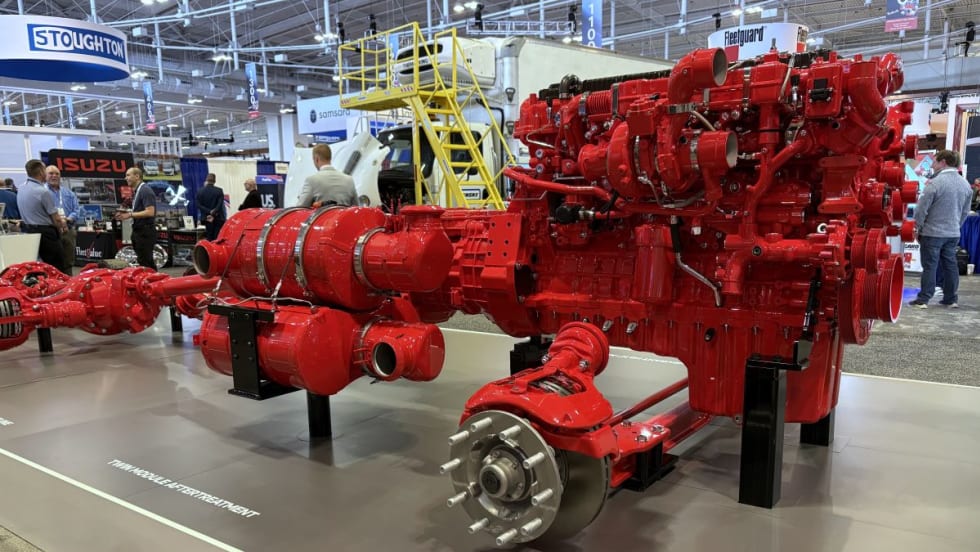
Cummins Adjusts 2027 Engine Rollout After EPA Proposal
The engine maker will gradually introduce its new Model Year 2027 diesel engines while continuing to offer current models during the transition, citing the EPA's proposed emissions rule changes.
Read More →
EPA Proposal Could Ease 2027 Truck Costs and Buying Uncertainty
The proposal doesn't change the tougher NOx standard, but it would revise key implementation requirements that manufacturers say have driven up costs and complicated fleet purchasing decisions.
Read More →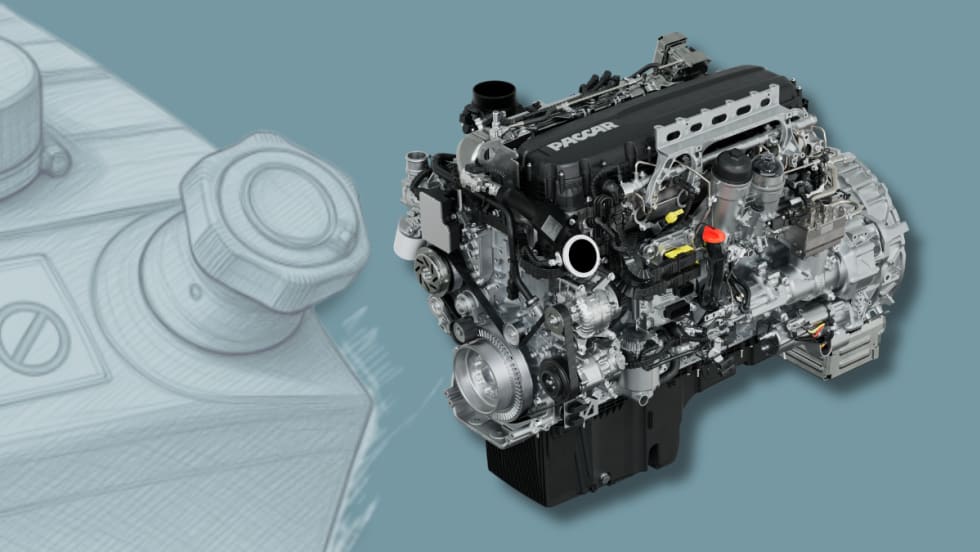
Cummins, Paccar Ease DEF Derates After EPA Guidance
Updated diesel engine software gives truck operators more time to address emissions-system issues while staying compliant with EPA emissions standards.
Read More →
Maintenance in the Messy Middle Part 3: Biodiesel
Biodiesel can reduce emissions, improve fuel-system lubricity and use existing diesel infrastructure. But NACFE’s Messy Middle maintenance report says fleets must actively manage storage, cold-weather operation, filters and oil drain intervals to avoid problems.
Read More →
Enhance Fleet Performance with High-Efficiency Auxiliary Power Units
Drive sustainable cost savings while increasing driver comfort during short- and long-haul logistics operations.
Read More →
Maintenance in the ‘Messy Middle’ Part 2: Renewable Diesel Fuel
NACFE's latest Messy Middle Powertrain Service & Maintenance report says renewable diesel gives fleets an opportunity to reduce carbon emissions without changing trucks, fueling infrastructure or maintenance practices. But technicians still need to understand several important operational differences.
Read More →
The Diesel Engine Enters NACFE’s ‘Messy Middle’
NACFE’s new Messy Middle Powertrain Service & Maintenance report says keeping modern diesel engines running now depends as much on software, diagnostics and data as traditional mechanical service.
Read More →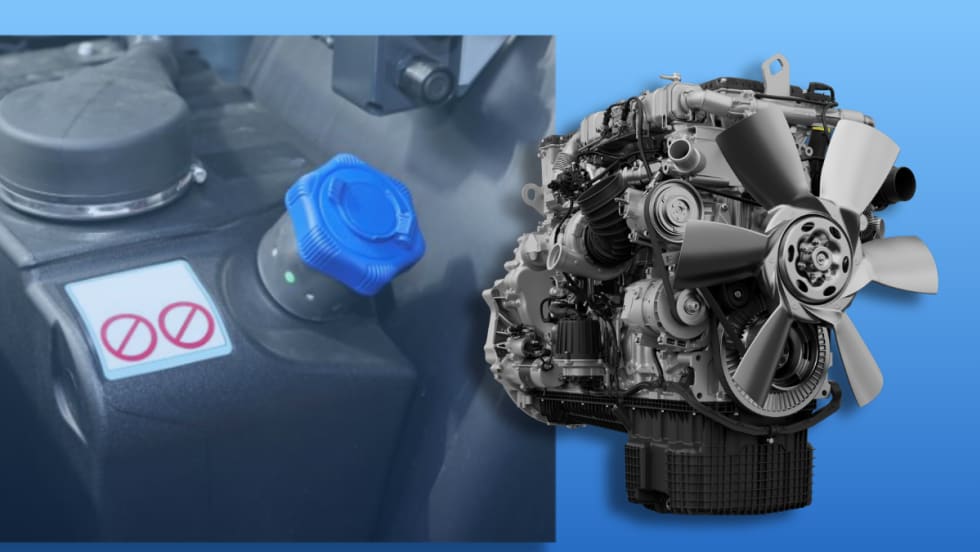
DTNA Software Update Gives Truckers More Time Before DEF Derates Take Effect
The changes reflect EPA guidance aimed at reducing downtime caused by emissions-system faults while maintaining compliance requirements.
Read More →
New Agentic Predictive Maintenance Report Demonstrates How Degraded Aftertreatment Systems Waste Fuel
Questar analyzed a large mixed-class fleet and discovered it was wasting as much as $30 in fuel per vehicle, per day, because of mechanically degraded aftertreatment systems.
Read More →
New York City's Microhub Project is Delivering Results
Trucking, last-mile delivery companies, and environmental advocates like what they are seeing so far with New York's microhub program.
Read More →