




Eaton Expands Advantage Product Line, Adds Coast Mode to AMTs
Eaton now offers is Advantage Series transmission in more configurations to broaden its appear to different long-haul, linehaul and regional markets. The Advantage Series automated models now come with a fuel-saving coast mode to decrease parasitic drag on the drive train when operating on hilly terrain.

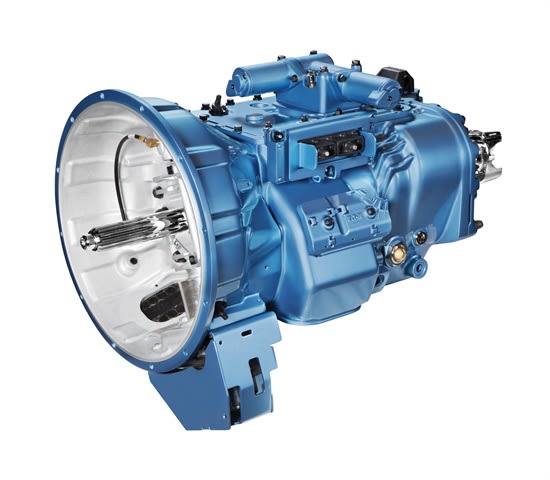
LOUISVILLE, KY -- Eaton is expanding its Advantage Series transmission line up to meets the needs of broader group of regional and line haul carriers, as well as those operating 6x4 and 6x2 configurations. The new Advantage offerings include three manual models with new direct-drive gear ratios, two automated models with new direct drive gear ratios and four automated versions with new overdrive ratios.
All of the Fuller Advantage Series automated 10-speed transmissions are available for delivery to all North American truck makers. Small-step 'S' ratio models, with fuel-efficient shifting between 9th and 10th gears, are rated up to 80,000 gross combination weight only. The remaining models (direct and overdrive) will be rated up to 110,000 GCW at the end of April this year.
“Our customers have been asking us for additional ratio coverage in both direct drive and overdrive designs,” said Ryan Trzybinski, product planning manager at Eaton. “All of the direct drive additions are ideally suited for a variety of linehaul applications and will be especially beneficial for regional and LTL customers with day cabs and 6X2 axles. The other additions are ideal for linehaul/on-highway fleets and provide better options for customers preferring axle ratios that are best suited for an overdrive transmission.”
COAST MODE MADE FOR SAVINGS
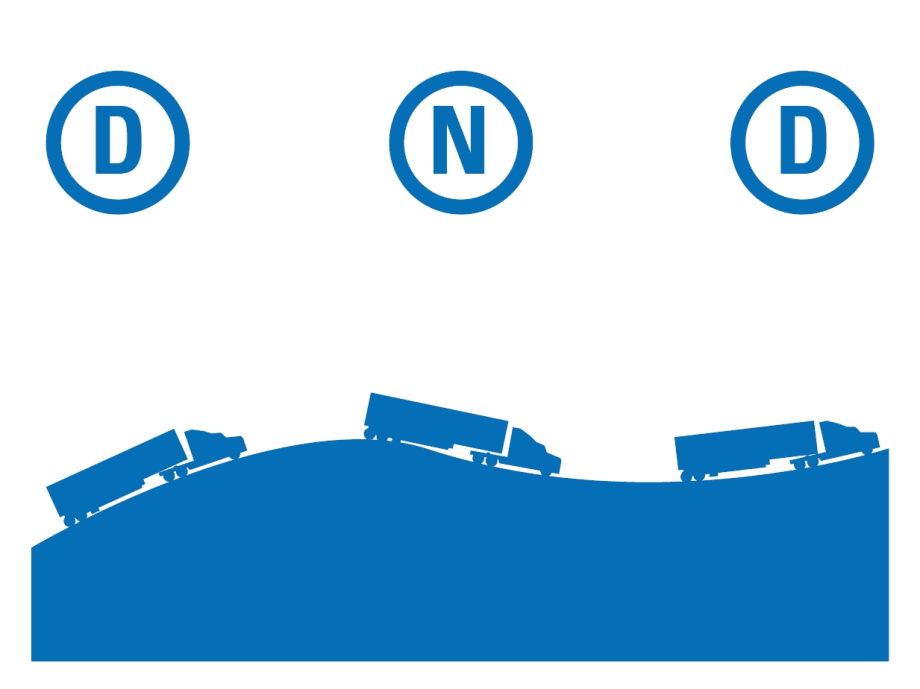
In addition to the wider product offerings, Eaton will now offer a 'coast' mode with its Advantage and UltraShift automated transmissions, enabling disengagement of the truck’s driveline while on slight downhill grades to drop engine speeds to idle. Eaton says the new technology improves fuel consumption by up to one percent while ensuring safe operation regardless of driving conditions.
Known internally at Eaton as Neutral Coast Mode, it will be named SmartCoast when paired with a Cummins engine, Fuel Efficient Coast when paired with a Navistar engine, and Neutral Coast when paired with a PACCAR engine. It is available on all vehicles with a 2013 or newer Cummins ISX15, Navistar N13, or PACCAR MX-13 engine.
Eaton says the disengagement takes place within the synchronizer section of the transmission, The clutch itself does not disengage.
“This new option promises to bring fuel efficiency improvements to linehaul fleets typically traveling on roads where hills and grades are present,” Trzybinski says. “The gains will vary depending on the amount and severity of grades encountered.”
Neutral Coast Mode allows the transmission to disengage the driveline by pulling out of gear on downhill grades where little or no engine power is required, when the vehicle is in cruise control and the transmission is in Drive mode. The vehicle’s display will simultaneously flash a gear number that represents the gear that the transmission will select when it is necessary to engage.
The transmission exits Neutral Coast Mode under any of the following conditions:
Vehicle brakes are applied.
Driver presses accelerator pedal.
Cruise control is cancelled.
A mode other than Drive is selected.
Cruise high or low set speeds are exceeded.
Maximum vehicle grade is exceeded.
Request by an adaptive cruise system.
The maximun coast speed is a fleet-programmable setting, which can be set to eliminate speeding by disengaging coast mode a the set speed and activating the engine brake if necessary to keep vehicle speed in check.
“Neutral Coast Mode features Eaton proprietary logic that works with the engine ECU or another ECU to determine the appropriate time for the transmission to decide when the driveline should be engaged or disengaged,” added Trzybinski.
More Fuel Smarts

Wex Adds Cardless Fuel Payments for Over-the-Road Customers
A new fuel card feature for Wex customers offers convenience and security.
Read More →
New California Law Could Shed Light on Electric Truck Prices
Why do battery-electric Class 8 trucks remain so expensive? A California bill signed by Gov. Gavin Newsom would give fleets and state agencies more visibility into what manufacturers charge.
Read More →
How Volvo Updated Its D13 for EPA 2027 [Watch]
Volvo’s updated D13 promises lower emissions without sacrificing performance or fuel economy. Take a closer look at what changed inside the engine in this HDT Spotlight video.
Read More →

Diesel Price Spike Shortens Payback for Natural Gas Trucks, Report Says
Energy Vision estimates fleets could recover the higher purchase price of an RNG-fueled Class 8 tractor in 1.3 to 2.8 years under current fuel-price scenarios.
Read More →
Calstart Becomes Catalyst Mobility, Reflecting Broader Focus
Calstart is now Catalyst Mobility, reflecting the nonprofit’s growing national role in clean transportation, including zero-emission trucks, infrastructure and incentive programs.
Read More →
Record Diesel Prices Squeeze Trucking Fleets
Average U.S. diesel prices have climbed to nearly $6 a gallon, surpassing the 2022 record as tight refinery capacity and Middle East disruptions keep fuel costs elevated.
Read More →
How Fuel Delivery Shapes Engine Performance
Fuel delivery depends on more than what happens at the injector. For fleet, maintenance and technical professionals, looking at the full path from pump to injector can provide useful context for understanding engine performance.
Read More →
East Coast Port Launches $45M Electric Truck Push
The Port Authority of New York and New Jersey announced millions in incentives for zero-emission drayage trucks, yard tractors, and new charging hubs near the port.
Read More →
Detroit Opens Orders for EPA 2027 Engines
Detroit isn’t starting from scratch to meet EPA 2027 diesel emissions standards. Its Gen 6 DD13 and DD15 engines keep much of today’s platform while updating the fuel and aftertreatment systems.
Read More →
Zero-Emission Truck Corridor Planned for West Coast
California, Oregon, Washington, British Columbia and Baja California are coordinating plans for truck charging and hydrogen fueling from Canada to Mexico.
Read More →