




Earnings Watch: ArcBest Loss Grows, P.A.M. Transportation Profit Slips
The parent company to less-than-truckload carrier ABF Freight and others saw its first quarter losses grow despite healthy shipment growth and improved pricing, while a truckload carrier saw lower profits but beat expectations.


The parent company to less-than-truckload carrier ABF Freight and others saw its first quarter losses grow despite healthy shipment growth and improved pricing, while a truckload carrier saw lower profits but beat expectations.
ArcBest Corp. recorded a net loss $7.4 million, or 29 cent per share, compared to a first quarter 2016 net loss of $6.1 million, or 24 cent per share. Revenue in the most recent quarter was $651.1 million compared $621.5 million a year earlier. Both revenue and the per share performance fell short of a consensus estimate from analysts.
“The first quarter, typically the most challenging of the year, saw revenue growth in both our asset-based and asset-light businesses, but also experienced some changing freight characteristics on the less-than-truckload side and a degree of weaker demand, particularly in the truckload sector,” said president and CEO Judy R. McReynolds.
The company’s asset-based segment, which includes ABF, had revenue of $464.4 million compared to $439.1 million, a per-day increase of 4.9%. Tonnage per day decreased 0.7% but shipments per day increased 5.7%. All this led to an operating loss of $10 million, up from an operating loss of $9 million in the first quarter of 2016.
“Asset-based services maintained pricing discipline, and average shipment rates were positively impacted by changes in freight profile and increases in fuel surcharge,” the company said in a statement. “Recent trends of asset-based shipment growth continued, resulting in the need for increased amounts of freight handling labor and purchased transportation resources.”
ArcBest’s asset-light operation had revenue of $193.1 million compared to $186 million a year earlier with operating income of $1.9 million compared to operating income of $1 million during the first quarter of last year.
The increase in revenue was the result of growth in expedited services and the impact of additional dedicated truckload business related to a second half 2016 acquisition, according to the company.
Better Revenue Doesn’t Lead to Higher Profit for P.A.M. Transportation
This follows the carrier P.A.M. Transportation releasing first quarter numbers recently that showed net income of $2.3 million in the first quarter, down from $2.9 million a year earlier. Earnings per share were 36 cents, far better than the 16 cents expected by Wall Street, but lower than 41 cents in the first quarter of 2016.
Revenue for the Arkansas-based company improved 5.6% from a year earlier to $109.4 million while operating income was less than half of what it was a year earlier, totaling $2.7 million.
According to President Daniel H. Cushman, the first quarter of 2017 was somewhat of a continuation of the trends the company experienced in 2016, where it saw higher costs and downward rate pressure from customers.
“While we have had some success in implementing cost reduction strategies, we have yet to achieve success in obtaining any significant rate increases from customers,” he said. “In fact, the largest variance in our results during the first quarter of 2017, compared to the first quarter of 2016, has been the variance in our rates charged to customers. The impact of the continuous downward rate pressure experienced throughout 2016 is evident, as after a full year of monthly customer rate reductions, our average rate per mile has declined to a point well below that of last year at this time.”
Cushman said some of P.A.M.’s customer base is beginning to show concern for future truck capacity due to the electronic logging device regulations that are scheduled to take effect in December, and the company believes industry capacity will begin to tighten as this timeframe approaches.
“These customers are looking to lock in multi-year rates while rates are at depressed levels,” he said. “Other customers seem to be taking the position that the new regulations will not have an impact on their capacity needs as their current carrier base is already compliant with the regulations.”
More Fleet Management

Trimble’s New AI Agent Takes Aim at Fleet Back-Office Busywork
Arc Agent works across Trimble TMS products to automate repetitive tasks such as freight orders, maintenance, invoices, fuel costs and more.
Read More →
How HDT’s 2026 Truck Fleet Innovators Are Rethinking Fleet Operations
Meet five trucking leaders who are challenging assumptions, solving operational problems, and putting innovative ideas to work.
Read More →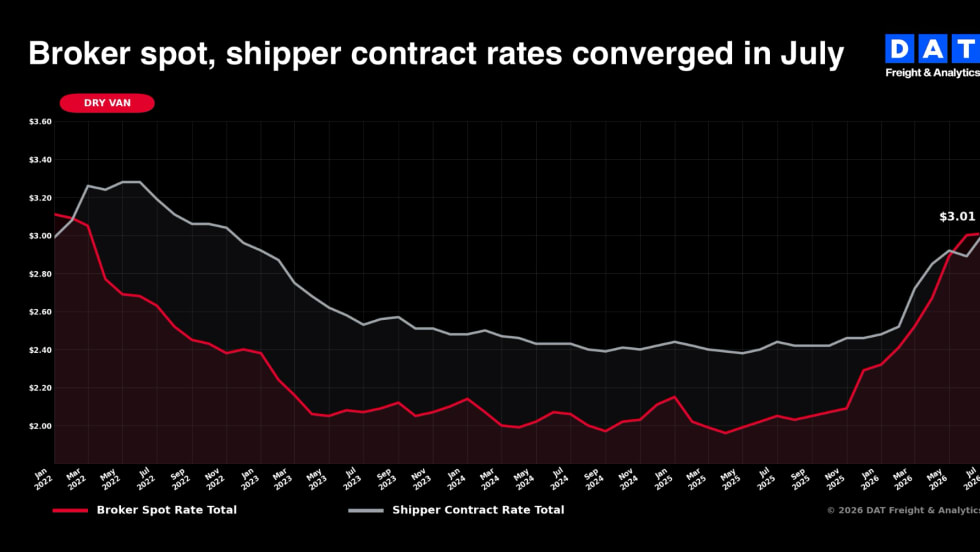
Tight Trucking Capacity Pushes Rates Higher Even as Freight Volumes Fall
“Spot rates moving ahead of contract rates have historically signaled a tightening market, but we haven’t seen a capacity-driven market quite like this one,” said DAT's Dean Croke.
Read More →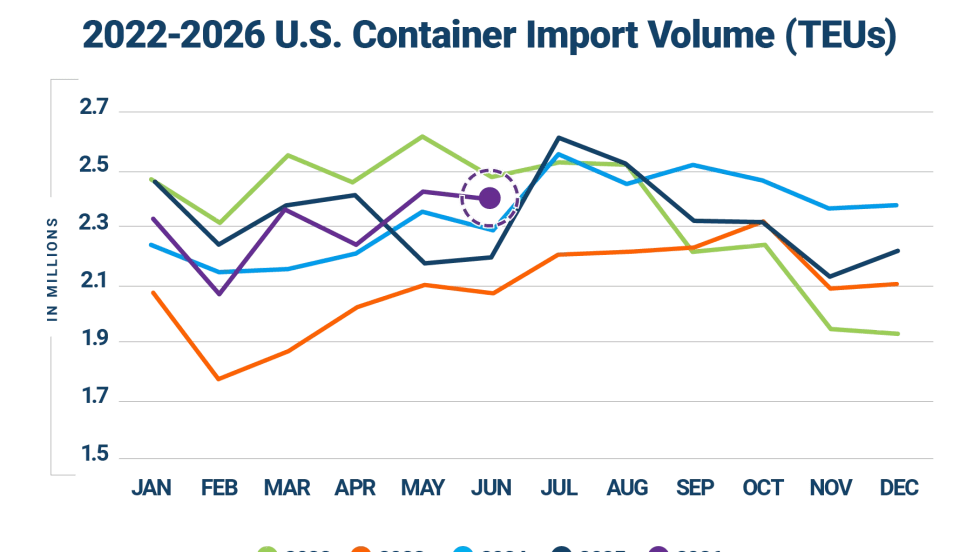
Import Cargo’s Early Peak Season is Winding Down
There was an early start to peak season this year at the nation's gateway ports, as retailers brought in merchandise ahead of tariff changes in late July and responded to other supply chain uncertainties,
Read More →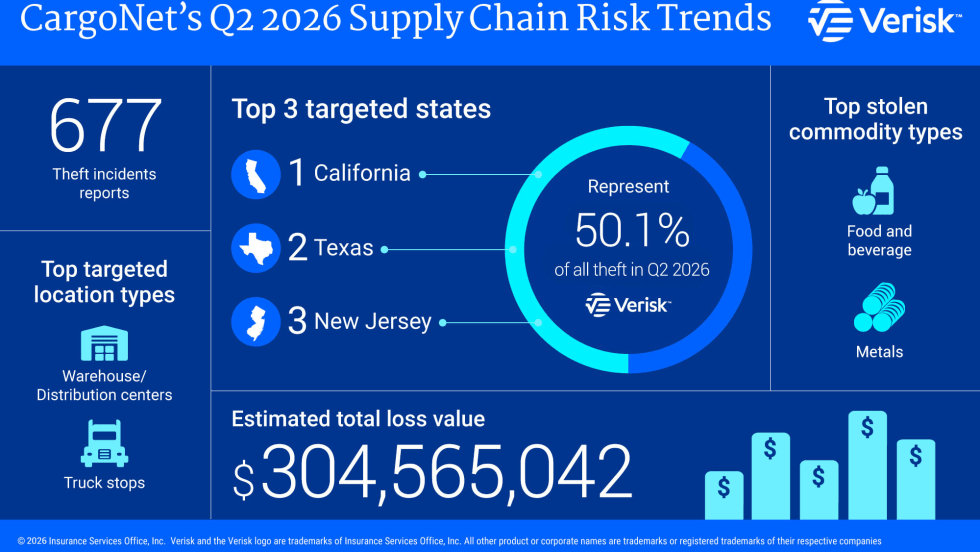
Fewer Cargo Thefts, Bigger Losses: Criminals Target Higher-Value Loads
CargoNet says organized theft rings are stealing fewer shipments but choosing more valuable freight, including metals and technology, resulting in record losses.
Read More →
How Innovative Trucking Leaders Turn Change Into an Advantage
As the pace of change accelerates in trucking, the fleets that adapt best have more than the latest technology. They have cultures that embrace improvement.
Read More →
Freight Broker Bonds Just Got Harder to Get. Here's What That Means for Your Fleet.
When it gets harder for a freight broker to prove they are financially sound, the ones who cannot clear that bar get pushed out of the market. And those are exactly the brokers who used to leave motor carriers holding the bag.
Read More →
Long-Awaited Canadian Border Bridge to Open in Detroit
For trucking, the bridge opening should offer immediate improvements in efficiency and reliability, with new customs facilities, expanded inspection capacity, and direct freeway-to-freeway connections.
Read More →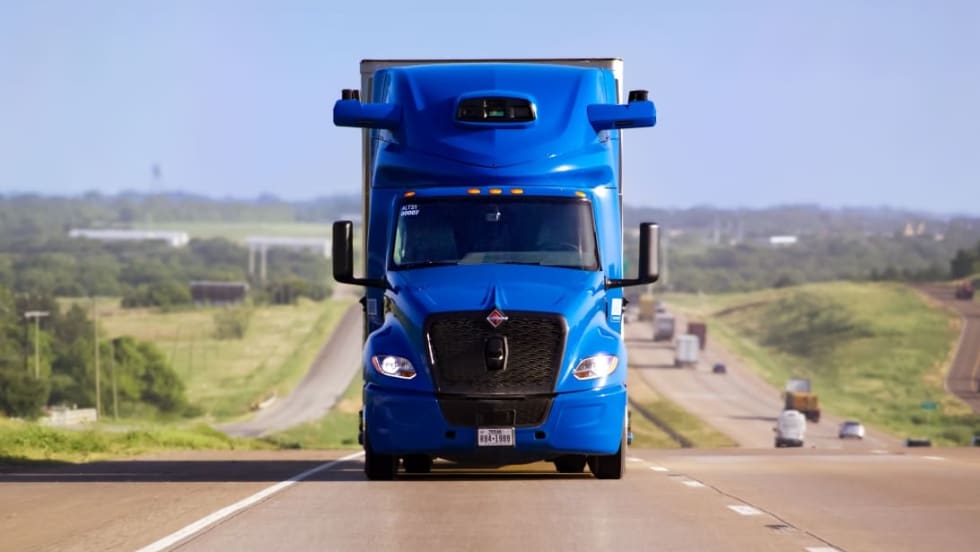
Aurora Rolls Out Next Generation of Driverless Trucks for Commercial Freight
Aurora's latest autonomous trucks it's rolling out with International feature lower-cost hardware designed for a million miles as the company expands commercial driverless freight operations across the U.S. Sun Belt.
Read More →
Freight Tonnage Down, Rates up, as Lower Capacity Powers Trucking Recovery
The recovery from the freight recession continues to be driven by reduction in capacity rather than by increased demand.
Read More →