





Pete Buttigieg Nominated for DOT Secretary by President-Elect Biden
Roadcheck Inspection Blitz Targets Driver Violations
DOT officers put almost 21% of the commercial vehicles inspected out of service during Roadcheck 2020, CVSA reported. Read how that compares to 2019 results.
December 18, 2020
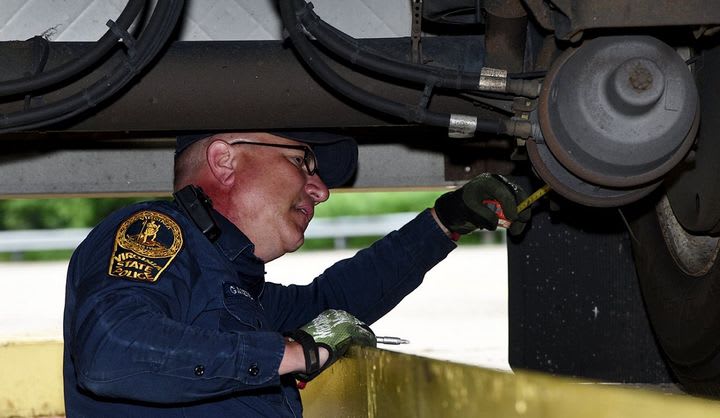
During this year’s International Roadcheck, 45,046 Level I, II and III Inspections were conducted in the U.S.
Photo: CVSA
3 min to read
Nearly 21% of vehicles were put out of service during CVSA's annual Roadcheck inspection blitz in September, up from just under 18% last year. And with a special focus on drivers this year, more than 3,000 drivers were put out of service, nearly 35% of those for hours-of-service violations.
More than 50,000 North American Standard Level I, II, III and V Inspections were conducted throughout Canada, Mexico and the U.S. during the Commercial Vehicle Safety Alliance’s three-day International Roadcheck commercial motor vehicle and driver inspection and enforcement initiative. This year’s event took place Sept. 9-11, after being postponed from its original May dates due to the coronavirus pandemic. (Law enforcement personnel conducted inspections following their departments’ health and safety protocols to protect inspectors and drivers.)
The overall vehicle out-of-service rate in North America was 20.9%. By comparison, in 2019, CVSA reported that of the 67,072 inspections conducted, more than 12,000 vehicles were put out of service, representing a 17.9% overall vehicle out-of-service rate.
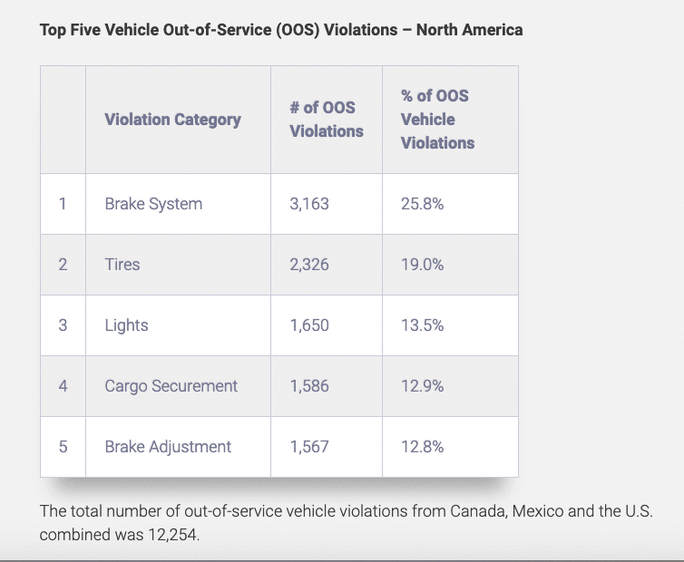
Brakes continue to be the most common cause of out-of-service violations during CVSA Roadcheck.
Credit: CVSA
Each year, International Roadcheck places special emphasis on a category of violations. The 2020 focus was on the driver requirements category of a roadside inspection. A driver may be placed out of service for violations related to the driver’s age; commercial driver’s license or operator’s/chauffeur’s license or permit; medical/physical requirements; record of duty status (hours of service); sickness or fatigue; or intoxicating beverages, drugs and other substances.
The total number of driver out-of-service violations was 3,247. The top driver out-of-service violation during the 2020 Roadcheck was for hours of service, accounting for 34.7% of all driver out-of-service violations. That's a lower percentage than last year, when 2,784 drivers were put out of service, with hours of service at violations making up 37.2%. Despite the fact that the electronic logging device mandate came fully into effect between the 2019 and 2020 inspection blitzes, the percentage of false log violations was not drastically different: 14.7% in 2019 and 14% in 2020.
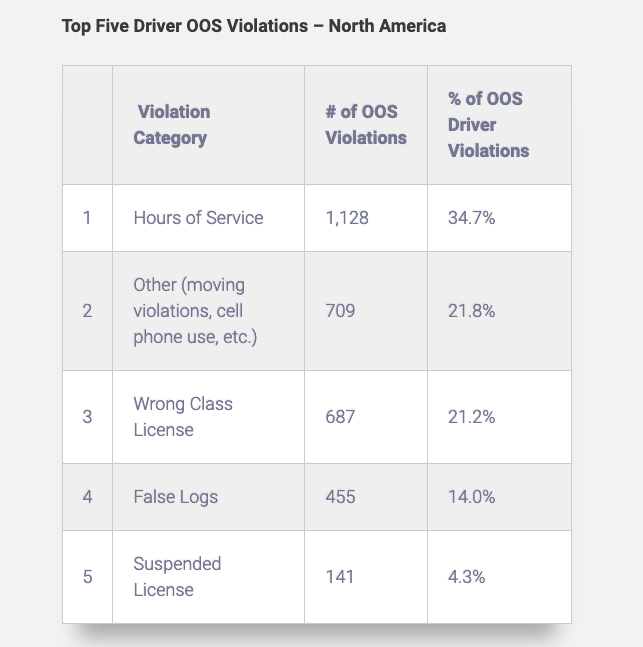
Hours of service continue to dominate driver out-of-service violations, despite mandatory ELDs.
Credit: CVSA
During 2020 International Roadcheck, CVSA-certified inspectors primarily conducted the 37-step North American Standard Level I Inspection; however, the Level II Walk-Around Driver/Vehicle Inspection, Level III Driver/Credential/Administrative Inspection and Level V Vehicle-Only Inspection were also acceptable. All told, this year, CVSA said, 26,451 Level I Inspections, 11,224 Level II Inspections, 11,364 Level III Inspections and 1,112 Level V Inspections were conducted.
Vehicles without critical vehicle inspection item violations, after a Level I or Level V Inspection was completed, were eligible for a CVSA decal. Decals were applied to 9,303 power units, 3,662 trailers, and 123 passenger carrier vehicles, for a total of 13,088 decals issued throughout North America.
The CVSA decal is a visual marker that signifies a vehicle has been inspected by a CVSA-certified inspector and no critical vehicle inspection item violations were detected. Generally, vehicles with recently issued decals, which are valid for up to three months, are not re-inspected.
More Safety & Compliance

FMCSA Pauses Biennial-Update Enforcement Amid Motus Transition
Carriers whose updates were due on or after June 1 have more time, while FMCSA works to stabilize its new registration system and warns of phishing sites impersonating its new carrier registration system, Motus.
Read More →
ZF Expands Commercial Vehicle Push in North America
ZF is expanding its North American commercial-vehicle presence with new transmission applications, electrification, trailer technology and autonomous-driving systems.
Read More →
Truck Drivers Need More Than Another Alert
Fleets have more visibility into truck health, safety events, and driver activity than ever. The next challenge is turning all that information into useful guidance for the person who has to decide what to do next.
Read More →
Tesla Wants a Self-Driving Semi. Are Cameras Enough?
Could Tesla’s camera-only autonomous driving technology work on an 80,000-pound Semi? In this commentary, HDT's Deborah Lockridge takes a look at Tesla, Cybercab, and how autonomous trucks see the road.
Read More →
What DOT’s Automated Vehicle Strategy Means for Trucking
The U.S. Department of Transportation issued a new automated-vehicle strategy that outlines plans for driverless-truck regulations, cross-state freight corridors, and federal safety standards.
Read More →
NYC Expands Speed, Pedestrian Safety Tech Across Fleet
New York City is expanding intelligent speed assistance and pedestrian-alert systems across its municipal fleet, moving the technologies from pilot programs into vehicle procurement and retrofit requirements.
Read More →
FMCSA Removes 110 Truck Driver Training Schools from Certified ELDT List
Federal regulators also are targeting more than 160 additional training providers and launching a nationwide audit of third-party CDL skills testers as part of a broader crackdown on trucking fraud.
Read More →
Beyond DOT Compliance: What Makes a Trucking Fleet Truly Safe?
A trucking fleet can follow every rule and still make unsafe decisions. The real test comes when safety conflicts with freight, productivity, or cost.
Read More →
Hours of Service Pilot Programs: FMCSA Readies for 2027 Rollout
Two pilot programs could eventually reshape hours-of-service rules, giving truck drivers options to pause their 14-hour clock or use longer split sleeper rest periods.
Read More →
New Guide Offers Pet Safety Tips for Truck Drivers
Hundreds of thousands of pets travel in truck cabs. A new safety guide from Volvo Trucks and the Center for Pet Safety offers practical advice for truck drivers who bring dogs and cats along for the ride.
Read More →