




Related: FMCSA Getting Closer to Decision on Crash Accountability
Crash Accountability Study Coming in Two Weeks
The Federal Motor Carrier Safety Administration will release its study on crash accountability in the next couple of weeks, said Jack Van Steenburg, the agency’s chief safety officer.

Oliver Patton・Former Washington Editor
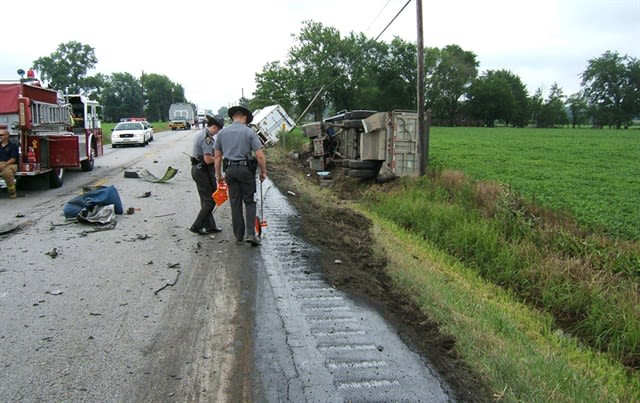
Photo: Ohio State Patrol
2 min to read
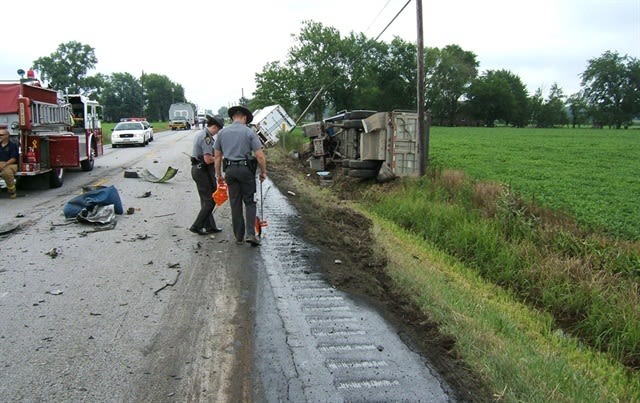
Photo: Ohio State Patrol
The Federal Motor Carrier Safety Administration will release its study on crash accountability in the next couple of weeks, said Jack Van Steenburg, the agency’s chief safety officer.
Van Steenburg was responding to a question at the Transportation Research Board meeting in Washington, D.C., on Tuesday.
The study is likely to reignite the long-simmering controversy over how the agency accounts for fault in crashes recorded in its Compliance, Safety Accountability safety enforcement system. CSA uses roadside inspection and traffic enforcement data to find the carriers most in need of enforcement action.
The agency includes non-fault crashes in the CSA Safety Measurement System because its ability to distinguish fault is limited and there is a statistical probability that some of the crashes will be the carrier’s fault.
The agency and safety advocacy groups contend that past crashes are a predictor of future crash risk no matter who is at fault. Carriers say it is illogical and wrong to include non-fault crashes in a system that measures safety performance.
The agency studied the issue and has drafted a report that is supposed to outline a possible solution. The study will address three core questions:
Are police accident reports reliable enough to determine accountability?
Will a system that includes accountability be a better predictor of future safety than one that does not?
And, how should the agency manage the process, giving the public a chance to participate?
An additional issue likely to surface in the report is the question of cost: Will the expense of determining fault be worth the value it achieves?
More Fleet Management

Sponsored•September 16, 2026
Color Match Smarter: Tools That Restore & Perform
For fleet managers and collision repair professionals keeping heavy-duty trucks on the road, getting the color right the first time isn't just about appearance — it's about efficiency, turnaround time, and bottom-line results. Discover how today's digital color tools are transforming the repair process from guesswork to precision.
Read More →
FMCSA Pauses Biennial-Update Enforcement Amid Motus Transition
Carriers whose updates were due on or after June 1 have more time, while FMCSA works to stabilize its new registration system and warns of phishing sites impersonating its new carrier registration system, Motus.
Read More →
Sponsored•September 14, 2026
2026 Blueprint for Countering Smarter Supply Chain Theft
Cargo theft is no longer just the cost of doing business. It's a multi-billion-dollar criminal enterprise exploiting vulnerabilities across your fleet, drivers, and supply chain.
Read More →


Sponsored•September 1, 2026
How Telematics Improves Visibility, Control, and Performance in Refrigerated Fleets
Explore how telematics help refrigerated fleets improve visibility, uptime, efficiency, compliance, and cargo protection across connected cold chain operations.
Read More →
What the U.S.-Canada Trade War Means for Trucking
Escalating U.S.-Canada tariffs could disrupt cross-border freight, reduce truck volumes, raise costs, and create new uncertainty for carriers on both sides of the border.
Read More →
What Are Trucking’s Top Concerns for 2026?
The American Transportation Research Institute wants to know what's worrying trucking fleet managers, drivers, and other stakeholders in its annual Industry Issues survey.
Read More →
American Trucking Associations Looks for a New Leader
ATA President and CEO Chris Spear abruptly left his job at the association on August 21, at a pivotal time for the trucking industry.
Read More →
Public Wi-Fi Cybersecurity Risks: How Truck Drivers and Fleets Can Protect Their Data
Public Wi-Fi can expose truck drivers and fleets to credential theft, malware, and other cyber threats. Here’s how to reduce the risk on the road.
Read More →
For Nicky Cupp, Fleet Innovation Starts With Frustration
HDT Truck Fleet Innovator Nicky Cupp turns everyday pain points at Fraley & Schilling into opportunities for better technology and smarter processes.
Read More →
Adam Buttgenbach’s Approach to Electric Trucks: Start With Where They Fit
HDT Truck Fleet Innovator Adam Buttgenbach helped PepsiCo build one of North America’s largest EV fleets by focusing on where electric trucks make operational sense.
Read More →