




Could Some Drivers be Exempt from Vaccine Mandate?
Could exemptions to the new COVID-19 vaccine mandate for employees who work alone apply to truck drivers?


The new OSHA rule calls for employees to have their final vaccination dose – either their second dose of Pfizer or Moderna, or single dose of Johnson & Johnson – by Jan. 4, 2022.
Photo: U.S. Secretary of Defense, CC BY 2.0 via Wikimedia Commons
Although the vaccine mandate announced Nov. 4 for companies of at least 100 employees did not explicitly exempt trucking or truck drivers as some groups have urged, some trucking observers say one part of the new rule could mean at least some drivers would be exempt.
The Department of Labor’s Occupational Safety and Health Administration is issuing an emergency temporary standard, or ETS, requiring employers with 100 or more employees to develop, implement, and enforce a mandatory COVID-19 vaccination policy. An alternative to vaccines is an exception for employers that instead establish, implement, and enforce a policy allowing employees who are not fully vaccinated to elect to undergo weekly COVID-19 testing and wear a face covering at the workplace.
Although trucking groups had lobbied to have trucking, or at least truck drivers, exempted from the rule, warning that it could make the supply chain crisis worse, there is no such exemption in the new rule.
In an email to members, American Trucking Associations said the rule does exempt employees who work 100% alone or outdoors, so long as their indoor contact with other employees or customers is minimal (e.g., using a restroom or briefly visiting an administrative office).
“In our view, that exemption covers much of the commercial driver population, but as with any complex new rule, it is impossible to be certain how OSHA will apply it until they issue guidance or begin enforcement,” ATA said. “We will seek clarification whether commercial drivers are generally exempt under this provision. We remain prepared to seek judicial review of the rule.”
Team drivers would be required to be vaccinated or test regularly, according to an ATA COVID-19 vaccine toolkit, and if unvaccinated drivers come into the office for training, you would have to test for that period.
“We have evidence to back this up based on the reported infection rates for drivers being substantially below the population rates during the pandemic,” ATA said in its toolkit.
Scopelitis, Garvin, Light, Hanson & Feary’s trucking attorneys, however, read the rule differently and believe that most drivers would not be exempt.
In a law alert e-mail, the firm pointed out that no specific exemption for drivers or motor carriers exists.
“Drivers could only be considered exempt in the unlikely event they fall into one of the enumerated exemptions, which are (1) those who do not report to a workplace where other individuals are present; (2) employees working from home; or (3) employees who work exclusively outdoors.”
Different Vaccine Rules for Government Contractors
The OSHA rule follows a prior requirement that all federal contractors and subcontractors implement a mandatory vaccination program without a testing option (with the exception of those legally qualifying for a medical or religious accommodation).
For fleets that are federal contractors or subcontractors, all employees who work on or in connection with a federal contract will need to be vaccinated by Jan. 4, or on the first day of performance on the contract, whichever is later. This is a later date from the original deadline of Dec. 8, 2021, changed in order to match up with the new OSHA mandate.
Any worker who may come in contact with those working on or in conjunction with the government contract must also be vaccinated. Covered contractors must also designate a person or persons to coordinate COVID-19 workplace safety efforts and comply with regionally appropriate levels of masking, social distancing, etc.
ATA also notes that when it issues a new rule, OSHA will in most instances announce that it will use its enforcement discretion for employers who are making a good faith effort to comply. That means even if someone has not met all requirements by the deadlines set in the rule, OSHA will not cite them as long as there is evidence of good faith (for example, document attempts to order tests if you cannot purchase and/or do not receive them by the
compliance deadline).
More Safety & Compliance

Kodiak Lines Up Fleets for Driverless Trucking
An agreement for 75 trucks, a new Texas freight lane, and progress on safety validation move Kodiak closer to its planned driverless highway launch.
Read More →
More Trailer Data Through the Same Seven-Way [Video]
Can trucking’s standard seven-way connector handle more cameras and trailer data? Grote’s Adam Slade shows HDT how the company is using new technology with its 4See trailer system, not only to add a new backup camera but also to expand other capabilities — without adding another connection.
Read More →
PrePass Intelligence Mines Fleet Bypass, Toll and Safety Data
PrePass Intelligence helps fleets measure bypass savings, flag potential toll overcharges, and spot suspicious transactions by combining data from separate systems.
Read More →
Fatal Crash Exposes Toll Plaza Risks
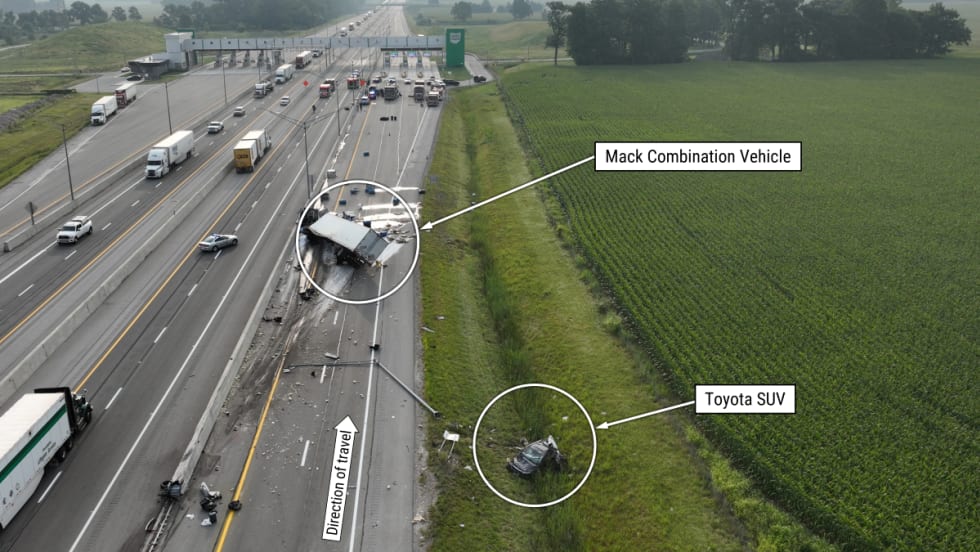
An NTSB investigation found that last-minute lane changes and large speed differences at an Ohio toll plaza created a hazard the truck driver couldn't avoid in time.
Read More →
When Language Stops the Truck: The Return of ELP Out-of-Service Orders
English language proficiency rules for commercial drivers aren’t new, but renewed out-of-service enforcement has raised the stakes. Here’s what carriers need to know before a driver reaches a roadside inspection.
Read More →
A Camera Isn't a Safety Program. Here's What Brokers Are Screening for Now
Footage alone may not be enough to pass broker vetting processes. Here's what counts as a defensible safety program now.
Read More →
Marijuana and Trucking’s Drug-Testing Dilemma
Marijuana is getting stronger, laws are changing, and drug tests still can’t reliably establish impairment. What does that mean for truck drivers and the fleets that employ them?
Read More →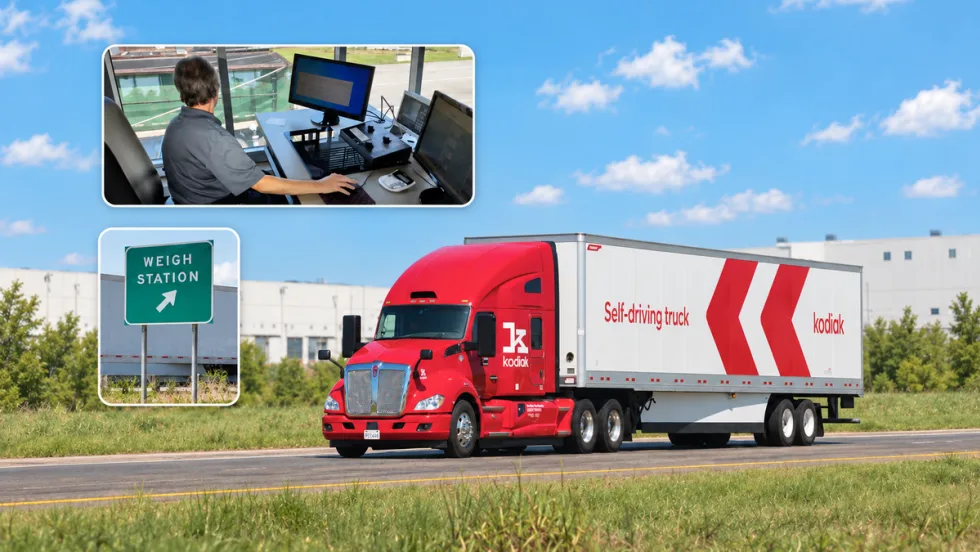
PrePass, Kodiak Connect Driverless Trucks to Roadside Enforcement
The system will allow enforcement agencies to verify Enhanced Inspection information and decide whether Kodiak’s autonomous trucks can bypass roadside screening sites.
Read More →
From One Generation to the Next: How Mentorship Builds Safer Truck Drivers
After three decades in trucking, Harold Perry shares what he's learned about driver safety, mentorship, and helping the next generation build confidence behind the wheel.
Read More →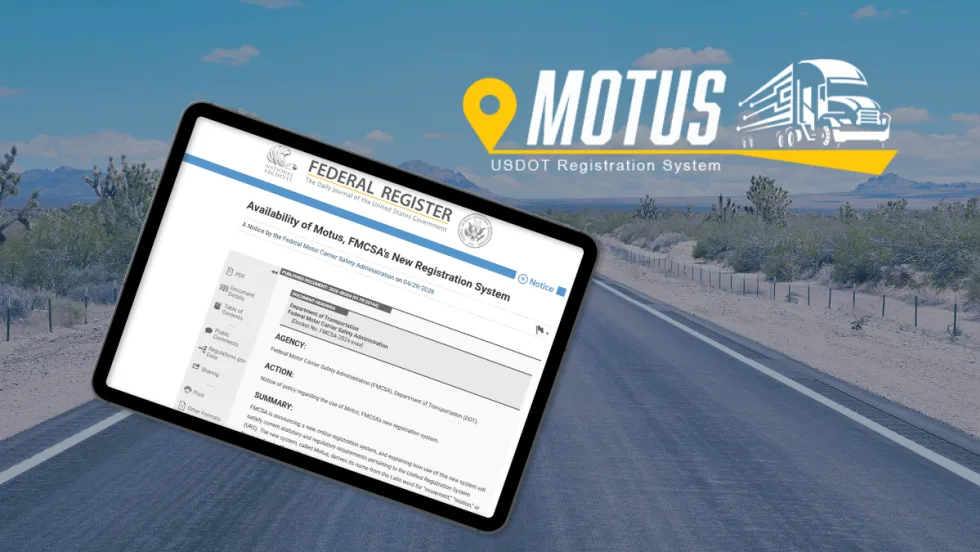
FMCSA Pauses Biennial-Update Enforcement Amid Motus Transition
Carriers whose updates were due on or after June 1 have more time, while FMCSA works to stabilize its new registration system and warns of phishing sites impersonating its new carrier registration system, Motus.
Read More →