




Connecticut Requires Snow and Ice Removal on All Vehicles
In Connecticut a new law that went into affect on Dec. 31 requiring commercial motor vehicles remove snow and ice from hoods, trunks and roofs or their operators will face fines ranging from $75 to $1,250.
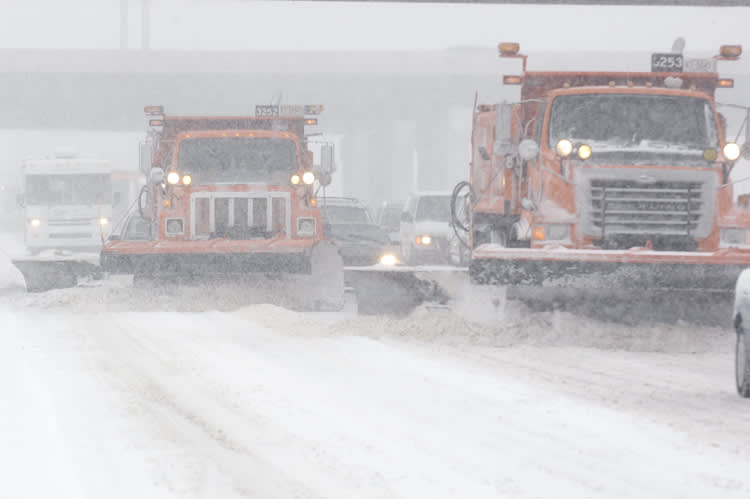
In Connecticut a new law went into affect on Dec. 31 requiring commercial motor vehicles remove snow and ice from hoods, trunks and roofs or their operators will face fines ranging from $75 to $1,250.
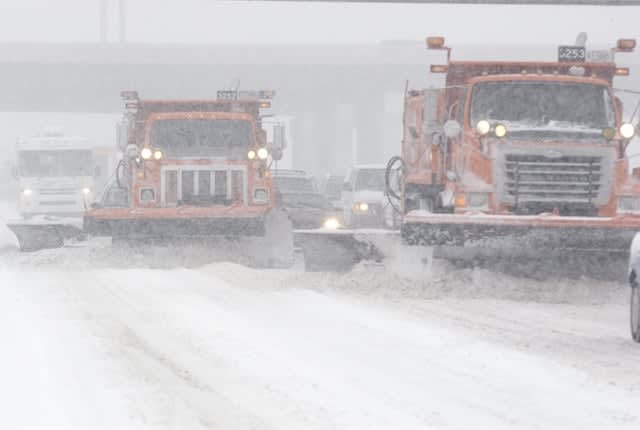
Operators of commercial vehicles who simply do not remove the accumulated snow and ice can be fined $75, however, the law calls for stiffer penalties when there’s personal or property damage from the flying elements. In those instances the operator can face a fine ranging from $500 to $1,250 each time it happens.
“This is a law meant to protect citizens and motorists from these elements that can be very dangerous when coming off traveling trucks on our highways and streets,” said DMV Commissioner Melody A. Currey in a press release. The fines carry the penalty of an infraction.
Operators are exempt from the fines when the snow, sleet and freezing rain begins or continues while the vehicle is traveling. Parked vehicles are also exempt from the required removal of ice and snow.
New Jersey and Pennsylvania have laws similar to Connecticut's, and the state of New York is considering a bill that would also require all vehicles remove snow and ice prior to taking off on the road.
These laws have raised concerns within the trucking industry over safety issues, especially considering the various laws require removing snow and ice from the tops of trailers, which are beyond dangerous for drivers to climb on.
So what are the options for drivers? In short, there aren't that many.
"A survey by the American Transportation Research Institute reveals that there remains a lack of economically feasible, easily deployable solutions available to motor carriers. ATRI said that snow throwers—devices that utilize an H-frame and rotate three times to throw snow as far as 20 feet away—cost about $70,000. Snow scrapers—devices mounted on H-frame that trailers can pull under to scrape the snow—run about $15,000 to $18,000," according to an article by Penske.
Related articles:
More Drivers

From One Generation to the Next: How Mentorship Builds Safer Truck Drivers
After three decades in trucking, Harold Perry shares what he's learned about driver safety, mentorship, and helping the next generation build confidence behind the wheel.
Read More →
Truck Drivers Need More Than Another Alert
Fleets have more visibility into truck health, safety events, and driver activity than ever. The next challenge is turning all that information into useful guidance for the person who has to decide what to do next.
Read More →
FMCSA Removes 110 Truck Driver Training Schools from Certified ELDT List
Federal regulators also are targeting more than 160 additional training providers and launching a nationwide audit of third-party CDL skills testers as part of a broader crackdown on trucking fraud.
Read More →
Hours of Service Pilot Programs: FMCSA Readies for 2027 Rollout
Two pilot programs could eventually reshape hours-of-service rules, giving truck drivers options to pause their 14-hour clock or use longer split sleeper rest periods.
Read More →
Medical Cards, English Proficiency Reshape Roadcheck Violations
Medical-card violations jumped to the top of the driver out-of-service list during CVSA’s 2026 International Roadcheck, while English-language proficiency violations appeared among the leading violations for the first time.
Read More →
Driver Trust Can Make or Break the Success of Fleet Safety Technology
New Teletrac Navman research suggests that onboarding, transparency about driver data, and positive feedback can play a significant role in how commercial drivers respond to safety and coaching technology.
Read More →
EEOC Sues KLLM Over Alleged Sex Discrimination in Driver Training
KLLM is facing a federal sex-discrimination lawsuit over policies the EEOC alleges put female truck driver trainees at a disadvantage.
Read More →
FMCSA Moves to Codify English Language Requirements for Commercial Drivers
By changing regulations on English-language proficiency requirements for commercial drivers, rather than relying on a guidance memo, the FMCSA said future administrations won't be able to walk back the Trump administration's stricter enforcement with just a memo.
Read More →
Drivers Put Western Star Trucks to the Test at Star Nation Experience
Watch to get an inside look at the Western Star trucks, technology, and community behind the Star Nation Experience 2026!
Read More →
Trump Administration Looks to Put More Veterans Behind the Wheel
The Freedom Haulers program pulls together existing and expanded programs at several federal agencies to recruit veterans to drive commercial heavy-duty trucks and cut the red tape for them to get a CDL, training, and employment.
Read More →