




Related: Siemens Opens First Public Electric Highway in Sweden
Colorado Announces Energy-Transfer Highway Project
The Colorado State Department of Transportation is working with private partners to explore the development of an energy-transfer highway segment.
by Jack Roberts
December 9, 2016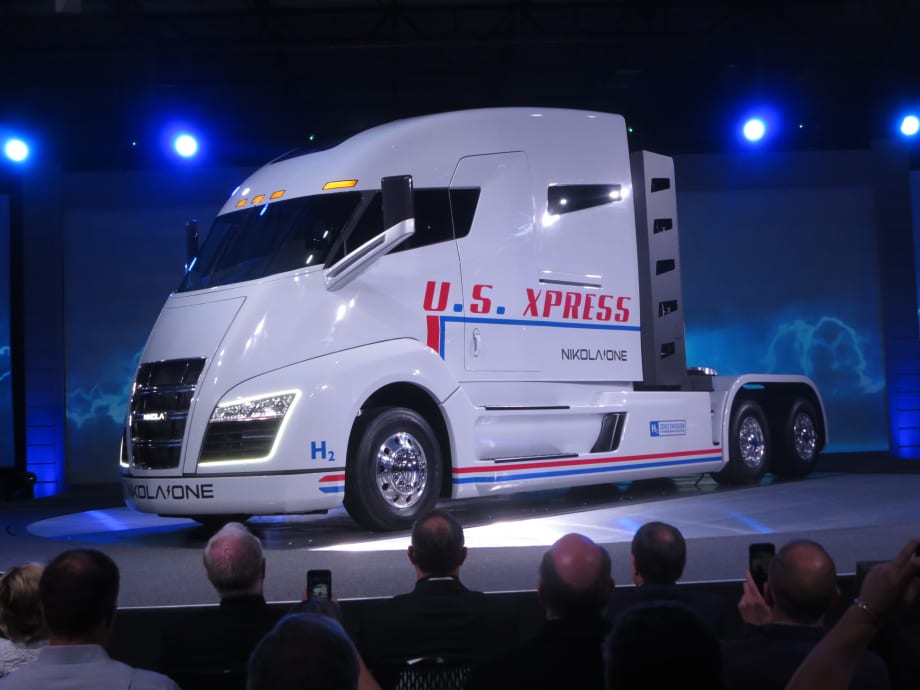
Nikola recently introduced the hydrogen fueled, electric-powered Class 8 Nikola One. Photo: Tom Berg
3 min to read

Nikola recently introduced the hydrogen fueled, electric-powered Class 8 Nikola One.Photo: Tom Berg
Hard on the heels of last week’s high-profile Nikola's hydrogen-electric powered truck launch comes news that the Colorado State Department of Transportation is working with private partners to explore the development of an energy-transfer highway segment.
The project will allow real-world testing of a stretch of an electric grid embedded in a stretch of highway that transfers electricity to electric-powered trucks through a coil transmission and reception system. Much like a cell phone charging surface commonly used today, the project would use powerful energy coils to transmit electric power upwards and into energy receiving coils mounted on the underside of trucks traveling in the dedicated energy-transfer lane.
Peter Kozinski is director of CDOT’s RoadX program - a forward-looking initiative that seeks out new, energy-efficient transportation technologies. He says the agency has been working with AECOM, a Los Angeles-based infrastructure builder for approximately 8 months to flesh out the beginning stages of the pilot program.
“We feel the vehicle of the future will be electrically powered,” Kozinski said, “and yet the cost of battery packs, combined with range anxiety concerns are real barriers to widespread acceptance of this technology. Our goal with this project is to determine if this power grid and energy transfer system can work in real-world driving conditions.”
Andrew Liu, vice president, AECOM Ventures said his company is a progressive, and forward-thinking road building and infrastructure construction firm that is committed to helping the United States move its road network into the 21st Century. “We’re already seeing the rise of all-electric vehicles and autonomous vehicles,” Liu said. “But what we have today are increasingly smart vehicles driving on dumb roads. And we want to help change that.”
According to Liu, AECOM has been working with the Sustainable Electrified Transportation Research Center, (SELECT) at Utah State University on related projects that have shown the potential for an energy-transfer roadway. “SELECT has been working on static charging pads that can wirelessly transfer energy to city buses,” Liu explained. “We started talking to them about the feasibility of charging an electric vehicle while it is in motion. They responded by developing a ¼-mile closed loop track that can charge buses while they drive. And this is the basis for our pilot program with RoadX and Colorado DOT.”
Currently, Liu says the SELECT closed loop track can charge buses moving between 35 to 40 mph with an efficiency rate between 85 and 95% transmitted by coils ranging from 6 to 8 feet in diameter. He says further work is being done now to determine if that high energy transfer rate can be sustained at higher speeds and in varying weather conditions, including rain and snow.
Kozinski says currently RoadX and AECOM are in the preliminary stages of the project and hope to identify additional OEM, technology, and fleet partners, as well as identify the criteria for a test highway and optimal locations for the roadway. “We hope to have those goals accomplished in the next 6 to 8 months, and begin planning for actual construction to begin something in early 2018,” he said.
Additionally, Kozinski says the project must overcome challenges including maintaining a consistent distance between transmitting and receiving energy coils to ensure efficient transmission of electricity as well as determining the environmental impact of the technology. “We can’t have a bunny hopping onto one of these coils and getting zapped,” he noted.
Similarly, Liu says AECOM is working with its global partners to identify new technologies and procedures that might benefit the energy-transfer lane project as well as seeking 3 to 5 additional partner cities elsewhere in the country to conduct further studies. “Key areas of interest for us include
“Key areas of interest for us include heavily congested urban areas as well as freight corridors,” he said. “We’re also looking to hear from other OEMs and interested parties. We view this as an open invitation for people, companies and organizations to get involved. Our feeling is the more people we have involved, the more successful this project will be.”
More Fuel Smarts
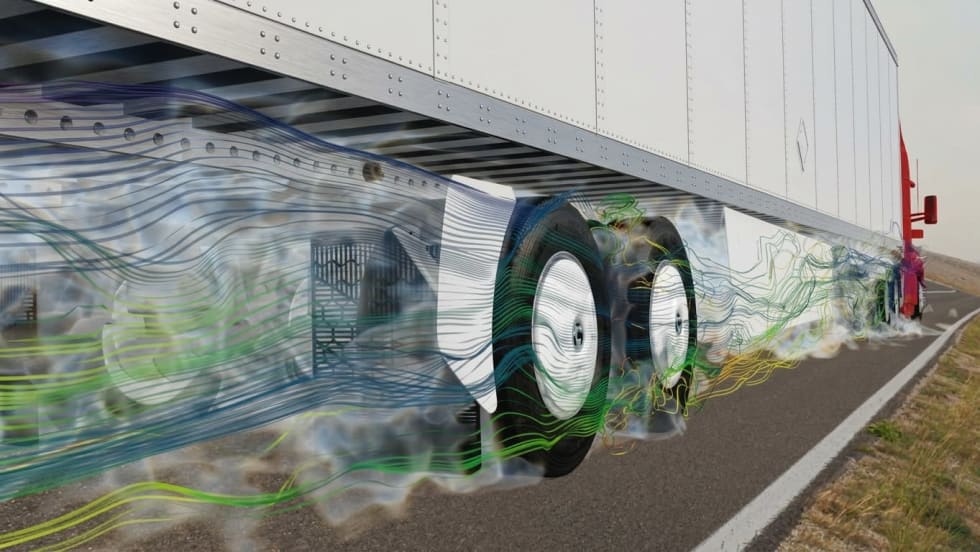
FlowBelow Redesigns Trailer AeroSlider to Cut Fuel Use
The lighter trailer aerodynamic system installs in less than 45 minutes, according to the company, with potential payback in under a year depending on fuel prices and trailer mileage.
Read More →
Why Diesel Price Relief Efforts May Fall Short
Diesel prices have eased from September’s record high, but doubts about additional Russian supply and limits on dyed-diesel tax relief mean trucking fleets still face expensive fuel. And prices could go higher.
Read More →
Why Small Fuel Savings Matter in Trucking
Can better fuel economy help pay for driver raises? In this podcast, GP Transco explains how small efficiency gains create room to reinvest in its people.
Read More →
How GP Transco Cuts Trucking Fuel Costs, a Tenth of a Gallon at a Time
What’s another tenth of a mile per gallon worth? GP Transco shares how equipment upgrades and driver coaching turn small gains into meaningful fuel savings.
Read More →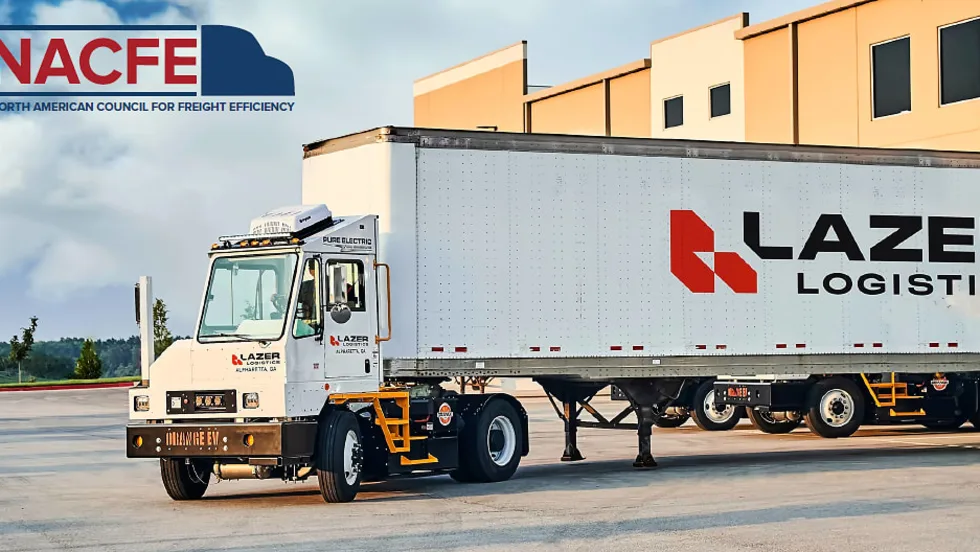
Electric Yard Tractors Move Beyond Pilots
Operating-cost savings have overtaken sustainability goals as the leading reason surveyed fleets are adopting battery-electric terminal tractors, according to new NACFE research.
Read More →
Geotab Links Fleet Card to Vehicle Data
The new card combines fuel discounts with telematics-based purchase controls. Geotab’s analysis also points to potential savings from choosing lower-priced fuel stops.
Read More →
Fleet Economics Shape Electric Truck Outlook
ACT Research expects costs, charging infrastructure, and technology improvements to drive zero-emission commercial vehicle adoption as federal regulations and incentives retreat.
Read More →
Wex Adds Cardless Fuel Payments for Over-the-Road Customers
A new fuel card feature for Wex customers offers convenience and security.
Read More →
New California Law Could Shed Light on Electric Truck Prices
Why do battery-electric Class 8 trucks remain so expensive? A California bill signed by Gov. Gavin Newsom would give fleets and state agencies more visibility into what manufacturers charge.
Read More →
How Volvo Updated Its D13 for EPA 2027 [Watch]
Volvo’s updated D13 promises lower emissions without sacrificing performance or fuel economy. Take a closer look at what changed inside the engine in this HDT Spotlight video.
Read More →