




Canadian Interest in EOBRs Remains Strong Despite Delays and Official Apathy
Even as the U.S. trucking industry awaits the final rule on EOBRs from the Federal Motor Carrier Safety Administration, Canada's trucking industry has been battling with some of the same questions. Truckers around the world have used on-board recording devices for more than 50 years. The first electronic device, the Tripmaster by Rockwell (now ArvinMeritor), emerged in the mid-1980s, and the pro and con camps have been split ever since
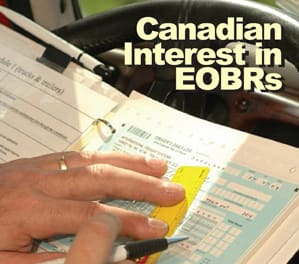
Even as the U.S. trucking industry awaits the final rule on EOBRs from the Federal Motor Carrier Safety Administration, Canada's trucking industry has been battling with some of the same questions.
Truckers around the world have used on-board recording devices for more than 50 years. The first electronic device, the Tripmaster by Rockwell (now ArvinMeritor), emerged in the mid-1980s, and the pro and con camps have been split ever since.
The earliest versions were paper-based mechanically linked engine tachographs that recorded only engine and road speed, as well as driver duty intervals. Electronics made vast menus of data available, and have proved highly beneficial in fleet utilization, fault recording, and maintenance scheduling among others, and of course, driver duty status monitoring.
They are also seen by some as the great equalizer.
CTA Asks for a Mandate
In 2006, the then newly appointed chair of the Canadian Trucking Alliance (CTA), Claude Robert, CEO of Groupe Robert in Boucherville, Quebec, called on industry to take hard look at hours of service compliance for its own benefit.
"Paper log books are a joke," he told reporters at the time. "You can have all the internal audit protocols you want and you won't eliminate illegal operations. If we don't [get serious about this], and some carriers and drivers continue to operate illegally, we will never get the rates we need, our drivers will never be paid what they are worth, and we will not attract the quality people to the industry."
The CTA asked Transport Canada (the government agency regulating trucking) for a Canadian EOBR mandate two years earlier, back in 2004, and restated the call again in February 2009, but the U.S. isn't the only country where the wheels of government turn slowly.
An industry-led project group was established during development of the current Canadian hours of service standard in the late 1990s, but interest in the project waned and it was abandoned in 2003. A research project began in 2001 involving Transport Canada, and regulators and industry in Ontario and Quebec to demonstrate EOBRs' effectiveness in an operational environment. Work on the project continues to this day, but official interest in EOBRs has been less than enthusiastic up to now.
Where EOBRs Stand
In 2006, Transport Canada issued findings from a report concluding there would be no insurmountable challenges to implementing an EOBR mandate in Canada. Since then, the number of carriers voluntarily adopting electronic data recorders has increased markedly, leaving regulators quite concerned about the proliferation of ad hoc policies and standards, and a lack of uniformity in the reporting capabilities of various readily available technologies.
Current Canadian HOS regulations provide for the use of electronic recording devices to track driver duty status, but carriers in certain jurisdictions have reported a concerted lack of willingness on the part of roadside inspectors and police officers to embrace the technology.
In 2007, Surrey, British Columbia-based Coastal Pacific Xpress, a 300-truck refrigerated less-than-truckload carrier specializing in retail distribution rolled out an e-log plan, but ran immediately into a brick wall with enforcement in that province.
It was a classic case of technology getting ahead of the enforcement community.
"We flipped the switch shortly after Canada rolled out its then-new HOS rules," said Jim Mickey, company president. "The rules allowed for electronic logging, provided enforcement was able to gather data on the previous 14 days of operation, and the device had the capability of showing -- and outputting -- that information. Our system was there, but the RCMP (Royal Canadian Mounted Police, Canada's federal police force) and CVSE (Commercial Vehicle Safety & Enforcement in BC), wouldn't have any part of it."
Mickey and his staff actually had to go door-to-door in the province, visiting district headquarters of both agencies to conduct hands-on training for the officers. The British Columbia Trucking Association later joined the training campaign, and brought enforcement officials around to the new technology.
Official "understanding" of the technology is still far from universal. Many carriers now running electronic logging systems still hear complaints from drivers that they are being required to hand-write the previous 14 days of logs for roadside inspectors.
This situation recently prompted federal regulators to draft an enforcement protocol directing enforcement officers to attempt to determine compliance through several means, including faxes and e-mails of uploaded data before requiring drivers to reproduce by hand the previous 14 days' logs.
Eyes in the Sky
Until there is a mandate in place, and all carriers are forced to the same level data retention, concerns about official use of carriers' retained data remain high. While being among the chief proponents of EOBRs in Canada, the Ontario Trucking Association (OTA) expressed consternation with a recent announcement from that province's motor carrier enforcement office (Ontario Ministry of Transportation, or MTO), that officials had again granted themselves access to carriers' GPS and satellite data for enforcement purposes.
"OTA had hoped that MTO would hold off on using satellite records until they had put in place a policy framework for the mandatory use of [EOBRs]," said David Bradley, the association's president.
The Ontario Ministry of Transportation had ceased using electronic data retained by carriers in August 2008, pending a court challenge to the practice, and development of policy guidelines that satisfied carrier privacy and equality concerns. The OTA feels that the use of satellite records to enforce hours of service compliance upsets the competitive balance between carriers that use satellite technology and those that do not. Those who have embraced the technology for business purposes could be subject to a higher degree of scrutiny than carriers that have not, OTA notes.
MTO's new policy applies only to the use of electronic records in a facility audit for scoring purposes, and not for investigations or compliance verifications that may result in enforcement action -- so they say.
At Last, Some Movement
In the face of this ongoing discord, Canada's Council of Deputy Ministers Responsible for Transportation and Highway Safety responded in April to CTA's February request, directing the Canadian Council of Motor Transport Administrators to explore issues related to EOBRs, and to come back with recommendations in the fall of 2010.
Work to be undertaken includes studying EOBR use in other jurisdictions, risks, and benefits of EOBRs, their impact on various stakeholders, and assessing the needs and requirements of government and industry.
Canada has been watching and continues to monitor developments in the U.S., and remains hopeful that a universal, North American standard will emerge governing the bilateral use of EOBRs -- even if our respective HOS regulations diverge significantly in the coming months. It should be noted that despite adopting a Canadian federal standard for HOS in 2007, several provinces have yet to harmonize intra-provincial rules with the national standard.
Still Some Concerns
Still, not everyone is as certain as CTA that EOBRs will finally level the playing field. Some carriers fear productivity decreases might outweigh the paperwork-reduction and level-playing-field benefits. At least one major refrigerated carrier from southern Ontario has tried but since removed the black boxes from trucks in its LTL division, citing impossible scheduling constraints related to delays experienced in loading and unloading.
"We were using up all of our hours sitting at the dock," a driver told us. "We couldn't make up the time, and our next day's schedul
More Aftermarket

What Three Fleets Are Doing Differently When Buying Truck Parts in 2026
With freight improving but costs still climbing, fleet maintenance executives explain how they're balancing price, quality, and supplier relationships.
Read More →
ConMet Expands Aftermarket Brake Drum Lineup With TruCast
A new heavy-duty truck brake drum option in the aftermarket gives customers more flexibility within the ConMet product family.
Read More →
Phillips Opens High-Tech Distribution Center for Faster Parts Delivery
Phillips Industries’ new Cincinnati-area distribution center is now shipping aftermarket trucking parts nationwide, aiming to speed up delivery times for customers.
Read More →
Volvo to Sponsor America’s Road Team for 2025
Volvo Trucks announced that it is extending its exclusive sponsorship of America’s Road Team for 2025.
Read More →
Webb to Start Taking Orders for UltraSet Pre-Adjusted Wheel Hubs
Webb, which recently acquired the Stemco Trifecta pre-adjusted hub program, will soon start taking orders for its replacement pre-assembled hub, the UltraSet.
Read More →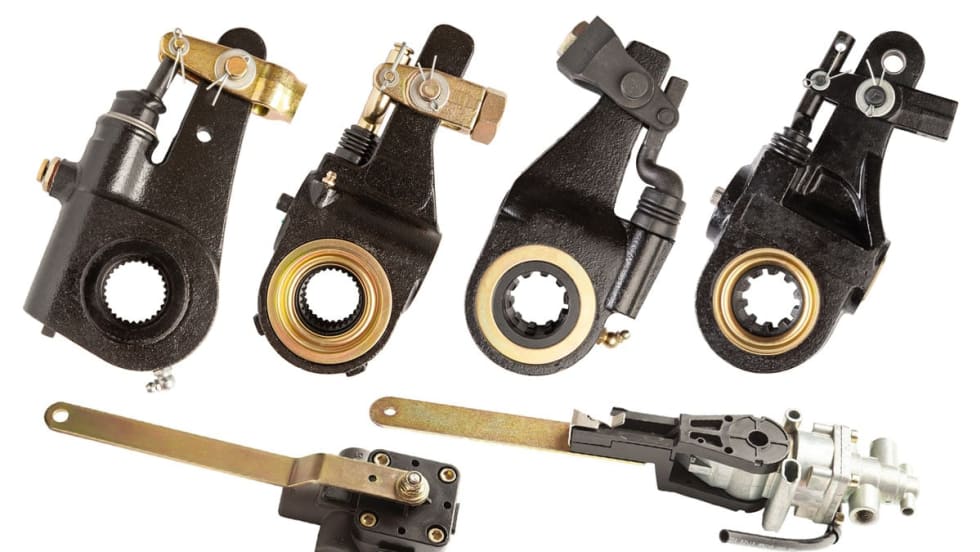
All-Makes Automatic Brake Adjusters, Ride Height Control Valves from Midland
SAF-Holland has added automatic brake adjusters and ride height control valves to its Midland All-Makes Program.
Read More →
ZF Aftermarket Expands [pro]Academy Training
ZF Aftermarket said it is expanding its ZF [pro]Academy training and will be adding 40 new modules this year.
Read More →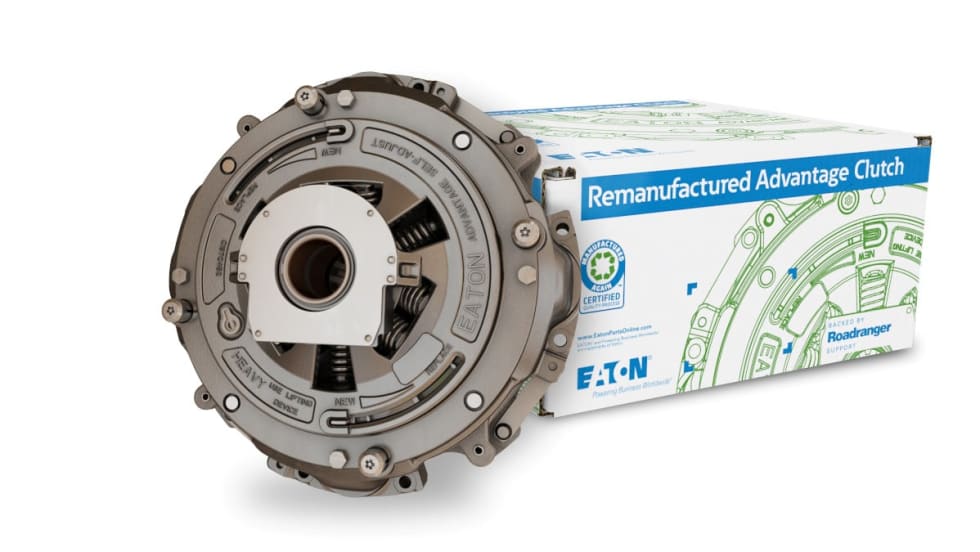
Eaton Adds Remanufactured Advantage Line of Clutches
Eaton has added its Advantage clutches to its remanufactured product line. The clutches feature a unique strap drive intermediate plate designed to allow customers to choose the latest OE specification
Read More →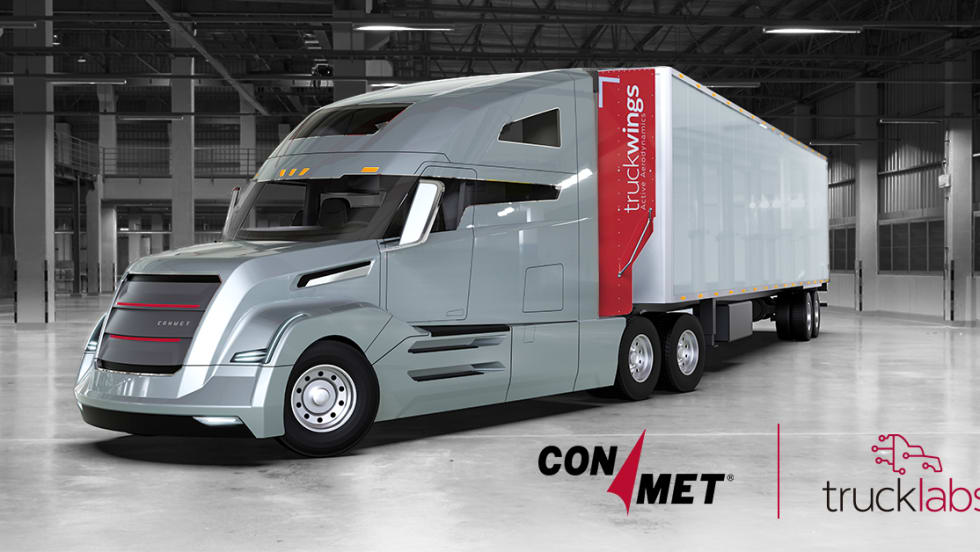
ConMet Acquires TruckLabs, the Creator of TruckWings
Commercial truck and trailer parts provider ConMet acquired TruckLabs, the company that created TruckWings, an aerodynamic device that attaches to truck cabs and deploys to close the gap between truck and trailer. TruckLabs now operates as a subsidiary of ConMet.
Read More →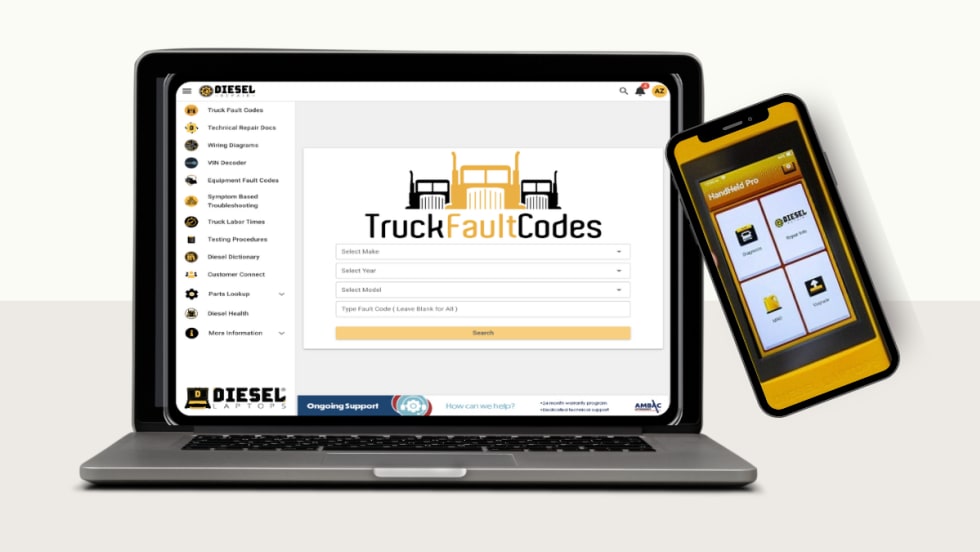
Diesel Laptops Releases Fault-Code-to-Part-Number Tool
Diesel Laptops said its Truck Fault Codes allows users to input a fault code and immediately identify and order the parts needed to complete repair work.
Read More →