




Related: House Committee Hears Testimony on Autonomous Truck Tech
Canada Senate: Country Not Prepared for Autonomous Vehicles
As the U.S. government mulls guidelines for autonomous vehicles that often don’t consider heavy trucks, a Canadian government panel has concluded that our neighbor to the north is ill-prepared for the arrival of autonomous and connected vehicles.
by John G. Smith, Today's Trucking
January 31, 2018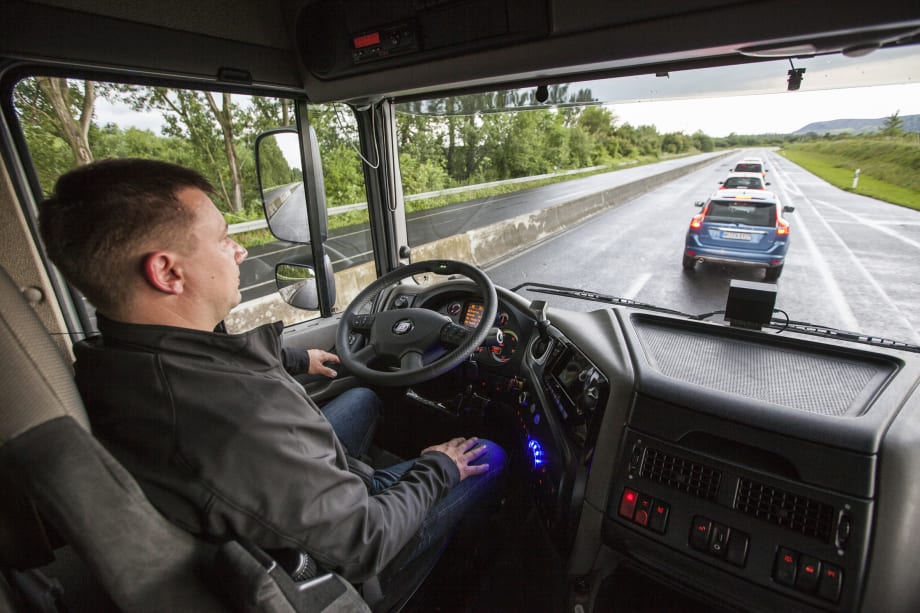
Is Canada ready for the global adoption of autonomous vehicles? Photo: Daimler
2 min to read
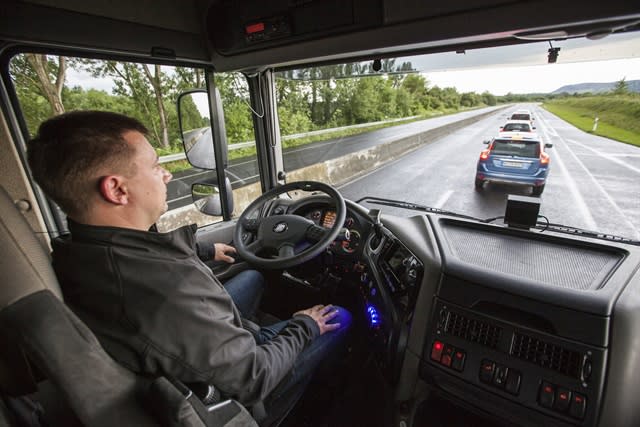
Is Canada ready for the global adoption of autonomous vehicles?Photo: Daimler
As the U.S. government mulls guidelines for autonomous vehicles that often don’t consider heavy trucks, a Canadian government panel has concluded that our neighbor to the north is ill-prepared for the arrival of autonomous and connected vehicles.
Canada’s Senate Committee on Transport and Communications delivered 16 recommendations to help prepare for the technology to come, calling for such things as a national strategy and cybersecurity measures to maintain public safety and confidence.
“We are on the cusp of a transportation revolution, and Canada must be ready. Cities were ill-prepared when ride sharing came to Canada. We cannot afford to repeat this mistake,” said Senator Dennis Dawson, deputy chairman of the committee.
“It is not a matter of if, but when more sophisticate automated and connected vehicles will arrive on Canadian roads,” concludes the related Driving Change report, which paints pictures of computer-controlled cars weaving in and out of traffic, and even terrorists taking control of vehicles from afar.
And the committee notes that some experts believe self-driving transportation could take root in urban areas in as few as 10 to 15 years.
Noting the potential of commercial applications such as those in mining, farming, and forestry, Driving Change also references potential job losses for truck and courier service drivers, tow truck drivers, and more.
While the technology is advancing quickly, there is a nod to widespread commercial applications not changing overnight, quoting Wendy Doyle, co-chairwoman of the Canadian Council of Motor Transport Administrator’s Automated Vehicles Working Group.
“If we look at the commercial industry, because of the complex task of moving those large loads, it will take technology a long time to replace all the requirements a driver is required to do,” she told the committee during a presentation.
More Safety & Compliance

From One Generation to the Next: How Mentorship Builds Safer Truck Drivers
After three decades in trucking, Harold Perry shares what he's learned about driver safety, mentorship, and helping the next generation build confidence behind the wheel.
Read More →
FMCSA Pauses Biennial-Update Enforcement Amid Motus Transition
Carriers whose updates were due on or after June 1 have more time, while FMCSA works to stabilize its new registration system and warns of phishing sites impersonating its new carrier registration system, Motus.
Read More →
ZF Expands Commercial Vehicle Push in North America
ZF is expanding its North American commercial-vehicle presence with new transmission applications, electrification, trailer technology and autonomous-driving systems.
Read More →
Truck Drivers Need More Than Another Alert
Fleets have more visibility into truck health, safety events, and driver activity than ever. The next challenge is turning all that information into useful guidance for the person who has to decide what to do next.
Read More →
Tesla Wants a Self-Driving Semi. Are Cameras Enough?
Could Tesla’s camera-only autonomous driving technology work on an 80,000-pound Semi? In this commentary, HDT's Deborah Lockridge takes a look at Tesla, Cybercab, and how autonomous trucks see the road.
Read More →
What DOT’s Automated Vehicle Strategy Means for Trucking
The U.S. Department of Transportation issued a new automated-vehicle strategy that outlines plans for driverless-truck regulations, cross-state freight corridors, and federal safety standards.
Read More →
NYC Expands Speed, Pedestrian Safety Tech Across Fleet
New York City is expanding intelligent speed assistance and pedestrian-alert systems across its municipal fleet, moving the technologies from pilot programs into vehicle procurement and retrofit requirements.
Read More →
FMCSA Removes 110 Truck Driver Training Schools from Certified ELDT List
Federal regulators also are targeting more than 160 additional training providers and launching a nationwide audit of third-party CDL skills testers as part of a broader crackdown on trucking fraud.
Read More →
Beyond DOT Compliance: What Makes a Trucking Fleet Truly Safe?
A trucking fleet can follow every rule and still make unsafe decisions. The real test comes when safety conflicts with freight, productivity, or cost.
Read More →
Hours of Service Pilot Programs: FMCSA Readies for 2027 Rollout
Two pilot programs could eventually reshape hours-of-service rules, giving truck drivers options to pause their 14-hour clock or use longer split sleeper rest periods.
Read More →