




Related: ATA Issues First-Ever Autonomous Vehicle Policy Guidelines
Business Interests Spur Autonomous Vehicle Policy Moves in Wisconsin
A multinational electronics manufacturer is considering building a new facility near Racine, Wisconsin, that would employee 13,000 workers – provided the city has a plan to develop autonomous vehicle infrastructure in the area.
by Staff
November 14, 2017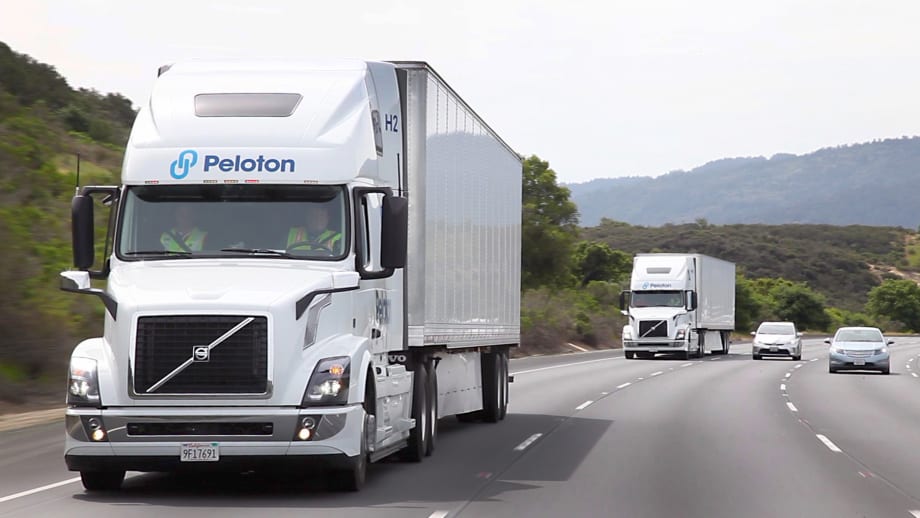
Racine, WI, city officals felt they were "ahead of the curve" on traffic issues, until a business considering locating there asked about autonomous vehicle infrastructure. Photo: Peloton
2 min to read
Racine, WI, city officals felt they were "ahead of the curve" on traffic issues, until a business considering locating there asked about autonomous vehicle infrastructure. Photo: Peloton
Is a new trend developing where big business interests are pushing municipalities to develop autonomous vehicle infrastructure?
That seems to be the case in Wisconsin, where the Foxconn Technology Group, a Taiwanese multinational electronics contract manufacturing company, has prompted the city of Racine to study the possibility of developing special lanes for autonomous vehicle traffic on Interstate 94, which runs through the city.
According to Racine’s Centennial Journal newspaper, members of the Racine City Council reported that Foxconn, which is currently considering building a manufacturing facility in a semi-rural area near the city, is concerned about traffic congestion on the highway. The facility could ultimately employ as many as 13,000 workers, the report said.
The state has already allocated money to widen I-94 to eight lanes in the area, along with other local road improvements, which lead city leaders to believe they were “ahead of the curve” on traffic issues, according to Tim Sheehy, president of the Metropolitan Milwaukee Association of Commerce, who was quoted in the story. “We were all dumbstruck,” Sheehy added, “when they looked at us and said, ‘So where’s the autonomous vehicle lane?’”
As a result of that conversation, the Journal Sentinel reports, Wisconsin transportation planners were asked to consider the possibility. The Department of Transportation is doing just that, a spokesman said Monday.
“Yes, it is something we are looking at,” said Michael Pyritz, spokesman for the department’s southeast region.
Pyritz said the process of evaluating and making final decisions on upgrades to I-94 and other roads near the planned Foxconn complex in Mount Pleasant “is a work in progress,” with many options being weighed.
“It’s on the table,” he said of dedicated lanes for driverless vehicles, “but boy, there’s a lot of stuff on the table.”
One possibility, Sheehy said, would be driverless lanes between the Foxconn plant and Milwaukee’s Mitchell International Airport as a way to move supplies and products to and from the factory.
The state appears to be one that is encouraging development and testing of the vehciles. Earlier this year, Wisconsin Gov. Scott Walker has signed an executive order that removes roadblocks to testing autonomous vehicle technologies in Wisconsin. The UW-Madison College of Engineering has been designated by the U.S. Department of Transportation as one of 10 national proving grounds for autonomous vehicles. The governor has a Steering Committee on Autonomous and Connected Vehicle Testing and Deployment to offer advice on how to advance the testing and operation of self-driving vehicles in Wisconsin.
More Drivers

Truck Drivers Need More Than Another Alert
Fleets have more visibility into truck health, safety events, and driver activity than ever. The next challenge is turning all that information into useful guidance for the person who has to decide what to do next.
Read More →
FMCSA Removes 110 Truck Driver Training Schools from Certified ELDT List
Federal regulators also are targeting more than 160 additional training providers and launching a nationwide audit of third-party CDL skills testers as part of a broader crackdown on trucking fraud.
Read More →
Hours of Service Pilot Programs: FMCSA Readies for 2027 Rollout
Two pilot programs could eventually reshape hours-of-service rules, giving truck drivers options to pause their 14-hour clock or use longer split sleeper rest periods.
Read More →
Medical Cards, English Proficiency Reshape Roadcheck Violations
Medical-card violations jumped to the top of the driver out-of-service list during CVSA’s 2026 International Roadcheck, while English-language proficiency violations appeared among the leading violations for the first time.
Read More →
Driver Trust Can Make or Break the Success of Fleet Safety Technology
New Teletrac Navman research suggests that onboarding, transparency about driver data, and positive feedback can play a significant role in how commercial drivers respond to safety and coaching technology.
Read More →
EEOC Sues KLLM Over Alleged Sex Discrimination in Driver Training
KLLM is facing a federal sex-discrimination lawsuit over policies the EEOC alleges put female truck driver trainees at a disadvantage.
Read More →
FMCSA Moves to Codify English Language Requirements for Commercial Drivers
By changing regulations on English-language proficiency requirements for commercial drivers, rather than relying on a guidance memo, the FMCSA said future administrations won't be able to walk back the Trump administration's stricter enforcement with just a memo.
Read More →
Drivers Put Western Star Trucks to the Test at Star Nation Experience
Watch to get an inside look at the Western Star trucks, technology, and community behind the Star Nation Experience 2026!
Read More →
Trump Administration Looks to Put More Veterans Behind the Wheel
The Freedom Haulers program pulls together existing and expanded programs at several federal agencies to recruit veterans to drive commercial heavy-duty trucks and cut the red tape for them to get a CDL, training, and employment.
Read More →
Putting Mack’s Command Steer to the Test
A test drive of Mack’s Command Steer active steering system evaluates how it can make truck driving easier and less tiring.
Read More →