




Related: CVSA Brake Check Puts 12% Out of Service for Violations
Brake Service Violations Increase to 13.2%, CVSA Says
The results from the 2016 Commercial Vehicle Safety Alliance’s Brake Safety Week have revealed a slight increase in out-of-service violations compared to last year’s inspection period.
by Staff
November 14, 2016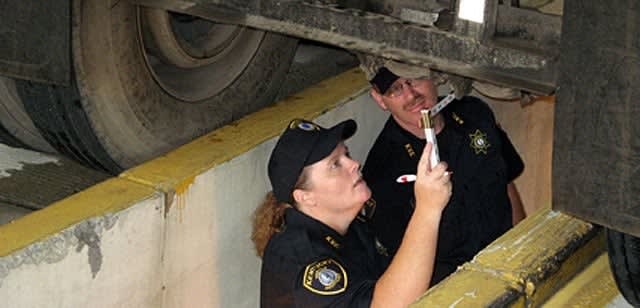
2 min to read
The results from the 2016 Commercial Vehicle Safety Alliance’s Brake Safety Week have revealed a slight increase in out-of-service violations compared to last year’s inspection period.
For 2016, enforcement members of CVSA conducted 18,385 commercial vehicle and brake-system inspections during the week resulting in brake-related out-of-service violations in 13.2% of vehicles. Local, state, provincial, territorial, and federal inspectors throughout the U.S. and Canada conducted inspections to identify out-of-adjustment brakes and brake-system violations.
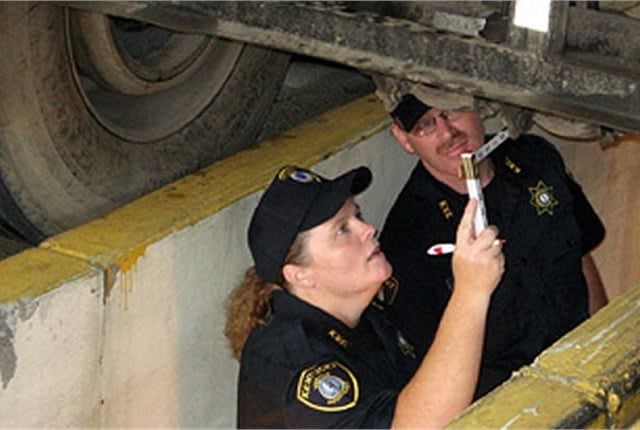
Roadside inspections included examining brake-system components to identify loose or missing parts, air or hydraulic fluid leaks, cracked, damaged or worn linings, pads, drums or rotors, and other faulty brake-system components.
This year, inspectors also checked anti-lock braking system indicator lamps for compliance with jurisdictional regulations. Partcipatng jurisdicitons collected data for an ABS survey looking at the prevalence of ABS systems and related violations on trucks and trailers.
As many as 93.2% of air-braked trucks and 90.4% of hydraulic-braked trucks required ABS based on their date of manufacture while 89.4% of air-braked trailers required ABS based on manufacturing date. Of those inspected, 8.8% of all ABS-required trucks were found with ABS violations while 15.8% of all trailers requiring ABS were found with ABS violations.
Around 7.6% of trailers were not subject to ABS requirements because they had neither air brakes or hydraulic brakes. Inspections also included 328 buses and motor coaches during the event, 80.8% of which required ABS systems. Only two buses violated ABS requirement regulations.
“Brakes must be routinely checked and properly maintained to ensure the safety of the commercial motor vehicle, the CMV driver and everyone else on the road,” said Julius Debuschewitz of Yukon Highways and Public Works, CVSA president. “Although brake inspections are a part of the Level I inspections conducted by our hard-working CMV inspectors every day, Brake Safety Week is an opportunity to remind motor carriers and drivers of the importance of brake health and safety, and it provides the opportunity for our inspectors to conduct targeted and focused inspections to identify and remove commercial motor vehicles that have brakes with critical violations from our roadways.”
Brake Safety Week is part of the Operation Airbrake Program sponsored by CVSA in partnership with FMCSA and the Canadian Council of Motor Transport Administrators. The Operation Airbrake Program is an international enforcement activity dedicated to preventing large truck and bus crashes, and saving lives throughout North America. The campaign seeks to highlight the importance of proper brake inspection and maintenance in an effort to reduce the number of brake-related violations discovered during a roadside inspection.
More Safety & Compliance

FMCSA Pauses Biennial-Update Enforcement Amid Motus Transition
Carriers whose updates were due on or after June 1 have more time, while FMCSA works to stabilize its new registration system and warns of phishing sites impersonating its new carrier registration system, Motus.
Read More →
ZF Expands Commercial Vehicle Push in North America
ZF is expanding its North American commercial-vehicle presence with new transmission applications, electrification, trailer technology and autonomous-driving systems.
Read More →
Truck Drivers Need More Than Another Alert
Fleets have more visibility into truck health, safety events, and driver activity than ever. The next challenge is turning all that information into useful guidance for the person who has to decide what to do next.
Read More →
Tesla Wants a Self-Driving Semi. Are Cameras Enough?
Could Tesla’s camera-only autonomous driving technology work on an 80,000-pound Semi? In this commentary, HDT's Deborah Lockridge takes a look at Tesla, Cybercab, and how autonomous trucks see the road.
Read More →
What DOT’s Automated Vehicle Strategy Means for Trucking
The U.S. Department of Transportation issued a new automated-vehicle strategy that outlines plans for driverless-truck regulations, cross-state freight corridors, and federal safety standards.
Read More →
NYC Expands Speed, Pedestrian Safety Tech Across Fleet
New York City is expanding intelligent speed assistance and pedestrian-alert systems across its municipal fleet, moving the technologies from pilot programs into vehicle procurement and retrofit requirements.
Read More →
FMCSA Removes 110 Truck Driver Training Schools from Certified ELDT List
Federal regulators also are targeting more than 160 additional training providers and launching a nationwide audit of third-party CDL skills testers as part of a broader crackdown on trucking fraud.
Read More →
Beyond DOT Compliance: What Makes a Trucking Fleet Truly Safe?
A trucking fleet can follow every rule and still make unsafe decisions. The real test comes when safety conflicts with freight, productivity, or cost.
Read More →
Hours of Service Pilot Programs: FMCSA Readies for 2027 Rollout
Two pilot programs could eventually reshape hours-of-service rules, giving truck drivers options to pause their 14-hour clock or use longer split sleeper rest periods.
Read More →
New Guide Offers Pet Safety Tips for Truck Drivers
Hundreds of thousands of pets travel in truck cabs. A new safety guide from Volvo Trucks and the Center for Pet Safety offers practical advice for truck drivers who bring dogs and cats along for the ride.
Read More →